Plant Overview
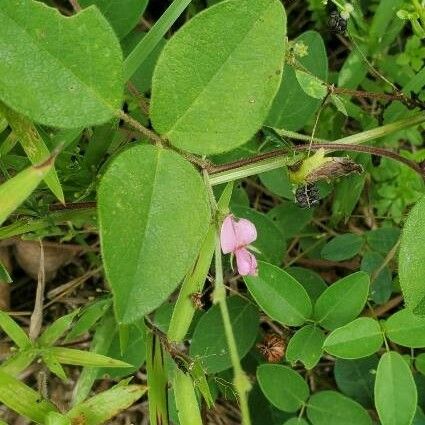
Often called the Florida Hammock Milkpea, this delicate, twining vine is a hidden gem of the scrublands and forest edges. While it doesn't shout for attention like a showy garden rose, its intricate purple flowers and ecological importance make it a favorite for native plant enthusiasts. It has a graceful way of "knitting" together a landscape without becoming an invasive nuisance.
🔍 How to Identify
- 🌿 The Leaves: Look for three distinct leaflets (trifoliate) that are oblong or oval. They often have a subtle, silvery sheen on the underside due to tiny, fine hairs.
- 🌸 The Blooms: Small, pea-shaped flowers that range from pale pink to deep lavender, typically appearing in clusters along a slender stalk.
- 🌱 Growth Habit: This is a "twiner." It doesn't use tendrils to climb; instead, the entire stem wraps itself around nearby shrubs or tall grasses to reach the sunlight.
🏡 In Your Garden
- 🦋 A Butterfly Cradle: This plant is a vital host for nature’s pollinators. It serves as a primary nursery for several butterflies, including the striking Long-tailed Skipper and the tiny Ceraunus Blue.
- 🏜️ Natural Fertilizer: As a member of the legume family, it possesses a "superpower"—it fixes nitrogen in the soil. It takes nitrogen from the air and converts it into a form that helps nearby plants grow, making it a great companion for poor, sandy soils.
- 🍃 Low Maintenance: Because it is adapted to hammocks and dry woods, it is incredibly drought-tolerant. It prefers to be left alone once established and resents being moved due to its deep root system.
⚠️ Safety & Toxicity
- 🐾 Pet Safety: Galactia species are generally considered non-toxic, but like many wild legumes, the pods and seeds can cause mild digestive upset if ingested in large quantities by curious dogs or cats.
- 🧒 Child Safety: There are no known skin irritants associated with this plant. However, it is always best to teach children that "wild peas" are for the butterflies and not for eating.
✨ Fun Fact
The name "Milkpea" originates from an old botanical myth. Early naturalists mistakenly believed that the sap of these plants could increase milk production in goats and cattle. While the plant doesn't actually produce milk, its high protein content makes it a favorite high-energy snack for wild deer!

Detailed Care Instructions
| Lighting | Part Sun |
To grow Galactia Striata plant, you can follow these steps:
- Obtain seeds or seedlings: You can either collect seeds from mature Galactia Striata plants or purchase seedlings from a reputable nursery or online store.
- Prepare the soil: Galactia Striata prefers well-draining soil with a mixture of organic matter. Ensure the soil is loose and crumbly to allow proper root growth.
- Planting: If using seeds, sow them in the prepared soil at a depth of about 1/4 inch. Space the seeds or seedlings about 12 inches apart to allow ample room for growth.
- Watering: Water the planted area immediately after sowing the seeds or transplanting the seedlings. Keep the soil consistently moist but not waterlogged. Watering is especially important during dry spells or prolonged periods of heat.
- Sunlight: Galactia Striata requires full sun exposure to thrive. Ensure the plant receives at least 6-8 hours of direct sunlight each day. If planting indoors, place the plant near a sunny window or under grow lights.
- Fertilization: Apply a balanced, slow-release fertilizer once or twice during the growing season to provide essential nutrients. Follow the package instructions for the recommended dosage.
- Pruning: Regular pruning helps promote bushier growth and encourages flowering. Trim back any dead or diseased branches and pinch off the tips of young shoots to promote lateral branching.
- Mulching: Apply a layer of organic mulch around the base of the plant to help conserve moisture, regulate soil temperature, and suppress weed growth. Ensure the mulch is not touching the stem to avoid rot.
- Pests and diseases: Keep an eye out for common pests like aphids or spider mites. Treat any infestations using organic insecticides or by manually removing them. Additionally, practice good garden hygiene to prevent the onset of diseases.
- Propagation: Galactia Striata can also be propagated through stem cuttings or layering. These methods involve taking a healthy cutting or bending a low-growing stem and burying it in the soil until it develops roots.
With proper care and attention, your Galactia Striata plant should grow and flourish, providing attractive foliage and beautiful flowers.

Place in a dark room with little light, like a dark bedroom or a spot far away from a window or directly in a north-facing window.

To water this specific plant, you should first assess the moisture level of the soil by sticking a finger about an inch deep. If the soil feels dry, it's time to water. You should aim to water the soil directly at the base of the plant, avoiding getting water on the leaves or foliage. Use a watering can with a spout or a hose with a gentle spray nozzle to water slowly and evenly, making sure the water infiltrates the soil. Water until the soil is moist, but not waterlogged or soggy. Be careful not to overwater, as this can cause root rot and other issues. Wait until the soil feels dry to the touch before watering again.
To fertilize this plant, use a balanced granular fertilizer with equal amounts of nitrogen, phosphorus, and potassium, applying it every four weeks during the growing season. Mix the fertilizer into the top inch of soil around the plant, being careful not to disturb the roots. Water the plant thoroughly after fertilizing to help distribute the nutrients evenly. Avoid over-fertilization as this can lead to excessive growth and weak stems.
The ideal soil for this plant is a well-draining and nutrient-rich soil that is slightly acidic. It should have a pH level between 5.5 to 6.5. A mixture of equal parts peat moss, perlite, and vermiculite can be used as soil for Galactia Striata. Avoid using heavy clay soil as it can retain too much moisture, leading to root rot. Additionally, add organic matter such as compost or aged manure to improve soil fertility and structure. It is important to ensure that the soil is moist but not waterlogged to maintain the health of the Galactia Striata plant.
Galactia Striata plant can be propagated from cuttings. To propagate, first prepare a pot with well-draining soil. Next, take a cutting from the parent plant that is 2-3 inches in length and has several leaves. Remove the lower leaves from the cutting, leaving only the top few. Dip the cut end of the cutting into rooting hormone. Using a pencil or finger, create a hole in the soil and insert the cutting, gently pressing the soil around it. Water the cutting thoroughly and place it in a warm, bright location. Keep the soil moist but not overly wet. The cutting should soon produce roots and new growth.








