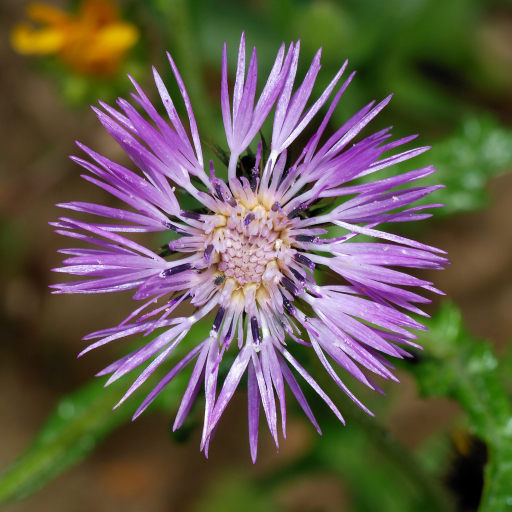
Plant Overview
Known as the Purple Milk Thistle, Galactites tomentosa is a Mediterranean native that turns rugged, sun-drenched landscapes into a sea of lavender and silver. Its name comes from the Greek word "gala" (milk), referring to the striking white patterns on its leaves that look like spilled cream across a green canvas. While it carries a prickly defense, it is a vital lifeline for pollinators in dry climates.
🔍 How to Identify
- 🌿 Milky Foliage: The most striking feature is the deep green leaves mottled with bright white, milky veins and spots. These leaves are deeply lobed and end in sharp, needle-like spines.
- 🌸 Pincushion Blooms: In late spring, it produces fragrant, lilac-to-purple flower heads. Unlike many thistles, these blooms appear soft and feathery, clustered at the ends of the branches.
- ☁️ Woolly Texture: The stems and the undersides of the leaves are covered in a dense, white, felt-like down (called "tomentum"). This gives the entire plant a shimmering, silvery-grey appearance from a distance.
🏡 In Your Garden
- ☀️ Drought Warrior: This plant thrives in the harshest, sunniest spots where other flowers might wither. It possesses a deep taproot that anchors it firmly, making it extremely drought-tolerant but also very difficult to transplant once it has settled in.
- 🦋 A Pollinator Magnet: If you are looking to support local wildlife, this thistle is a goldmine. It is a primary nectar source for the Painted Lady butterfly and several species of long-tongued bees, which are drawn to its sweet-scented bristles.
⚠️ Safety & Toxicity
- 🌵 Physical Hazard: While Galactites tomentosa is not considered chemically toxic to humans or common household pets, it is physically aggressive. The sharp spines along the leaf margins can easily pierce skin or garden gloves.
- 🐾 Pet Caution: Curious dogs or cats may experience mouth irritation or "thistle-prick" if they attempt to chew on the leaves. It is best planted in the back of borders where pets and children won't accidentally brush against it.
✨ Fun Fact
The white "milky" veins on the leaves aren't just for show—they are a form of natural camouflage! Scientists believe the white patterns break up the plant's outline, making it harder for hungry herbivores to recognize the shape of the leaf against the bright Mediterranean sun.

Detailed Care Instructions

Place in a bright room that is sun drenched almost all day. Or directly in a south-facing window.

Some plants require more regular watering than others, which should be done every few days. It's critical to maintain the soil moist all of the time. The water requirements of the same plant placed in pots with varying sizes will differ. Because the water in the smaller pot evaporates faster than the water in the larger pot, it will require more watering. Regardless of pot size, the surface should constantly be maintained moist.








