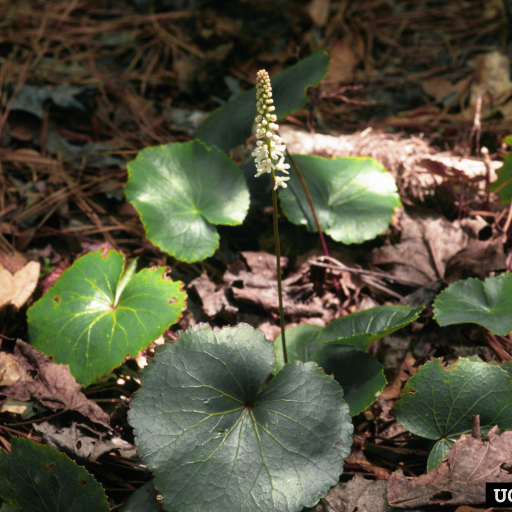
Plant Overview
Often called Beetleweed or the Wandflower, Galax urceolata is a charming evergreen perennial that carpets the floor of the Appalachian mountains. Known for its leathery, heart-shaped leaves that transition from deep green to a rich bronze in winter, it is a favorite in the floral industry for its long-lasting foliage. Despite its delicate appearance, it is a hardy survivor of the ancient eastern forests.
🔍 How to Identify
- 🍃 Lustrous Foliage: The leaves are perfectly heart-shaped (cordate), leathery to the touch, and feature finely serrated "toothed" edges.
- 🕯️ The Wand: In late spring, a single, leafless stalk rises up to 15 inches high, topped with a dense spike of tiny, star-shaped white flowers.
- 🎨 Seasonal Shift: While vibrant green in summer, the leaves develop a stunning metallic maroon or burgundy hue as soon as the first frost hits.
🏡 In Your Garden
- 🌲 Forest Mimicry: To thrive, Galax needs to feel like it’s in a woodland; it craves acidic, moist, and organic-rich soil, preferably tucked under the shade of rhododendrons or pines.
- 🐌 Patience is Key: This is a slow-growing species that spreads via underground rhizomes. It strongly dislikes being moved once established, as its root system is sensitive to disturbance.
- 💨 The Fragrance Factor: Be aware that while the leaves are scentless, the white flower spikes emit a musky, skunk-like odor to attract specific pollinators—a trait that earned it the nickname "Skunkweed" in some regions.
⚠️ Safety & Toxicity
- ✅ Safe for Touch: Galax is generally considered non-toxic to humans and is not known to cause skin irritation.
- 🐾 Pet Friendly: There are no documented toxic effects for cats or dogs, making it a safe choice for a woodland-themed backyard where pets roam.
- 🍽️ Not for Consumption: While not "poisonous" in a deadly sense, it is not an edible plant and should not be ingested by humans or animals.
✨ Fun Fact
Galax leaves are so durable that they are harvested by the millions in the wild for use in professional floral arrangements; a single leaf can stay green and fresh in a vase for several weeks!

Detailed Care Instructions
To grow Galax Urceolata, also known as Appalachian Tea, follow these steps:
- Choose a suitable growing location: Galax Urceolata prefers moist, well-draining soil and partial to full shade. It thrives in cool, mountainous regions with consistent humidity.
- Prepare the soil: Amend the soil with organic matter, such as compost or peat moss, to improve drainage and moisture retention. Galax Urceolata prefers slightly acidic soil with a pH range of 4.5-6.5.
- Planting Galax Urceolata: Dig a hole slightly larger than the root ball, ensuring the crown is level with the soil surface. Space multiple plants about 12-18 inches apart to allow adequate air circulation.
- Watering: Keep the soil consistently moist but not waterlogged, as Galax Urceolata prefers consistently moist conditions. Mulching around the base of the plant can help retain moisture.
- Fertilizing: Galax Urceolata does not require heavy feeding. You can apply a balanced, slow-release fertilizer in early spring to promote healthy growth. Follow the package instructions for application rates.
- Pruning: Galax Urceolata does not require extensive pruning. Remove any dead or damaged leaves, and thin out any overcrowded areas to improve air circulation.
- Pests and diseases: Galax Urceolata is generally resistant to pests and diseases. However, keep an eye out for slugs and snails, which can damage the leaves. Handpick them or use organic slug control methods if necessary.
- Propagation: Galax Urceolata can be propagated through division or by collecting and sowing seeds. Divide mature plants in spring or early fall, ensuring each division has a portion of the rhizome and several healthy leaves. Sow seeds in a nursery tray in a moist, sterilized seed-starting mix, and keep them in a cool, shaded area until germination.
Remember to consider the specific growing conditions in your region and adjust the care accordingly. Regularly monitor the plant's health, water it appropriately, and provide the necessary shade and moisture to ensure successful growth.

Place in a window with dappled sun or a spot in the middle of a room. Or directly in a window facing west or east.

1. Determine the soil type: Before watering, it is essential to determine the soil type in which Galax Urceolata plant is growing. The plant prefers moist, well-drained, and slightly acidic soil.
2. Monitor soil moisture: The best way to water this plant is by monitoring the soil moisture level. The plant requires a consistently moist soil, but it should not be waterlogged. A dry soil can cause the leaves to wilt.
3. Water frequency: The frequency of watering depends on the plant's location, soil type, and weather conditions. In general, the plant requires watering once every week. However, during the hot summer months, it may require more frequent watering.
4. Watering method: The most effective method of watering is through drip irrigation or a soaker hose. This ensures that the soil is evenly moistened and prevents waterlogging. Alternatively, watering can be done with a watering can or a hose with a gentle spray nozzle.
5. Water quantity: It is best to water the plant deeply, ensuring that the soil is moistened to the root level. Avoid surface watering, which can lead to shallow root development.
6. Time of day: It is best to water the plant early in the morning or in the late afternoon. Avoid watering during the midday heat to prevent water evaporation.
7. Mulching: Mulching the plant with organic materials such as compost, leaves, or wood chips helps to retain soil moisture and regulate soil temperature. This reduces the frequency of watering required.
To fertilize the Galax urceolata plant, use a balanced, slow-release fertilizer in the spring. Apply the fertilizer around the base of the plant, being careful not to get any on the leaves. Water the plant thoroughly after fertilizing. Repeat the fertilization process every year in spring.
Galax urceolata plant prefers a well-draining, acidic soil that is rich in organic matter. It can grow well in a variety of soil types, including loam, sand, and clay, but sandy loam soil with a pH range of 4.5-5.5 is considered ideal. The soil should be moisture-retentive but not waterlogged, as the plant prefers a consistent moisture level. Adding compost, leaf mold, or peat moss to the soil can help improve its acidity and provide the necessary nutrients for healthy growth. It is important to avoid using soil that is contaminated with chemicals or heavy metals, as Galax urceolata plant is sensitive to these pollutants.
Galax Urceolata plant can be propagated using several methods. One of the easiest methods is by dividing the plant. This involves digging up the plant and carefully separating the roots into smaller sections, making sure that each section has a healthy root system and at least one shoot. These smaller sections can then be replanted into new containers or directly into the ground.
Another way to propagate Galax Urceolata plant is by taking stem cuttings. Cuttings should be taken from healthy, mature stems with at least two nodes or leaves. Remove the lower leaves and cut the stem just below the node. Dip the cut end in rooting hormone and plant the cutting in a well-draining potting mix. Keep the soil moist and provide high humidity by covering the container with plastic wrap or a clear plastic bag. In a few weeks, the cutting should develop roots and can be transplanted into a larger container or directly into the ground.
Finally, Galax Urceolata plant can also be propagated by seed. Collect the seeds from the plant and plant them in a well-draining potting mix. Keep the soil evenly moist and warm, and the seeds should germinate in a few weeks. Once the seedlings have developed a few leaves, they can be transplanted into larger containers or directly into the ground.








