Plant Overview
Often called the "Gallant Soldier," this humble South American native has quite the travel history. Originally hailing from the Andes mountains, it was accidentally introduced to Kew Gardens in London in the late 18th century and quickly "marched" across Europe and the rest of the globe. While many modern gardeners dismiss it as a common weed, it holds a prestigious place as a beloved culinary herb in its homeland.
🔍 How to Identify
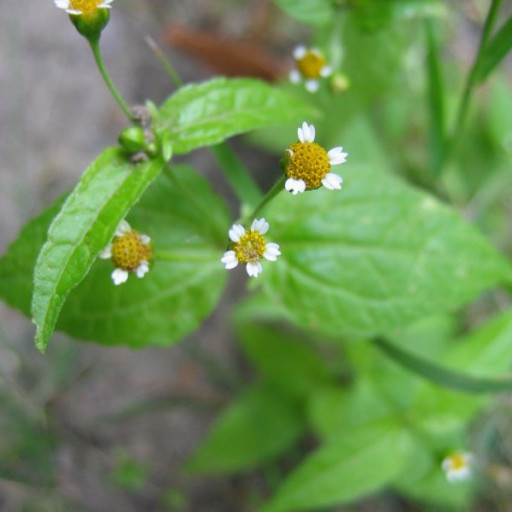
- 🌼 Miniature Daisies: The flowers are tiny—only about 5mm wide—featuring a bright yellow center surrounded by five tiny, white petals. Each petal has three distinct "teeth" at the tip, looking like a small, jagged crown.
- 🌿 Opposite Oval Leaves: The light-green leaves grow in pairs directly across from one another. They are egg-shaped with pointed tips and have noticeably "toothed" or serrated edges.
- 🌱 Fuzzy Texture: If you look closely or touch the plant, you’ll notice the stems and leaf surfaces are covered in fine, soft hairs, giving the plant a slightly matte, velvety appearance.
🏡 In Your Garden
- 🍲 A Gourmet "Weed": In Colombia, this plant is known as Guascas. It is the essential signature ingredient for Ajiaco, a famous traditional potato soup. Without this plant's unique earthy, slightly grassy flavor, the dish is considered incomplete.
- 🏃 The Speed of Life: It is often called "Quickweed" because of its incredibly fast life cycle. It can go from a germinating seed to producing its own seeds in just a few weeks, allowing it to produce several generations in a single summer if the soil is rich and moist.
⚠️ Safety & Toxicity
- ✅ Generally Safe: Galinsoga parviflora is non-toxic and widely documented as an edible potherb for humans. It is rich in calcium and vitamin C.
- 🐾 Pet Observation: While not listed as toxic to cats or dogs, always monitor your pets. Large amounts of any fibrous garden plant can cause mild digestive upset in animals not used to eating greens.
- 🚜 Nitrate Note: Like many leafy greens, if grown in soil that has been heavily treated with chemical fertilizers, the plant can accumulate nitrates. It is best harvested from organic or untreated garden areas.
✨ Fun Fact
The common name "Gallant Soldier" is a charming linguistic accident! 18th-century English citizens found the botanical name Galinsoga (named after Spanish physician Ignacio Mariano Martinez de Galinsoga) nearly impossible to pronounce, so they simply transformed it into the more heroic-sounding "Gallant Soldier."

Detailed Care Instructions
| Humidity | Normal |
| Lighting | Part Sun |
| Toxicity | Poisonous |
| Difficulty | Easy |
| Hibernation | Cold Period |
To grow Galinsoga Parviflora plants, also known as gallant soldier or shoofly plant, follow these steps:
- Choose a suitable location: Galinsoga Parviflora plants prefer full sun but can also tolerate partial shade. Ensure that the soil is well-drained and fertile.
- Prepare the soil: Before planting, loosen the soil using a garden fork or tiller to a depth of at least 6 inches. Remove any weeds, rocks, or debris.
- Sow the seeds or transplant seedlings: You can start Galinsoga Parviflora from seeds or buy seedlings from a nursery. If planting from seeds, sow them half an inch deep and 6-12 inches apart. Transplant seedlings at the same depth they were growing in their containers, spacing them 6-12 inches apart as well.
- Water the plants: Galinsoga Parviflora plants require regular watering, especially during dry periods. Keep the soil moist but not waterlogged. Water at the base of the plant to avoid wetting the leaves.
- Mulch the soil: Apply a layer of organic mulch, such as straw or wood chips, around the plants. This helps retain moisture, suppresses weed growth, and keeps the soil temperature stable.
- Fertilize as needed: If the soil is poor in nutrients, you can fertilize the plants with a balanced fertilizer according to the manufacturer's instructions. However, Galinsoga Parviflora generally doesn't require heavy feeding.
- Control weeds: Regularly remove any weeds that compete with the Galinsoga Parviflora plants for nutrients, water, and sunlight.
- Prune if necessary: If the plants become leggy or overcrowded, you can trim them back to promote bushier growth. Pinch off the tips of the stems to encourage branching.
- Watch for pests and diseases: Galinsoga Parviflora is relatively pest-resistant, but occasionally aphids or spider mites may attack. Monitor your plants regularly and apply appropriate organic pest control methods if necessary.
- Harvest or deadhead flowers: If you want to harvest the edible leaves of Galinsoga Parviflora, do so when they are young and tender. Deadheading, or removing spent flowers, will prevent the plant from self-seeding and spreading further.
Remember, Galinsoga Parviflora can be invasive in some areas, so check if it is considered a weed in your region before growing it.

Place in a window with dappled sun or a spot in the middle of a room. Or directly in a window facing west or east.

The best way to water this plant is to first check the soil moisture level by touching the soil with your finger. If the top inch of soil feels dry, then it is time to water.
Use a watering can or a hose with a gentle spray nozzle to avoid damaging the plant. Water the soil around the base of the plant, rather than watering the leaves or flowers. Be careful not to overwater the plant, as this can lead to root rot.
It is important to water Galinsoga Parviflora regularly, especially during the growing season. However, be mindful of the weather and adjust watering accordingly. During hot and dry weather, the plant may require more frequent watering.
In addition to regular watering, make sure the plant is in a well-draining soil and receives enough sunlight. This will help maintain a healthy plant and prevent any issues caused by overwatering.
To fertilize this plant, apply a balanced fertilizer with equal amounts of nitrogen, phosphorus, and potassium. Apply the fertilizer evenly around the base of the plant, avoiding getting any on the leaves or stem. Water the plant thoroughly after fertilizing to help the nutrients penetrate the soil. Repeat this process every 4-6 weeks during the growing season.
Galinsoga Parviflora plant prefers well-draining soils with good organic matter content and a slightly acidic pH. The plant thrives in soils that are rich in nitrogen and other important nutrients. A suitable mix for potting the plant is one part peat moss, one part perlite, and one part vermiculite. Additionally, adding compost or aged manure to the soil can provide adequate nutrition for the plant to thrive. It is important to ensure that the soil is moist but not waterlogged, as the plant can suffer from root rot. Therefore, allow the soil to dry out slightly between watering to prevent overwatering.
To propagate this plant, collect cuttings from healthy specimens. Cuttings should be taken from the tips of the plant, and should be 3-4 inches long. Remove the lower leaves from the cutting and dip the cut end into rooting hormone. Plant the cutting into a soilless medium such as peat moss or perlite. Water the cutting thoroughly and keep it in a warm, bright location with high humidity. After several weeks, the cutting should begin to grow roots and can be transplanted into a pot or garden bed.
Common pests of the quick weed include Spider mites, thrips. Make a habit of checking your quick weed frequently for pests so that any infestations can be caught and managed early.








