Plant Overview
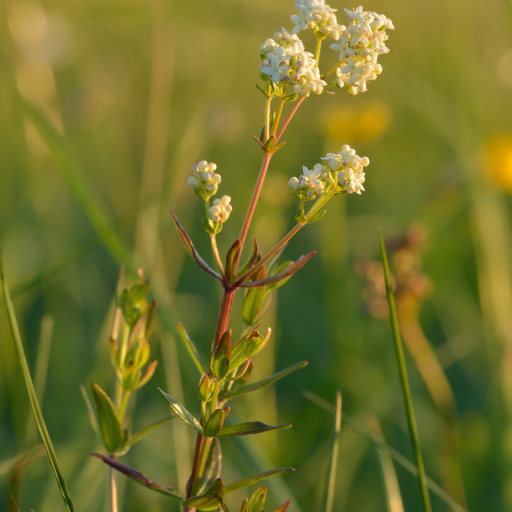
Often called Northern Bedstraw, this delicate perennial is a master of the "airy" look, resembling a low-lying cloud of white lace in midsummer meadows. Its name stems from a centuries-old tradition of using the dried foliage to stuff mattresses, as the scent of the plant acts as a natural insect repellent. In many cultures, it’s considered a plant of comfort and fragrance, often associated with stable-born legends and rural folk medicine.
🔍 How to Identify
- 🌿 The Whorled Leaves: Unlike many plants, its narrow, lance-shaped leaves grow in distinct circles of four around the stem at regular intervals.
- ⏹️ Square Stems: If you roll the stem between your fingers, you’ll notice it is distinctly four-sided and smooth, unlike its "sticky" cousin, Cleavers.
- ☁️ Frothy Flowers: It produces dense, terminal clusters of tiny, star-shaped white flowers, each with exactly four petals, creating a "baby's breath" effect.
🏡 In Your Garden
- 🌱 Native Resilience: As a circumboreal species, it is incredibly hardy and thrives in various conditions, from rocky slopes to moist meadows, making it a "plant-it-and-forget-it" favorite for native gardens.
- 🦋 Pollinator Magnet: The sheer volume of nectar-rich tiny blooms makes it a bustling hub for small bees, hoverflies, and butterflies during the peak of summer.
- 📏 Groundcover Habit: Because it spreads via rhizomes, it’s excellent for filling gaps between larger perennials, providing a "living mulch" that keeps the soil cool and moist.
⚠️ Safety & Toxicity
- ✅ Status: Generally Non-Toxic.
- 🐾 Details: Northern Bedstraw is considered safe for pets and children. While it was historically used in teas and folk remedies, it contains small amounts of coumarin, which gives it a sweet scent but should not be consumed in large quantities by those on blood-thinning medication.
✨ Fun Fact
When the plant is dried, it releases a rich, sweet scent similar to vanilla or freshly mown hay. This fragrance is so long-lasting that a bed stuffed with Northern Bedstraw would remain aromatic for months!

Detailed Care Instructions
To grow Galium boreale, also known as northern bedstraw, follow these steps:
- Obtain seeds or seedlings: Depending on the availability, you can either purchase Galium boreale seeds from a plant nursery or online store or acquire seedlings from a local gardening center or a friend who already grows the plant.
- Choose a suitable location: Galium boreale prefers to grow in full or partial shade, making it an excellent choice for woodland gardens or shaded areas of your yard. Ensure the soil is well-draining to prevent waterlogging.
- Prepare the soil: Till the soil to remove any weeds or grass and make it loose. Add organic matter such as compost or well-rotted manure to improve the soil's fertility and drainage.
- Sow the seeds or transplant the seedlings: If using seeds, sprinkle them on the soil surface, and gently press them down. If using seedlings, dig holes wide and deep enough to accommodate their root systems. Place the seedlings in the holes and backfill with soil, firming it gently around the roots.
- Water regularly: Galium boreale prefers moist soil, so water the plant regularly, especially during hot, dry periods. Avoid overwatering as it can lead to root rot. Check the soil moisture level by inserting your finger into the soil up to the first knuckle. If it feels dry, it's time to water.
- Mulch the soil: Apply a layer of organic mulch, such as wood chips or straw, around the base of the plant. This will help retain moisture, suppress weed growth, and promote healthy root development.
- Provide support if needed: Galium boreale plants are typically low-growing and delicate, but if they become leggy or flop over, you can provide support with stakes or small plant cages.
- Prune regularly: To maintain a compact shape and encourage branching, prune Galium boreale after the flowering period or during early spring. Trim back any excessively long or wayward stems.
- Fertilize occasionally: Galium boreale generally does not require heavy fertilization, as it can obtain enough nutrients from the soil. However, if needed, you can apply a balanced, slow-release fertilizer during the growing season.
- Monitor for pests and diseases: While Galium boreale is relatively resistant to pests and diseases, occasionally keep an eye out for common garden problems like aphids or powdery mildew. Treat any issues promptly with organic or chemical solutions, if necessary.
With proper care and attention, your Galium boreale plant should grow and thrive, providing you with its white, star-shaped flowers and attractive foliage.

Place in a window with dappled sun or a spot in the middle of a room. Or directly in a window facing west or east.

To properly water this particular plant, it is important to consider its natural habitat and water requirements. This plant typically thrives in moist, well-draining soils in areas with cooler temperatures.
When watering, it is best to either use a watering can or a gentle stream of water from a hose. It is important to avoid overwatering, as this can lead to root rot and other issues. Instead, aim to provide consistent moisture by watering deeply once or twice a week during the growing season.
During periods of drought or hot weather, it may be necessary to water more frequently. However, make sure to allow the soil to dry out slightly between watering to prevent issues with root rot.
In addition to watering, it is also important to provide proper drainage by ensuring that the plant is not sitting in standing water. This can be achieved by either planting it in raised beds or by adding drainage holes to the container.
Overall, Galium Boreale requires consistent moisture and good drainage to thrive. By following these simple watering guidelines, you can help ensure that your plant stays healthy and vibrant.
To fertilize Galium Boreale plant, follow these instructions:
- Choose a well-balanced slow-release granular fertilizer with an N-P-K ratio of approximately 10-10-10 or similar.
- Read the instructions on the fertilizer packaging to determine the correct application rate for potted or garden-grown plants.
- Apply the fertilizer during the growing season, preferably in early spring or summer. Avoid fertilizing during winter or dormancy periods.
- If applying to potted plants, sprinkle the granules evenly on the soil surface, keeping them away from the plant's stem or leaves to prevent burning.
- For garden-grown plants, spread the granules evenly around the base of the plant, extending slightly beyond the drip line.
- Gently work the fertilizer into the top layer of the soil using a rake or hand tool.
- Water the plant thoroughly after applying the fertilizer to help the nutrients penetrate the soil and reach the plant's roots.
- Follow the recommended frequency of fertilizer application mentioned on the packaging or adjust based on the plant's specific needs and response.
- Monitor the plant's growth and health regularly, adjusting the fertilizer application if necessary. Excessive or inadequate fertilization can harm the plant.
- Observe any specific fertilizer requirements for Galium Boreale based on local soil conditions, such as acidity or nutrient deficiencies. Adjust fertilizer choice or formula if needed.
Remember to always follow the manufacturer's instructions and adhere to local regulations regarding fertilizer usage to prevent any negative impact on the environment.
Galium Boreale plant prefers a well-draining soil that is rich in organic matter. A pH level of around 5.5 to 7.0 is ideal for this plant. It can tolerate various soil textures, including sandy, loamy, and clay. However, soil with sandy or loamy texture is best suited for this plant as it allows proper aeration and water drainage. The soil should be moist but not waterlogged, as excess water can lead to root rot. It is recommended to add compost or peat moss to the soil to improve its water-holding capacity and nutrient content. Galium Boreale plant thrives in partial to full sunlight, and the soil should be kept evenly moist throughout the growing season.
Galium boreale is a perennial plant that can be propagated through various methods. Here's a detailed explanation of how to propagate this plant:
- Seeds: Collect mature seeds from the plant during autumn. The seeds are small, and they often have a sticky or hook-like structure that aids in their dispersal. To ensure successful germination, it's recommended to stratify the seeds by placing them in a sealed plastic bag with some moist vermiculite or sand and storing them in the refrigerator for a few weeks. This mimics the natural winter conditions that encourage germination. Once stratification is complete, sow the seeds in a well-draining potting mix, lightly cover them with a thin layer of soil, and keep the medium consistently moist. Place the container in a warm and brightly lit location, and germination should occur within a few weeks to a few months.
- Stem Cuttings: Take stem cuttings from a healthy Galium boreale plant during spring or early summer. Choose a healthy, non-flowering stem that is approximately 4-6 inches long. Use a clean and sharp pair of pruning shears to make a clean cut just below a node. Remove the lower leaves, leaving only a few at the top. Dip the cut end in a rooting hormone powder to stimulate root formation, then insert it into a small pot filled with a well-draining potting mix. Mist the cutting to maintain high humidity, and cover the pot with a clear plastic bag or place it in a propagator to create a greenhouse-like environment. Position the cutting in a warm and brightly lit spot but away from direct sunlight. Rooting should occur in 4-8 weeks. Once new growth and a established root system are observed, you can transplant the cutting into a larger container or directly into the garden.
- Division: In early spring or autumn, when the plant is dormant, Galium boreale can be propagated through division. Gently dig up the plant and separate the roots into multiple sections using a sharp and clean knife. Each section should have healthy shoots and a good portion of roots attached. Replant each division in a suitable location in the garden or into separate pots. Water the newly divided plants thoroughly after replanting to promote root establishment and growth.
Remember to provide appropriate care for the propagated Galium boreale plants, including regular watering, well-draining soil, and suitable light conditions. With proper care and propagation techniques, you can enjoy the beauty of Galium boreale in your garden or indoor space.








