Plant Overview
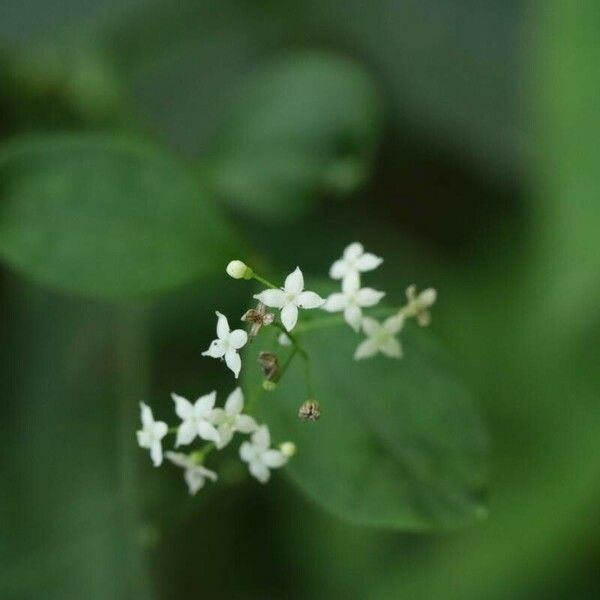
Known as the Japanese Bedstraw, Galium kinuta is a graceful perennial that brings a touch of woodland elegance to any shaded corner. Its name "Kinuta" refers to a traditional Japanese wooden block used for softening cloth, a poetic nod to the plant’s historical presence near villages and its delicate, fabric-like texture. Unlike its "sticky" cousins that cling to your clothes, this variety is prized for its tidy growth and misty white blooms.
🔍 How to Identify
- 🍃 Whorled Leaves: The most striking feature is the leaf arrangement; look for narrow, pointed leaves that grow in neat circles (whorls) of four around the stem.
- ☁️ Cloud-like Blooms: In mid-summer, the plant produces airy clusters of tiny, four-petaled white flowers that create a "snowy" effect above the foliage.
- ⬛ Square Stems: Like many members of the Rubiaceae family, the stems are distinctly four-sided, feeling like a tiny square when rolled between your fingers.
🏡 In Your Garden
- 🌦️ The Woodland Niche: This plant is a "specialist" for dappled sunlight. It thrives in the cool, moist conditions found under the canopy of larger trees or on the north side of a home.
- 🌱 Soil Patience: It prefers rich, loamy soil high in organic matter. Because it grows from a delicate root system, it dislikes being moved once established—pick its "forever home" carefully to avoid transplant shock.
⚠️ Safety & Toxicity
- ✅ Safe Status: Galium kinuta is generally considered non-toxic to humans, cats, and dogs.
- 🧤 Mild Irritation: While it lacks the hooked "velcro" hairs of the common Cleaver, some individuals with very sensitive skin may experience a mild tingle or redness after heavy handling. Wearing garden gloves is always a good practice.
✨ Fun Fact
In classical Japanese literature and music, the "Kinuta" (the sound of beating cloth) was often used as a metaphor for the melancholy and loneliness of autumn—a season when this plant begins to fade back into the forest floor.

Detailed Care Instructions

Place in a window with dappled sun or a spot in the middle of a room. Or directly in a window facing west or east.

Some plants require more regular watering than others, which should be done every few days. It's critical to maintain the soil moist all of the time. The water requirements of the same plant placed in pots with varying sizes will differ. Because the water in the smaller pot evaporates faster than the water in the larger pot, it will require more watering. Regardless of pot size, the surface should constantly be maintained moist.







