Plant Overview
Known affectionately as "Sweet Woodruff" or "Master of the Woods," Galium odoratum is a classic European woodland treasure. Historically tucked into pillows to ensure sweet dreams and used to flavor traditional May Wine, this low-growing perennial transforms shaded garden corners into a lush, emerald carpet. Its most famous trait is its scent—a nostalgic fragrance of freshly mown hay and vanilla that intensifies as the leaves dry.
🔍 How to Identify
- 🌿 The Whorls: The dark green, lance-shaped leaves grow in distinct "whorls" (circles) of 6 to 9 leaflets around a square stem, resembling a series of tiny green ruffs.
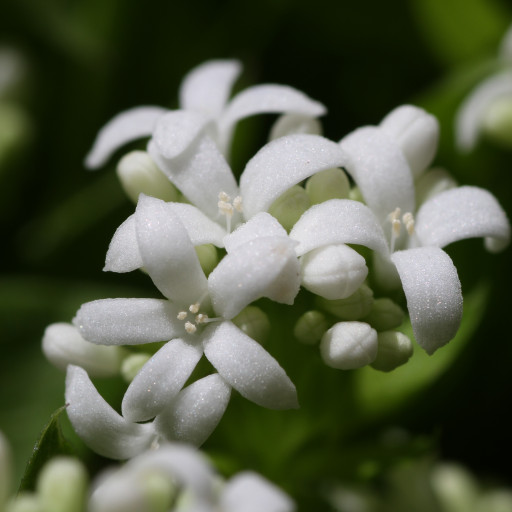
- ⭐ Starry Blooms: In late spring, the plant is topped with airy clusters of tiny, four-petaled white flowers that look like miniature stars floating above the foliage.
- 📏 Growth Habit: It typically forms a dense, uniform mat only 6 to 12 inches tall, spreading outward via underground runners (rhizomes) to fill in gaps.
🏡 In Your Garden
- 🌳 The Shade Specialist: Unlike many flowering plants, Sweet Woodruff thrives in deep shade. It is the perfect solution for the "dead zone" under large trees where grass refuses to grow.
- 💧 Moisture Balance: While it loves consistent moisture and rich, loamy soil, it is surprisingly resilient once established. However, if the soil dries out completely in mid-summer, the plant may go dormant until the cooler autumn rains arrive.
- 🏃 A Polite Spreader: It is a vigorous groundcover, but it isn't "choking" like ivy. It is easy to pull back if it wanders too far into your favorite flower beds.
⚠️ Safety & Toxicity
- ✅ Status: Generally safe for garden handling, but use caution with ingestion.
- 🐾 Pet Watch: While not considered highly toxic, it contains coumarin, which can be harmful to dogs and cats if eaten in very large quantities. It acts as a blood thinner, so it is best to keep curious chewers away.
- 🍽️ Culinary Note: While used traditionally to flavor syrups and wines, excessive consumption should be avoided due to the coumarin content.
✨ Fun Fact
In the Middle Ages, Sweet Woodruff was known as "Churchbrook." It was hung in bunches inside drafty stone churches and homes to act as a natural air freshener, releasing its sweet hay-like scent every time someone brushed past it.

Detailed Care Instructions
| Color | White |
| Soil Ph | 4.8 To 8.3 (Tolerates A Wide Range) |
| Humidity | Normal |
| Soil Type | Medium To Wet And Well-Drained |
| Bloom Time | April And May |
| Difficulty | Easy |
| Plant Type | Perennial Herb |
| Hibernation | Cold Period |
| Mature Size | 6 To 12 Inches Tall With A Spread Of 9 To 18 Inches |
| Native Area | Europe, Northern Africa, Northern Asia |
| Temperature | 14°C - 25°C |
| Sun Exposure | Part Shade To Full Shade |
| Hardiness Zones | 4 To 8, Usa |
To grow Galium odoratum, also known as sweet woodruff, you can follow these steps:
- Choose the right location: Galium odoratum prefers partial shade or filtered sunlight. Find a location that receives morning sun or dappled shade throughout the day.
- Prepare the soil: The plant prefers moist, well-draining soil with a slightly acidic to neutral pH level. Amend the soil with organic matter such as compost or peat moss to improve drainage and fertility.
- Planting method: You can start Galium odoratum from seeds, division, or potted plants. Seeds should be sown in early spring, just barely covered with soil, and kept moist until germination. Division can be done in early spring or fall by separating the clumps and replanting them. Potted plants can be transplanted at any time during the growing season.
- Plant spacing: Depending on the available space, plant Galium odoratum 6-12 inches apart to allow it to spread and fill in the area.
- Watering: Keep the soil consistently moist but not waterlogged. Water deeply when the top inch of soil feels dry. Avoid overwatering to prevent root rot.
- Mulching: Apply a layer of organic mulch around the plants to help retain soil moisture and suppress weed growth. However, avoid covering the crown of the plant as it may cause rotting.
- Care and maintenance: Remove any weeds that may compete with the plant for nutrients and water. Prune Galium odoratum after flowering to maintain its appearance and prevent it from becoming invasive. It is a low-maintenance plant but may benefit from occasional fertilization with a balanced, slow-release fertilizer.
- Propagation: Galium odoratum can spread quickly and may self-seed. To prevent overcrowding, you can propagate by dividing the plant every few years or by collecting and sowing seeds.
By following these steps, you should be able to successfully grow Galium odoratum, a delightful and fragrant groundcover.

Place in a window with dappled sun or a spot in the middle of a room. Or directly in a window facing west or east.

Galium Odoratum plant prefers to be watered deeply and regularly throughout the growing season. It is important to allow the top inch of soil to dry between watering to prevent overwatering and root rot. The best way to water this plant is to use a watering can or hose nozzle that provides a gentle stream of water to avoid damaging the delicate foliage. Additionally, it is recommended to water the plant early in the morning or late in the evening to prevent evaporation and ensure the soil absorbs the water adequately. During droughts or hot summer months, you may need to increase the frequency of watering to keep the soil moist.
To fertilize this plant, it is recommended to use a balanced, slow-release fertilizer in the springtime. Begin by lightly feeding the plant, gradually increasing the amount of fertilizer as the plant grows. Be sure not to over-fertilize, as this can lead to excessive foliage growth at the expense of flowers. Additionally, avoid fertilizing late in the growing season, as this can promote new growth that is vulnerable to cold weather damage. Finally, always follow the instructions on the fertilizer packaging, as different products may have varying application rates and methods.
In order to provide the ideal growing conditions for this particular plant species, it is recommended to use a well-draining soil that is rich in nutrients and has a slightly acidic pH level. A mix of loam, peat moss, and sand is often recommended for this purpose, as it provides the plant's root system with the necessary balance of moisture, air, and nutrient content. Additionally, it is important to ensure that the soil is kept consistently moist, but not waterlogged, in order to promote healthy growth and prevent issues such as root rot. Fertilizer can also be added to the soil periodically to support the plant's nutrient needs. Overall, providing appropriate soil conditions is an essential aspect of successfully cultivating this species.
Galium Odoratum can be propagated by taking stem cuttings in spring or summer. The cuttings should be about 4-6 inches long and cut just below a node. Remove any leaves from the lower two-thirds of the cutting and place in a pot with a well-draining soil mix. Keep the soil moist and place in a bright, shady location.
Alternatively, the plant can also be propagated from seeds. Collect the seeds from the plant and sow them in a seed tray or outdoors in early spring. Cover lightly with soil and keep moist until the seeds germinate. Once the seedlings have grown a few inches tall, they can be transplanted to their permanent location.








