Plant Overview
Known as the Wild Laburnum or Transvaal Privet, Galpinia transvaalica is a hidden gem from the bushveld of South Africa. Despite its common name, its flowers are a snowy white rather than yellow, creating a spectacular "frosted" look against its deep green foliage. It is a favorite among landscapers for its ability to transform from a multi-stemmed shrub into a graceful, small canopy tree.
🔍 How to Identify
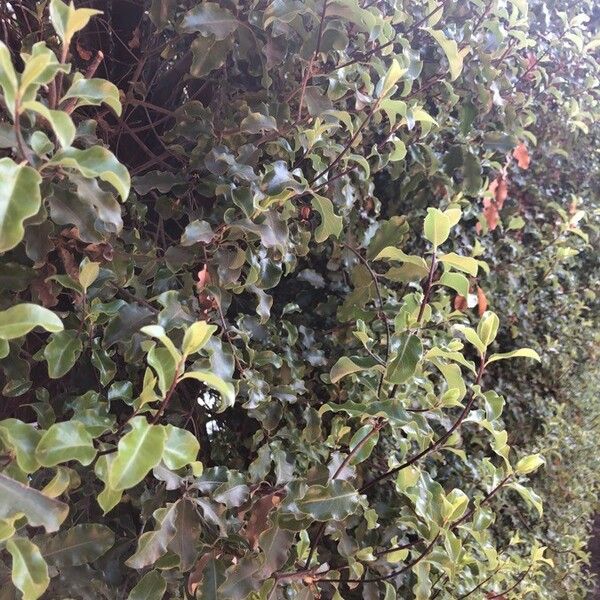
- 🍃 Leaf Texture: The leaves are opposite, stiff, and exceptionally glossy, often featuring wavy margins that catch the light.
- 🌸 Crinkled Blooms: The flowers appear in dense clusters at the branch tips; each tiny white petal has a ruffled, "crepe paper" texture similar to a Crepe Myrtle.
- 🍂 Autumn Flare: While technically semi-deciduous, the foliage often turns a striking reddish-bronze during cold snaps, adding rare seasonal color to warmer climates.
🏡 In Your Garden
- ✂️ Living Screens: Because of its dense growth habit and willingness to be pruned, it makes an excellent, bird-friendly hedge or "narrow space" filler.
- ☀️ Sun Seeker: This tree thrives in full sun; while it is remarkably drought-tolerant once established, it needs protection from heavy frost during its first few winters.
- 🦋 Wildlife Magnet: The nectar-rich flowers are a massive draw for butterflies and honeybees, while the small, dark fruits attract various fruit-eating birds.
⚠️ Safety & Toxicity
- ✅ Safe Status: Galpinia transvaalica is generally considered non-toxic and safe for residential gardens.
- 🐾 Pet & Child Friendly: There are no recorded incidents of significant toxicity to dogs, cats, or humans, making it a "worry-free" choice for family landscapes.
✨ Fun Fact
Though it is called the "Wild Laburnum," it isn't actually related to the true European Laburnum. It actually belongs to the Lythraceae family, making it a close cousin to the popular ornamental Crepe Myrtle!

Detailed Care Instructions
To grow Galpinia Transvaalica plant, you can follow these steps:
- Obtain seeds or young plants from a reputable nursery or online supplier. Galpinia Transvaalica is a native plant to South Africa but can be found in some specialty nurseries.
- Choose a suitable location for planting. Galpinia Transvaalica prefers full sun but can tolerate partial shade. Ensure the soil is well-draining.
- Prepare the soil by loosening it with a garden fork or tiller. Remove any weeds, rocks, or debris from the area.
- Dig a hole slightly larger than the root ball of the plant. Place the plant in the hole, ensuring it is at the same depth as its previous container.
- Backfill the hole with soil, gently firming it around the base of the plant. Water thoroughly to settle the soil and remove any air pockets.
- Apply a layer of organic mulch around the base of the plant to help retain moisture and prevent weed growth. Leave a small gap around the stem to avoid rotting.
- Water the plant regularly, especially during dry periods. However, avoid overwatering, as Galpinia Transvaalica prefers slightly drier conditions compared to other plants.
- Fertilize the plant once a year in early spring with a balanced, slow-release fertilizer. Follow the instructions on the fertilizer packaging for application rates.
- Prune the plant lightly after flowering to maintain its shape and remove any dead or damaged growth. Avoid heavy pruning, as Galpinia Transvaalica tends to have a naturally bushy and well-branched form.
- Protect the plant from frost and extreme cold temperatures, especially if you live in a colder climate. Consider covering the plant or moving it to a sheltered spot during winter if needed.
Following these steps should help you successfully grow Galpinia Transvaalica plant in your garden or landscape. Remember to provide it with the necessary care and maintenance for optimal growth and health.

Place in a bright room that is sun drenched almost all day. Or directly in a south-facing window.

To water this particular plant, it is important to ensure that the soil around it is moist but not too wet. One way to do this is to test the soil by inserting your finger into it up to about an inch (2.5 cm) deep. If the soil feels dry at this depth, it is probably time to water the plant.
When watering, it is best to use a watering can or hose with a gentle flow and aim to water around the base of the plant rather than directly onto the leaves or flowers. This helps to prevent damage and fungal diseases.
It is important not to overwater this plant as it can lead to root rot and other problems. As a general rule of thumb, it is better to underwater than overwater. It is best to water deeply and then allow the soil to dry out a bit before watering again.
It is also important to consider the humidity levels around the plant. If the air is too dry, it can cause the leaves to brown and crispy. To combat this, you can mist the plant with water or place a tray of water nearby to increase humidity levels.
Overall, it is important to monitor the soil moisture levels and adjust watering accordingly to ensure healthy growth for this plant.
To fertilize this plant, first ensure that the soil is well-draining and has a pH level between 6.0 and 7.0. Then, apply a balanced fertilizer that contains equal amounts of nitrogen, phosphorus, and potassium. Apply the fertilizer once a month during the growing season, which typically occurs in the spring and summer months. Avoid over-fertilizing, as this can damage the roots and leaves of the plant. Water the plant thoroughly after applying fertilizer to ensure proper absorption.
The Galpinia Transvaalica plant prefers well-drained soil with a slightly acidic to neutral pH level, between 5.5 to 7.5. It grows well in sandy or loamy soils and can tolerate some clay content. Organic matter such as compost or manure can be added to the soil to improve its fertility. It is important to avoid using soil that is too heavy, as it can retain too much moisture and lead to root rot. Additionally, the plant requires regular watering, so it is important to ensure that the soil has good drainage to prevent waterlogging.
To propagate this plant, it is necessary to take a cutting from a healthy specimen. The cutting should be around 6 inches long with a few sets of leaves. Once the cutting is taken, it should be immediately immersed in water to prevent air bubbles from forming in the stem.
Next, the lower leaves should be removed to expose the node where roots will form. The cutting should be dipped in rooting hormone and planted in well-draining soil. It should then be placed in a sheltered location with bright, indirect sunlight.
Regular misting will help the cutting to establish roots, which should take around 4-6 weeks. During this time, it's important to keep the soil moist but not waterlogged. Once the cutting has established roots, it can be transplanted to a larger pot or planted outdoors.
Propagation can also be achieved by collecting seed from the plant, but this method is less common as Galpinia Transvaalica plant is primarily propagated through cuttings.








