Plant Overview
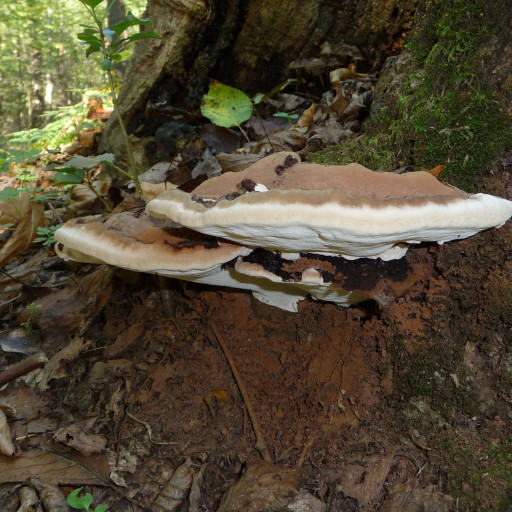
Known as the "Artist’s Bracket" or "Artist’s Conk," this mushroom is a permanent fixture of the forest. Unlike many fungi that sprout and vanish in days, this sturdy shelf-fungus can live for years, growing larger and thicker with every passing season. It is famous in the world of nature crafts because its white underside serves as a permanent, natural canvas for artists.
🔍 How to Identify
- 🎨 The Canvas (Pores): The underside is brilliant white and covered in tiny pores. If you scratch it with a fingernail or a twig, it immediately turns dark brown, creating a permanent line.
- 🧱 The Shelf (Cap): The top is woody, flat, and often lumpy. It ranges from grayish-brown to a dull mahogany color and usually feels as hard as a piece of wood.
- 🪵 The Attachment: It lacks a stem (stipe). Instead, it grows directly out of the side of a tree like a sturdy, horizontal bracket or shelf.
🌲 Habitat & Ecology
- 🍂 Nature’s Recycler: This fungus is a "saprobic" powerhouse, meaning it breaks down dead or dying hardwood trees like Oak, Maple, and Beech, returning vital nutrients to the soil.
- 🔄 A Perennial Presence: Unlike soft mushrooms, this one is perennial. You can see distinct growth rings on the top, similar to the rings of a tree, marking each year of its life.
⚠️ Safety & Toxicity
- 🚫 Status: Non-toxic but inedible.
- 🦷 Details: While not poisonous, the Artist's Conk is as tough as a piece of lumber. You cannot eat it because it is far too woody and corky for the human digestive system to process.
- 🌿 Medicinal Note: In some cultures, it is dried and ground into a powder for medicinal teas, but it should never be consumed raw or without expert guidance.
✨ Fun Fact
One single Artist's Bracket can release up to 5 billion spores per day for several months. In the height of its release season, you can often find a fine dusting of "rusty" brown powder coating the ground and the top of the mushroom itself—these are its millions of offspring!

Detailed Care Instructions

Place in a dark room with little light, like a dark bedroom or a spot far away from a window or directly in a north-facing window.
To water this plant, first examine the surrounding soil to determine if it is dry or moist. If the soil is dry, pour water slowly and evenly around the base of the plant, ensuring that the water reaches the roots. Avoid overwatering the plant, as this can lead to root rot and other issues. It is important to water this plant consistently, but not excessively, to maintain its health and encourage growth.
The ideal soil to use for Ganoderma Applanatum is a nutrient-rich, well-draining substrate that is slightly acidic. It should have a pH level between 5.5 to 7.5. The soil should be kept consistently moist, but not overly saturated as this can cause root rot. The best type of soil to use can vary depending on the climate and environmental conditions, but a mix of organic matter such as peat moss or compost and mineral components such as perlite or vermiculite can create an ideal growing medium. It is important to avoid using soil that has been treated with pesticides or other chemicals, as this can negatively affect the growth and health of the plant. Regular fertilization using a balanced fertilizer can help to maintain the health and vitality of the plant.







