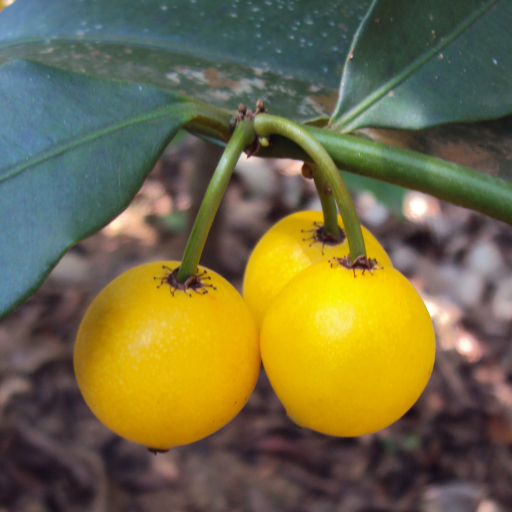
Plant Overview
Often called the "Lemon Drop Mangosteen" or Mameyito, this vibrant evergreen is a hidden gem from the rainforests of Central America. Unlike its finicky cousin, the Purple Mangosteen, this hardy tree is much more forgiving and adaptable for home growers. It is a favorite for "edible landscapers" who want a tropical aesthetic combined with a prolific harvest of zesty, refreshing fruit.
🔍 How to Identify
- 🍃 Glossy Foliage: The leaves are opposite, lance-shaped, and possess a thick, leathery texture with a deep emerald shine that lasts all year.
- 🌼 Subtle Blooms: It produces tiny, delicate cream or white flowers that emerge directly from the woody branches rather than just the tips.
- 🍋 Wrinkled Jewels: The fruit is small and round (about the size of a large cherry) with a distinctively "pebbly" or slightly wrinkled bright yellow skin when fully ripe.
🏡 In Your Garden
- 🏺 Container King: Because it naturally grows as a small tree or large shrub, it is perfectly suited for large pots on sunny patios. This allows gardeners in cooler climates to move it indoors during winter.
- 🌦️ Resilient Nature: While it craves humidity, it is surprisingly drought-tolerant once established and can withstand light, brief frosts that would be fatal to other tropical fruit trees.
- ✂️ Low Maintenance: It naturally maintains a tidy, pyramidal shape, meaning you won’t need to spend hours pruning to keep it looking ornamental and organized.
⚠️ Safety & Toxicity
- 🍏 Safe & Delicious: The white, pulpy flesh of the fruit is safe to eat and highly prized for its sweet-tart flavor, reminiscent of a lemon-infused mangosteen.
- 🐾 Pet & Human Safety: There are no known toxicities associated with this plant for humans, dogs, or cats.
- 💧 Sticky Sap: Like many in the Garcinia family, the bark and unripe fruit contain a yellow latex (sap). While not poisonous, it is incredibly sticky and can be difficult to wash off skin or clothing.
✨ Fun Fact
Most members of the Mangosteen family are notoriously slow growers, often taking a decade to produce fruit. Garcinia intermedia is the "sprinter" of the family, often rewarding gardeners with its first harvest in as little as two to four years!

Detailed Care Instructions
To grow Garcinia intermedia (Lemon drop mangosteen) plant, follow these steps:
- Climate: Garcinia intermedia thrives in humid and tropical climates. Ensure the temperature remains above 60°F (15°C) consistently throughout the year.
- Seed selection: Obtain ripe Garcinia intermedia seeds from a reputable source. Fresh seeds are generally better for germination.
- Germination: Soak the seeds in water for 24 hours before planting. Place them in a moist seed-starting mix or lightly moistened paper towel in a warm location. Keep the temperature consistently between 75-85°F (24-29°C). Germination usually takes 2-3 weeks.
- Planting: Once the seeds have germinated and sprouted, it's time to plant them. Prepare a well-draining planting pot or area in the garden. Use a mix of equal parts potting soil, sand, and organic matter. Plant the seedling at the same depth it was in the germination container.
- Light: Provide the Garcinia intermedia plant with bright indirect sunlight. It can tolerate some direct sunlight, but excessive heat and sun can damage the plant.
- Watering: Keep the soil consistently moist, but avoid waterlogging. Water the plant when the top inch of soil feels dry. Adjust watering frequency based on the climate and humidity levels.
- Fertilizer: Use a balanced fertilizer with a ratio of 10-10-10 or a slow-release granular fertilizer. Apply the fertilizer every three months during the growing season, following the instructions on the packaging.
- Pruning: Prune the plant to maintain a desired shape and remove dead or diseased branches. Pruning also helps control its size if grown indoors.
- Pests and diseases: Watch out for common pests like aphids, scales, or mealybugs. Treat them with insecticidal soap or horticultural oil. Keep an eye out for fungal diseases and deal with them promptly by adjusting watering practices or treating with suitable fungicides.
- Pollination: Garcinia intermedia usually requires cross-pollination for fruit production. If growing indoors, hand pollination may be necessary. Gently transfer pollen from the male to the female flowers using a small brush or cotton swab.
Remember that growing Garcinia intermedia from seeds requires patience, and it may take a few years before the plants start bearing fruit.
To water this plant, it is important to ensure that the soil is slightly moist but not waterlogged. This can be achieved by watering the plant when the top layer of soil feels dry to the touch. When watering, it is best to water the soil directly around the plant's base to allow for optimal root absorption. It is not advisable to wet the leaves or foliage, as this may encourage the growth of diseases or pests. Additionally, be sure to avoid over-watering the plant as this can lead to root rot and other related issues.
To fertilize the Garcinia Intermedia plant, follow these instructions:
- Choose a balanced fertilizer: Look for a slow-release granular fertilizer with a balanced ratio of nitrogen (N), phosphorus (P), and potassium (K). A balanced fertilizer would typically have equal or similar values for these three elements (e.g., 10-10-10 or 14-14-14).
- Dilute the fertilizer: Mix the fertilizer with water following the package instructions. Typically, you will need to dilute one tablespoon of fertilizer in one gallon (3.8 liters) of water. Adjust the amount proportionally for a smaller or larger container.
- Apply the fertilizer in the growing season: Fertilize the Garcinia Intermedia plant during its active growth period, which is usually in spring or summer. Avoid fertilizing during the dormant period (typically in winter).
- Water the plant beforehand: Before applying the fertilizer solution, make sure the soil is slightly moist. Watering the plant prior to fertilization helps prevent any potential harm to the roots caused by the concentrated fertilizer.
- Fertilize with care: Apply the diluted fertilizer solution to the soil around the base of the Garcinia Intermedia plant. Avoid directly spraying the solution on the foliage or flowers as it may cause damage.
- Follow the recommended frequency: Check the fertilizer package label for specific instructions on how often to fertilize. Usually, fertilizing every 4-6 weeks during the active growth period provides sufficient nutrients to the plant.
- Monitor the plant's response: Keep an eye on the plant's growth and overall health. If the leaves start turning yellow or you notice signs of overfertilization (such as leaf burn or wilting), reduce the frequency or dilute the fertilizer further for the next application.
Remember to always follow the manufacturer's instructions on the fertilizer packaging and consult local gardening resources for any specific considerations or differences based on your region.
Garcinia intermedia thrives best in soil that has good drainage and moisture retention. The soil must be slightly acidic with a pH range of 5.5 to 6.5. It can be grown in loamy soils with high organic content but also tolerates sandy soils. It is recommended to mix the soil with organic matter like compost or well-rotted manure to improve soil quality and nutrient content. The plant needs a constantly moist but not waterlogged soil, so it is best to avoid compacted or heavy clay soils. A layer of mulch around the plant can help retain moisture in the soil. It is important to avoid using soil that has been treated with chemicals or pesticides, as this can harm the plant and affect the fruit quality.
Garcinia intermedia, a tropical fruit-bearing tree, can be propagated using several methods. Here is a detailed guide on how to propagate Garcinia intermedia plant without mentioning its common names:
- Seed propagation:
- Collect fresh, ripe seeds from mature Garcinia intermedia fruits.
- Soak the seeds in water for 24-48 hours to soften the outer coating.
- Prepare a nursery container or seed tray with rich, well-draining soil.
- Sow the seeds at a depth of approximately 1 inch (2.5 cm) in the soil.
- Water lightly and place the container in a warm, humid location with indirect sunlight.
- Ensure the soil remains moist but not waterlogged.
- Germination typically takes 3-6 weeks.
- Once the seedlings have developed a few true leaves, they can be transplanted into individual pots or a permanent location in the garden.
- Collect fresh, ripe seeds from mature Garcinia intermedia fruits.
- Stem cutting propagation:
- Select a healthy stem from an established Garcinia intermedia tree.
- Using a clean, sharp knife, take a cutting that is 6-8 inches (15-20 cm) long, making the cut just below a leaf node.
- Remove the lower leaves, leaving only 2-3 leaves at the top.
- Dip the cut end of the stem in a rooting hormone powder or gel to promote root growth.
- Prepare a pot with a well-draining growing medium, and create a hole using a pencil or your finger.
- Insert the cutting into the hole and gently firm the soil around it.
- Place the pot in a warm, shaded location with high humidity.
- Mist the cutting regularly and keep the soil consistently moist, but avoid overwatering.
- Rooting can take several weeks to a few months. Once roots have developed, the cutting can be transplanted into a larger container or directly into the ground.
- Select a healthy stem from an established Garcinia intermedia tree.
- Air layering propagation:
- Select a healthy branch of suitable thickness on a mature Garcinia intermedia tree.
- Make a 2-inch (5 cm) downward slanting cut halfway through the branch, around 10-12 inches (25-30 cm) from the tip.
- Dust the cut area with rooting hormone powder.
- Surround the cut area with damp sphagnum moss, wrapping it with plastic wrap to secure and maintain moisture.
- After a few weeks, roots should start forming within the moss.
- Once a significant root system has developed, cut the branch just below the rooted section and remove the plastic wrap.
- Plant the rooted section in a pot or directly in the ground, ensuring the soil is loose and well-draining.
- Keep the newly planted cutting consistently moist, providing it with partial shade to protect it from direct sunlight.
Remember, Garcinia intermedia plants thrive in warm, tropical conditions and prefer well-draining soil. Providing adequate water, humidity, and protection from extreme temperatures will aid the success of propagation efforts.
- Select a healthy branch of suitable thickness on a mature Garcinia intermedia tree.








