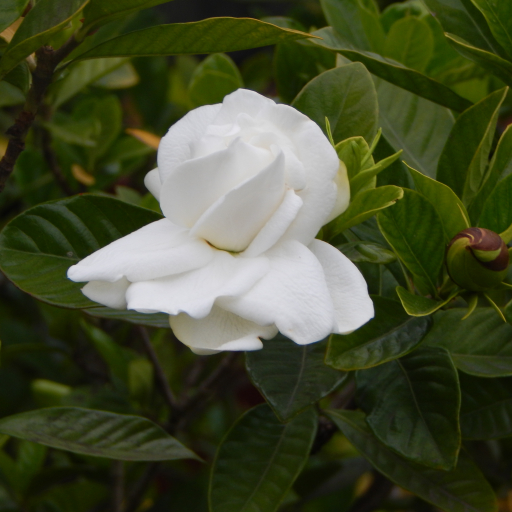
Plant Overview
Known as "Cape Jasmine" or the "Scent of the South," the Gardenia augusta is the undisputed queen of fragrant gardens. With its waxy, ivory-white blooms and deep emerald foliage, it has long been a symbol of elegance and secret love. Despite its beauty, it is famously "diva-like," demanding specific conditions and a little extra pampering to show off its stunning, perfume-heavy flowers.
🔍 How to Identify
- 🌿 Glossy Foliage: The leaves are thick, leathery, and have a high-shine finish that looks polished and vibrant even when the plant isn't in bloom.
- 🤍 Velvety Blooms: The flowers are creamy white, often featuring doubling layers of petals, and transition to a soft, buttery yellow as they begin to age.
- 👃 Signature Scent: Its fragrance is heavy, sweet, and unmistakable; it is most potent during the evening and early morning hours.
🏡 In Your Garden
- 🛁 Humidity Lovers: Unlike many hardy shrubs, Gardenias crave moisture in the air. If you live in a dry climate, they appreciate being grouped with other plants or placed near a water feature to create a humid micro-climate.
- 🍴 Acidic Appetites: These plants are "acid-loving." If the leaves start turning yellow while the veins stay green (a condition called chlorosis), it’s a cry for help—usually meaning the soil pH is too high for them to absorb nutrients.
- 🚫 The "Diva" Factor: Gardenias hate being moved. They have sensitive root systems and are known to drop their flower buds in a "temper tantrum" if they experience sudden temperature shifts or physical relocation.
⚠️ Safety & Toxicity
- 🐾 Toxic to Pets: Gardenias contain geniposide and saponins, which are toxic to dogs, cats, and horses. Ingestion typically leads to mild vomiting, diarrhea, or hives.
- 👶 Human Caution: While not considered highly toxic to humans, the leaves and berries can cause minor stomach upset if swallowed by curious children. The scent, however, is perfectly safe and widely used in aromatherapy.
✨ Fun Fact
In the Victorian "Language of Flowers," gifting a Gardenia was a silent way of telling someone, "I think you are lovely." They were often sent by anonymous admirers to express a secret crush or a hidden romance.

Detailed Care Instructions
To grow a Gardenia Augusta plant, follow these steps:
- Location: Choose a location that receives bright, indirect sunlight. Gardenias prefer temperatures between 65-75°F (18-24°C), so avoid placing them in drafty or excessively hot areas.
- Soil: Use well-draining, acidic soil with a pH level between 5.0-6.5. You can create this by mixing equal parts of peat moss, sand, and garden soil.
- Watering: Keep the soil consistently moist, but not soggy. Water the plant when the top inch of soil feels dry to the touch. Gardenias prefer high humidity, so consider misting the leaves with water regularly or placing a tray filled with water and pebbles nearby to increase humidity.
- Fertilizer: Gardenias require regular feeding. Use a fertilizer specially formulated for acid-loving plants, such as one with a ratio of 6-2-4 or 4-1-1. Apply the fertilizer according to the instructions on the package, usually every 4-6 weeks during the growing season (spring to fall).
- Pruning: Trim the plant regularly to maintain its desired shape and promote branching. Prune after flowering to remove dead or wilted blooms.
- Pests and diseases: Gardenias are susceptible to pests like aphids, whiteflies, and mealybugs. Inspect the plant regularly and treat any infestations promptly with an appropriate pesticide or insecticidal soap. Watch out for diseases like powdery mildew and root rot, and ensure proper ventilation and air circulation to prevent them.
- Winter care: If you live in a colder climate, remember that Gardenia Augusta is not frost-tolerant and needs protection during winter. Either bring the plant indoors or cover it with a frost blanket.
- Propagation: You can propagate Gardenia Augusta through softwood cuttings. Take 4-6 inch (10-15 cm) long cuttings from healthy, non-flowering branches in spring or early summer. Remove the lower leaves and dip the cut end in rooting hormone. Plant the cutting in a pot filled with moistened rooting medium, and keep it in a warm, bright spot until roots develop.
By following these steps, you can successfully grow a Gardenia Augusta plant and enjoy its fragrant flowers and glossy green leaves.

Place in a window with dappled sun or a spot in the middle of a room. Or directly in a window facing west or east.

To water this particular plant, it is important to ensure that the soil is consistently moist, but not waterlogged. This can be achieved by watering deeply, but infrequently, to ensure the water reaches the roots and does not simply sit on the surface. When watering, it is important to avoid getting water on the leaves and flowers, as this can lead to fungal diseases. It is also important to ensure that the pot or container has drain holes to prevent excess water buildup. During dry spells or periods of intense heat, extra watering may be necessary to prevent the plant from drying out.
To properly fertilize this plant, it is important to use a fertilizer that is specifically designed for acid-loving plants such as this one. This will provide the necessary nutrients without changing the soil pH level. Fertilizers should be applied during the growing season (spring to fall) and according to the manufacturer's instructions. It is important to not over-fertilize as this can cause burning of the leaves and damage to the root system. It is recommended to water the plant before and after fertilizing to ensure the nutrients are properly absorbed.
The recommended soil to use with the plant commonly known as "Gardenia Augusta" is a well-draining, acidic soil with a pH level between 5.0 and 6.0. This soil should be rich in organic matter and should have good water-holding capacity. It is important to avoid using soil that is too heavy or compacted, as this can lead to poor drainage and root rot. For best results, amendments such as peat moss, compost, and perlite can be added to improve soil structure and nutrient availability. It is also recommended to mulch around the base of the plant to help retain moisture and regulate soil temperature.
Gardenia Augusta can be propagated through various methods such as stem cuttings, layering, and seed propagation. One of the most common methods is stem cutting propagation, which involves cutting a 4-6 inch long stem from the parent plant, removing any leaves from the lower half of the stem, and dipping it in rooting hormone powder. The stem is then planted in a pot filled with well-draining soil and kept moist.
Another method is layering, which involves bending a lower branch of the parent plant and burying it in soil, leaving the tip of the branch exposed. This will encourage new roots to grow from the buried section. Once the roots have formed, the new plant can be separated from the parent plant and transplanted into its own pot.
Seed propagation can also be done with Gardenia Augusta, but it is a more challenging method as the seeds have a low germination rate and require special conditions to grow. The seeds should be planted in a pot with well-draining soil and placed in a warm, humid environment. It can take several weeks or months for the seeds to germinate.
Regardless of the method chosen, it is important to keep the soil moist and provide the new plant with sufficient sunlight or artificial light. It may take several months for the new plants to fully establish roots and begin to grow.
Common pests of the common gardenia include Scale insect, spider mites, aphids. Make a habit of checking your common gardenia frequently for pests so that any infestations can be caught and managed early.








