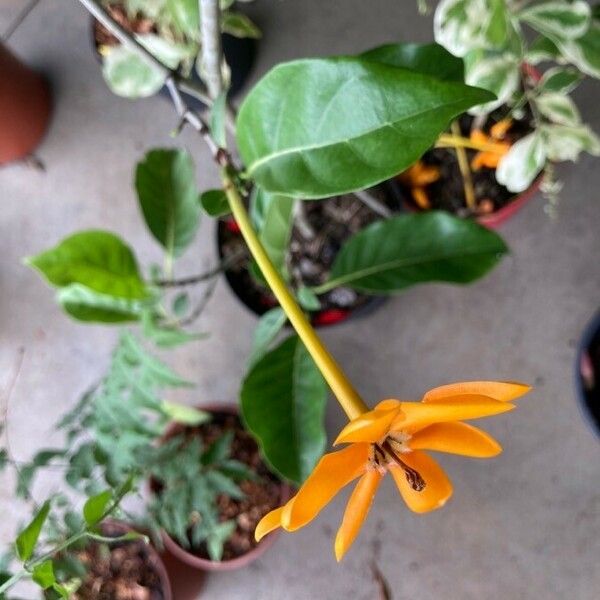
Plant Overview
Often called the Kedah Gardenia or the Golden Gardenia, this stunning tropical tree is a sensory masterpiece. Native to the lush forests of Malaysia and Thailand, it is famous for its "chameleon" flowers that change color over their lifespan, filling the air with a heavy, jasmine-like perfume that can be smelled from yards away.
🔍 How to Identify
- 🌼 Color-Shifting Blooms: The most striking feature is the flowers; they open as a creamy ivory white, transition to a bright lemon yellow, and finally settle into a deep, rich golden orange before falling.
- 🍃 Glossy Foliage: The leaves are large, oval, and have a high-gloss finish with deeply impressed veins that give them a "quilted" or ribbed texture.
- 🌳 Growth Habit: Unlike the common bushy gardenia, Carinata grows as a small, elegant tree or a very large shrub, often reaching 10 to 15 feet in height.
🏡 In Your Garden
- 🧪 Soil Sensitivity: Like many of its cousins, this plant is an "acid-lover." If the soil becomes too alkaline, the leaves will turn yellow (chlorosis) because the plant can't "grab" the iron it needs.
- ☀️ Sun & Humidity: It thrives in high humidity and bright, indirect light. While it loves the sun, its roots are sensitive; a thick layer of organic mulch helps keep the root zone cool and moist without becoming waterlogged.
- ✂️ Slow & Steady: It is a relatively slow grower and doesn't require aggressive pruning. It prefers to develop its natural, rounded canopy over time.
⚠️ Safety & Toxicity
- 🐾 Pet Caution: While not considered high-risk like lilies, Gardenias contain substances like geniposide and gardenoside which can cause mild vomiting or diarrhea in dogs and cats if ingested in large quantities.
- 👶 Human Safety: The plant is generally safe for humans to touch and smell, though the intensely fragrant oils can occasionally cause a headache for those very sensitive to strong scents.
✨ Fun Fact
In its native regions, the wood of the Golden Gardenia is remarkably hard and fine-grained; it was historically used to craft small, durable items like tool handles and even traditional combs!

Detailed Care Instructions
To grow a Gardenia Carinata plant, follow these steps:
- Choose a suitable location: Gardenia Carinata plants prefer bright, indirect sunlight. Choose a spot that receives morning sun and afternoon shade, or add a shade cloth to protect the plant from intense sunlight.
- Prepare the soil: Gardenia Carinata plants prefer acidic soil with good drainage. Amend the soil with organic matter like compost or peat moss to improve drainage and acidity. Avoid using limestone or alkaline soil amendments.
- Planting: Dig a hole that is slightly wider and deeper than the root ball of the plant. Gently remove the plant from its pot, loosening the roots if they are tightly bound. Place the plant in the hole and fill it with soil, firming it gently around the roots.
- Watering: Gardenia Carinata plants prefer consistently moist soil, but they don't like to sit in water. Water deeply immediately after planting, and then water regularly to keep the soil evenly moist. Avoid overwatering, which can lead to root rot.
- Fertilizing: Use a balanced, acidic fertilizer specifically formulated for Gardenias. Follow the product instructions for application rates and frequencies. Fertilize the plant during the growing season, usually from spring to fall.
- Pruning: Prune Gardenia Carinata plants in early spring or right after they finish flowering. Remove any dead, damaged, or diseased branches. Prune lightly to shape the plant, but avoid heavy pruning, as it can reduce flowering.
- Pest and disease control: Gardenia Carinata plants can be susceptible to pests like aphids, mealybugs, and scale insects. Inspect your plant regularly and treat any infestations promptly with a suitable insecticide or by using natural methods like spraying with soapy water. Monitor for diseases like powdery mildew, which can be controlled by improving airflow around the plant and using a fungicide if necessary.
- Winter care: Gardenia Carinata plants are frost-tender and should be protected from cold temperatures. If you live in an area with harsh winters, consider growing the plant in a container that can be moved indoors during winter. Alternatively, cover the plant with a frost blanket or bring it indoors to a cool, bright location.
By following these steps, you can successfully grow a Gardenia Carinata plant and enjoy its beautiful fragrant flowers.

Place in a bright room that is sun drenched almost all day. Or directly in a south-facing window.

The Gardenia Carinata plant should be watered regularly, but not excessively. The soil should be kept moist, but not waterlogged. It is important to water the plant deeply, so that the roots receive enough moisture. The frequency of watering will depend on the climate, humidity, and soil type. During hot and dry weather, the plant will require more frequent watering. It is important to avoid getting water on the foliage, as this can lead to fungal diseases. Using a watering can or drip irrigation system is recommended. Watering in the morning is also ideal, as this allows the plant to absorb the water before the heat of the day sets in.
To properly fertilize this plant, use a high-acid, slow-release fertilizer in early spring and mid-summer. Mix the fertilizer with soil, then water deeply after application to ensure it reaches the plant roots. Avoid applying too much fertilizer as it can cause burning of the plant's leaves. Additionally, incorporate organic matter, such as compost, into the soil annually to further improve the plant's nutrient uptake.
The ideal soil to use with this plant is an acidic, well-draining soil with a pH ranging from 5.0 to 6.5. The soil should also be rich in organic matter and nutrients. Make sure to avoid using heavy, clay soils as they can cause drainage problems and lead to root rot. Adding peat moss, compost, or well-aged manure to the soil before planting can improve its quality and provide the necessary nutrients for healthy growth. It is also important to ensure proper drainage by using a container with drainage holes or planting in an area with good drainage.
To propagate this plant, you will need to take stem cuttings about 4-6 inches long from a healthy, mature plant. Cut the stem just below a node and remove the lower leaves from the cutting. Dip the cut end of the stem in rooting hormone powder and plant it in a mixture of peat moss and perlite or vermiculite. Keep the soil moist and place the cutting in a warm, humid location with bright, indirect sunlight. Covering the cutting with a plastic bag or container can help to maintain humidity. After several weeks, the cutting should develop roots and new growth. Once the roots have developed, transplant the new plant into a larger pot with well-draining soil and continue to care for it as you would a mature Gardenia Carinata plant.








