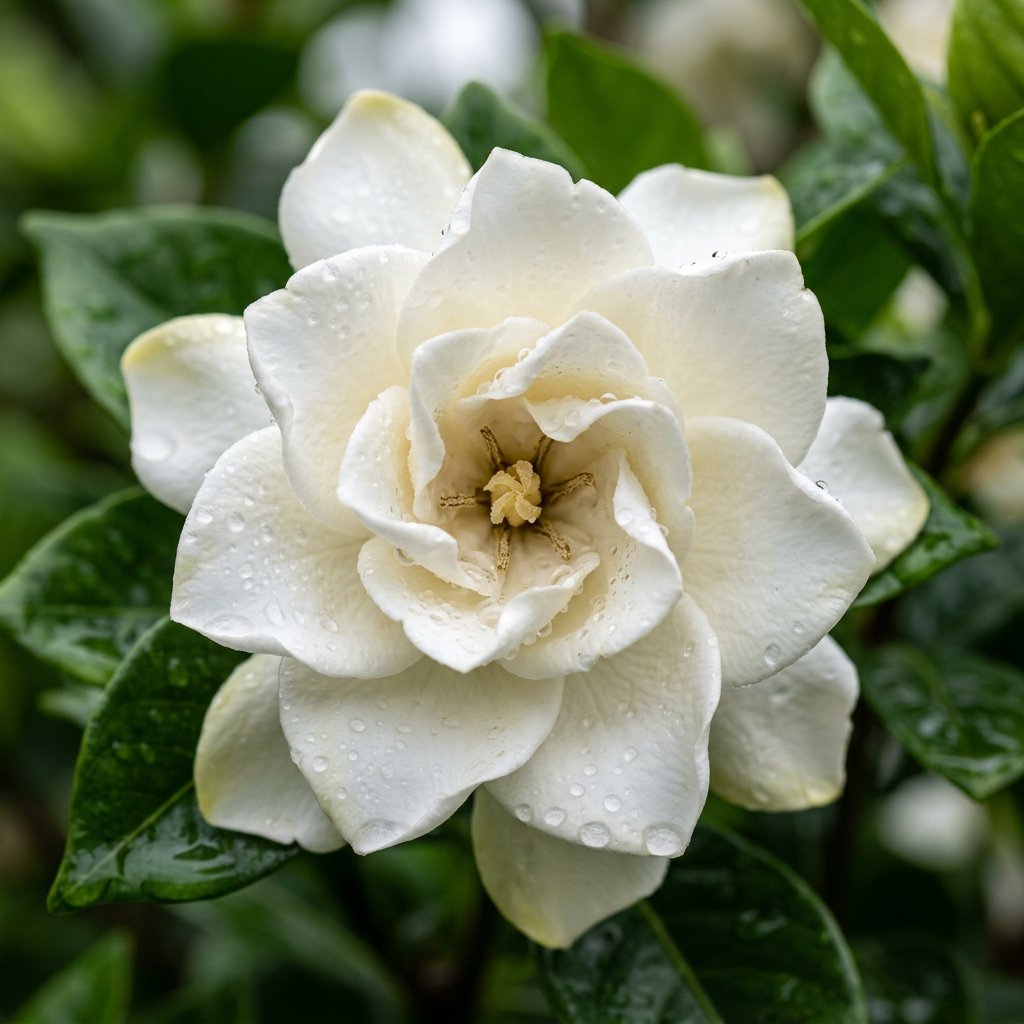
Plant Overview
Known as the "Cape Jasmine," the Gardenia is the undisputed crown jewel of the fragrant garden. With its porcelain-white blossoms and a scent so rich it defines high-end perfumery, this evergreen shrub has been a symbol of secret love and elegance since the 18th century. Originally hailing from East Asia, it is often nicknamed the "Diva of the Garden" because of its refined beauty and specific, sophisticated tastes.
🔍 How to Identify
- 🍃 The Foliage: Look for leathery, lance-shaped leaves that boast a deep, mirror-like emerald gloss. They remain vibrant green year-round.
- 🤍 The Blooms: Flowers are matte, waxy-white, and can be single or double-layered, looking much like a hybrid between a rose and a camellia.
- 👃 The Scent: Perhaps the most iconic identifier; it produces a heavy, sweet, and creamy floral fragrance that is strongest in the evening.
🏡 In Your Garden
- 🧪 Acidic Appetites: Unlike many garden plants, Gardenias are "acid-loving." They require a low pH soil to absorb iron; if their leaves turn yellow while the veins stay green, they are likely craving more acidity.
- 💧 The Humidity Balance: These plants breathe through moisture. While they love humid air and consistent water, they are prone to root rot if the soil doesn't drain quickly. Think "moist sponge," not "puddle."
- 🚫 Don't Move Me: Gardenias are notoriously sensitive to change. Once planted, they dislike being moved or having their roots disturbed, which can cause "bud drop"—a heartbreaking event where the plant drops its flowers before they even open.
⚠️ Safety & Toxicity
- 🐾 Pet Warning: Gardenias contain geniposides and saponins, which are toxic to dogs, cats, and horses.
- 🤢 Symptoms: Ingestion can lead to mild to moderate stomach upset, vomiting, or diarrhea. Keep these "divas" in a spot where curious pets won't try to take a snack.
✨ Fun Fact
Jazz legend Billie Holiday was famous for almost always wearing a large, white Gardenia tucked behind her ear during her performances. Because the flowers bruise easily and turn brown if touched, she had to handle them with extreme care to keep them pristine under the stage lights!

Detailed Care Instructions
| Color | White, Cream |
| Soil Ph | 5.0-6.5 |
| Humidity | High |
| Lighting | Part Sun |
| Toxicity | Poisonous |
| Soil Type | Rich, Well-Drained Soil; Peat-Based Potting Mix For Container Plants |
| Bloom Time | Seasonal Bloomer |
| Difficulty | Medium |
| Plant Type | Flowering Broadleaf Evergreen |
| Mature Size | 5–6 Feet Tall, Similar Spread |
| Native Area | China, Japan, Taiwan |
| Temperature | 16°C - 24°C |
| Sun Exposure | Part Shade |
| Hardiness Zones | 8-11 |
To grow Gardenia jasminoides, also known as the gardenia plant or Cape jasmine, follow these steps:
- Select a suitable location: Choose a spot in your garden that receives partial shade. Gardenias prefer a location with morning sun and afternoon shade to protect them from harsh direct sunlight.
- Prepare the soil: Gardenias thrive in well-draining, acidic soil. Test the pH level of your soil and aim for a slightly acidic range of 5.0 to 6.0. If your soil is not acidic enough, add organic matter like peat moss or compost to enhance the acidity.
- Planting: Dig a hole slightly larger than the root ball of the gardenia plant. Place the plant in the hole, ensuring that the top of the root ball is level with or slightly above the soil surface. Gently backfill the hole with soil, patting it down firmly but not compacting it too much. Leave some space around the plant for watering.
- Watering: Keep the soil around the gardenia plant evenly moist but not overly saturated. Water deeply once or twice a week, allowing the soil to dry slightly between watering. Avoid overwatering as it can lead to root rot.
- Fertilizing: Feed your gardenia plant with a fertilizer specifically formulated for acid-loving plants. Apply the fertilizer according to the package instructions, usually every four to six weeks from spring to early autumn. Be careful not to over-fertilize, as it can cause leaf burn.
- Mulching: Apply a 2 to 3-inch layer of organic mulch around the base of the gardenia to help conserve moisture and maintain a cool root environment. Use pine bark, pine straw, or compost as mulch.
- Pruning: Prune your gardenia plant after it has finished flowering. Remove any dead or diseased branches and shape the plant as desired. Regular pruning helps to maintain the plant's shape and encourages new growth.
- Protecting from frost: Gardenias are sensitive to cold temperatures, and frost can damage or kill them. If you live in an area with frost, cover your gardenia plants with a cloth or blanket during the night or bring them indoors to a protected area.
- Pest control: Watch out for common garden pests like aphids, mealybugs, and whiteflies. Inspect your plants regularly and use insecticidal soaps or natural remedies to control pests if necessary.
- Enjoy the blooms: With proper care, your gardenia plant will reward you with beautiful, fragrant white flowers. Take time to appreciate their delightful scent and the beauty they bring to your garden.
Remember that gardenias are generally considered to be intermediate to advanced level plants to grow. They require a bit more attention and care compared to some other plants. However, with patience and consistency, you can successfully grow gardenias and enjoy their lovely blooms.

Place in a window with dappled sun or a spot in the middle of a room. Or directly in a window facing west or east.

To irrigate this plant, you need to ensure that the soil remains moist but not over-watered. You can use a watering can or hose to slowly water the base of the plant, allowing the soil to soak up the water evenly. Be sure to avoid getting the leaves wet to prevent any fungal diseases. It is recommended to water this plant deeply and infrequently, allowing the soil to partially dry out before watering again. Depending on the climate and humidity level, you may need to water Gardenia Jasminoides plant once or twice a week, particularly during the warmer months.
To fertilize this plant, first make sure it is receiving bright, indirect sunlight and moist, well-draining soil. Choose a balanced, slow-release fertilizer that is specifically formulated for acid-loving plants. Follow the instructions on the packaging for the recommended application rate and frequency. It is important not to over-fertilize as this can damage the plant's roots and lead to reduced growth and blooming. Apply the fertilizer evenly around the base of the plant and water in thoroughly. Avoid getting fertilizer on the foliage or flowers as this can cause burning. Fertilize every 4-6 weeks during the growing season, reducing the frequency during the winter months when the plant is dormant.
The recommended soil for the plant is acidic and well-draining with a pH of around 5.0 to 6.0. The soil should be rich in organic matter, like peat moss or compost, and mixed with sand to improve drainage. It is important to avoid using soil with high alkalinity or clay content, as it can lead to poor growth and yellowing of leaves. Regular fertilization is also necessary to maintain the plant's health.
One method to propagate this plant is through softwood cuttings. Using a sharp, clean pair of scissors, select a healthy stem from the parent plant that is approximately 4 to 6 inches long and has several leaves. Remove any leaves from the lower half of the stem, leaving a few at the top. Dip the cut end of the stem in rooting hormone and plant it in a well-draining soil mix, such as a blend of peat moss, perlite, and sand. Water the cutting and cover it with a plastic bag or a clear plastic cup to create a mini greenhouse effect. Place the cutting in a warm, bright area but out of direct sunlight. Mist the soil and cutting with water as needed to keep the environment moist. Within a few weeks, roots should begin to form, and the plastic covering can be gradually removed as the cutting acclimates to its new environment.
Common pests of the gardenia include Scale insect, spider mites, aphids. Make a habit of checking your gardenia frequently for pests so that any infestations can be caught and managed early.








