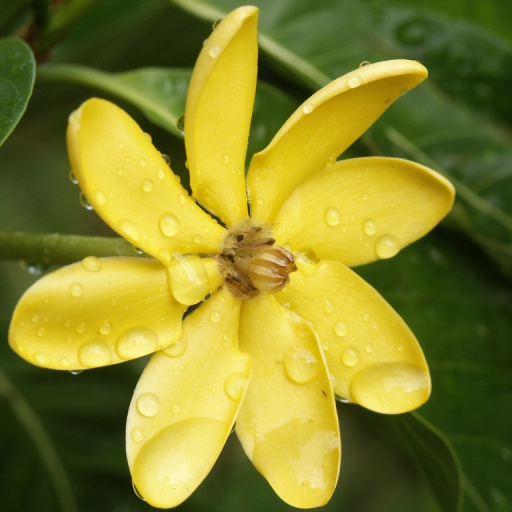
Plant Overview
Often called the Golden Gardenia, this tropical beauty is a "sunset in a shrub." Unlike its common white-flowered cousins, its blossoms undergo a magical transformation, shifting from a creamy ivory to a deep, honey-gold over several days. In its native Southeast Asian habitats, it is prized for its intoxicating, fruity fragrance that can perfume an entire courtyard.
🔍 How to Identify
- 🌼 The Flowers: Large, waxy blossoms with a distinct pinwheel shape. They emerge pale yellow or cream and darken to a rich, burnt orange as they age.
- 🍃 The Foliage: Elegant, lance-shaped leaves that are deep green and highly glossy, providing a high-contrast backdrop for the bright blooms.
- 🌳 Growth Habit: It typically grows as a small, upright tree or a large woody shrub, reaching heights of 6 to 10 feet if left unpruned.
🏡 In Your Garden
- ☀️ Sun Seeker: Unlike the common Gardenia jasminoides which often prefers partial shade, the Golden Gardenia thrives in full sun. More light generally leads to a more prolific display of those golden "pinwheels."
- 🧪 Soil Nuance: This plant is an "acid-lover." If the leaves start to turn yellow while the veins stay green (chlorosis), it is likely struggling with alkaline soil and needs a boost of iron or a more acidic potting mix.
- 💧 Thirst & Humidity: It dreams of the rainforest. It requires consistent moisture and high humidity; if the air is too dry, the flower buds may drop before they even have a chance to open.
⚠️ Safety & Toxicity
- 🐾 Pet Caution: Like most members of the Gardenia family, it is considered mildly toxic to cats, dogs, and horses.
- 🤢 The Details: Ingestion can lead to gastrointestinal upset, including vomiting or diarrhea. While not usually life-threatening, it’s best to keep this fragrant beauty out of reach of curious chewers.
✨ Fun Fact
In its native Thailand, the Golden Gardenia is considered an auspicious plant. It is often planted near homes because it is believed to bring "gold" (wealth) and prosperity to the family, mirrored by the literal "turning to gold" of its flowers.

Detailed Care Instructions
To successfully grow Gardenia Tubifera (also known as White Gardenia or Cape Jasmine), follow these steps:
- Climate: Ensure you are in an appropriate climate for growing Gardenia Tubifera. It prefers warm and humid conditions with a temperature range of 65-70°F (18-21°C). If you live in a colder region, consider growing the plant in a greenhouse or indoors.
- Soil: Gardenia Tubifera thrives in well-draining, acidic soil with a pH range of 5.0-6.0. If your soil is alkaline, amend it with organic matter like peat moss or compost to lower the pH level. This will help create optimal growing conditions.
- Light: Provide the plant with bright, indirect sunlight. It needs at least 4-6 hours of light daily but avoid placing it in direct sunlight, especially during the hottest part of the day. A spot near a window with filtered light is ideal.
- Watering: Keep the soil consistently moist but not waterlogged. Gardenia Tubifera prefers slightly moist conditions, so water the plant when the top inch of soil feels dry. Make sure to water at the base of the plant, avoiding wetting the leaves. Using room temperature water is best to prevent shocking the plant.
- Humidity: Gardenia Tubifera thrives in humid environments. Increase humidity levels by misting the leaves with water or placing a tray filled with water near the plant. You can also use a humidifier in the room where you are growing the plant.
- Fertilization: Feed the plant with a balanced, water-soluble fertilizer specifically formulated for acid-loving plants. Apply the fertilizer according to the package instructions, typically once a month during the growing season (spring and summer). Avoid over-fertilizing, as it can damage the plant.
- Pruning: Prune Gardenia Tubifera after flowering to control its size and shape. Remove any dead or diseased branches and trim back overgrown areas. This will encourage healthy growth and new flower production.
- Pests and Diseases: Watch out for common pests such as aphids, mealybugs, and scale insects. Treat infestations promptly with insecticidal soap or neem oil. Gardenia Tubifera is susceptible to diseases like root rot, so ensure proper drainage and avoid overwatering.
- Propagation: Gardenia Tubifera can be propagated from stem cuttings. Take 4-6 inch cuttings from healthy, non-flowering stems in spring or early summer. Remove the lower leaves, dip the cut ends in rooting hormone, and plant them in a well-draining soil mix. Keep the cuttings moist and warm until roots develop.
By following these guidelines, you can successfully grow Gardenia Tubifera and enjoy the beautiful white blooms and fragrant scent they offer.
Gardenia Tubifera is best watered by following a few specific guidelines to maintain its optimal health. To water this plant effectively, carefully pour water directly into the soil at the base of the plant rather than overhead watering. Make sure to avoid wetting the foliage and flowers to prevent damage or fungal issues.
To determine when to water, it is recommended to check the moisture level of the soil regularly. Insert your finger about an inch into the soil near the plant's root zone to evaluate if it feels dry. If the soil feels slightly moist, it is an indication that watering may not be necessary yet. However, if the soil feels dry, it's time to water the plant.
When watering this plant, do so deeply and thoroughly. Aim to soak the soil until water starts to drain out from the bottom of the pot or until the surrounding ground becomes saturated. This ensures that the entire root system receives moisture.
It is important to note that Gardenia Tubifera prefers evenly moist soil but does not tolerate sitting in waterlogged conditions for an extended period. Therefore, it is vital to maintain well-draining soil to prevent root rot or other diseases from occurring.
During hotter and drier periods, you may need to increase the frequency of watering. Conversely, reduce watering during colder months or when the plant is in its dormancy, ensuring that the soil is only lightly damp.
Lastly, it is recommended to use room temperature or slightly warm water when watering Gardenia Tubifera. Avoid using cold water, as it can cause shock to the plant.
Following these watering guidelines will help ensure that your Gardenia Tubifera plant receives the proper moisture it needs to thrive and produce beautiful blooms.
- Choose a well-draining pot: Select a pot or container that has drainage holes to prevent water from stagnating around the plant's roots.
- Soil mixture: Prepare a potting mixture that consists of equal parts of peat moss, perlite, and sand. This combination ensures good drainage and aeration for the Gardenia Tubifera plant.
- Fertilizer selection: Use a balanced, water-soluble fertilizer specifically formulated for acid-loving plants. Look for a fertilizer labeled for azaleas, camellias, or gardenias, as these plants have similar nutrient requirements.
- Dilute the fertilizer: Follow the manufacturer's instructions to mix the fertilizer with water. Dilute it to half or quarter strength, as Gardenia Tubifera plants are sensitive to high concentrations of nutrients.
- Watering before fertilizing: Ensure the soil is moist before applying fertilizer. This helps prevent burning the roots and allows the nutrients to be absorbed more evenly.
- Feeding frequency: Fertilize your Gardenia Tubifera plant every 3-4 weeks during the growing season, which is typically spring and summer. Reduce or stop fertilizing during the winter months when the plant is dormant.
- Application method: Carefully pour the diluted fertilizer around the base of the plant, avoiding direct contact with the leaves or stems. This helps minimize the risk of burning or damaging the plant's tissues.
- Watering after fertilizing: After applying the fertilizer, water the plant thoroughly to ensure it is washed into the soil and reaches the plant's roots. Avoid over-watering, as excessive moisture can lead to root rot.
- Monitor growth and adjust: Observe your Gardenia Tubifera plant closely for signs of nutrient deficiencies or excesses. Adjust the fertilization schedule or strength if necessary, based on the plant's response and the specific brand of fertilizer used.
- Maintaining overall plant health: In addition to fertilization, provide proper care for your Gardenia Tubifera plant by ensuring it receives adequate sunlight, maintaining appropriate humidity levels, and addressing any pest or disease issues promptly.
Remember that each plant is unique, so it's essential to monitor your Gardenia Tubifera closely and adjust the fertilizing instructions accordingly for optimal growth and health.
The recommended type of soil for Gardenia tubifera plants is a well-draining, slightly acidic soil with a pH level between 5.0 and 6.5. It should be rich in organic matter and have good moisture retention capabilities. The ideal soil texture is loamy, which provides a balance of drainage and water-holding capacity. Adding organic matter such as compost, peat moss, or well-rotted manure to the soil can enhance its fertility and improve moisture retention. Additionally, incorporating perlite or sand into the soil mix can help improve drainage.
Gardenia tubifera plants thrive in soil that is moist but not waterlogged. It is important to avoid heavy clay soils that tend to become compacted and retain excess moisture, as this can lead to root rot and other diseases. On the other hand, sandy soils that drain too quickly may result in inadequate moisture retention, causing the plant to wilt and stress.
In conclusion, the ideal soil for Gardenia tubifera plants should be well-draining, slightly acidic, rich in organic matter, and have good moisture retention capabilities.
Gardenia tubifera is a flowering plant that can be propagated through several methods such as stem cuttings, layering, or division. Here is a detailed explanation of each propagation technique:
- Stem cuttings:
a. Start by selecting a healthy parent plant. Look for a strong, disease-free stem with several pairs of leaves.
b. Using a clean and sharp pruning shears or razor blade, make a clean cut below a leaf node (the point where a leaf is attached to the stem). The cutting should be around 4-6 inches in length.
c. Remove the lower leaves from the stem, leaving only a few leaves at the top.
d. Dip the base of the cutting in rooting hormone powder or gel. This step is optional but can increase the chances of successful rooting.
e. Prepare a well-draining potting mix rich in organic matter, such as a combination of peat moss, perlite, and sand.
f. Make a hole in the soil using a pencil or your finger and gently place the cutting into the hole.
g. Firmly press the soil around the cutting to ensure good contact.
h. Water the cutting thoroughly and place it in a warm, bright location with indirect sunlight.
i. Mist the cutting regularly to maintain humidity and prevent drying out.
j. After several weeks, the cutting should develop roots. You can check by gently tugging on the stem to feel resistance.
k. Once the roots are well-established, usually within 6-8 weeks, you can transplant the new Gardenia tubifera plant to a larger container or outdoors in a suitable location.
- Layering:
a. Identify a low-growing branch of the Gardenia tubifera plant that is flexible and can easily be brought down to the ground.
b. Create a small wound on the branch, such as scraping the outer layer of bark using a knife. This will encourage root growth at the wounded area.
c. Dig a small hole in the soil next to the branch.
d. Gently bend the wounded branch and secure it in the hole, ensuring that the wounded area is in contact with the soil.
e. Cover the wounded area and the bent portion of the branch with soil, leaving the tip of the branch exposed.
f. Water the layered branch regularly to keep the soil moist, but not waterlogged.
g. Over time, roots will begin to grow from the wounded area. This process can take several months. You can check for root development by gently tugging on the branch.
h. Once sufficient roots have formed, usually after 6-8 months, you can safely cut the branch from the parent plant and relocate it to a new container or suitable outdoor location.
- Division:
a. This method is suitable for mature Gardenia tubifera plants that have developed a dense clump of stems.
b. Carefully dig up the entire plant, trying to disturb the roots as little as possible.
c. Place the plant on a flat surface and gently separate the clump into smaller sections, ensuring that each section has an adequate amount of healthy roots and stems.
d. If necessary, use a sharp sanitized knife or pruning shears to cut through the rootball.
e. Trim back any damaged or excessive growth, such as dead stems or overcrowded roots.
f. Prepare separate containers with well-draining potting mix for each divided plant section.
g. Plant each divided section in its respective container, ensuring that the roots are properly covered with soil and the plant stands upright.
h. Water each division thoroughly and place them in a warm, bright location with indirect sunlight.
i. Regularly monitor and care for each division, providing appropriate watering and light conditions.
j. Within a few weeks, the divided sections should establish new growth and can be handled like mature plants.








