Plant Overview
Known as the Silk-tassel bush, this evergreen beauty is the undisputed king of the winter garden. While most plants are shivering in dormancy, Garrya elliptica puts on a dramatic performance, draping itself in shimmering, silver-grey catkins that look like living tinsel. Native to the coastal ranges of California and Oregon, it brings a sophisticated, architectural structure to any landscape.
🔍 How to Identify
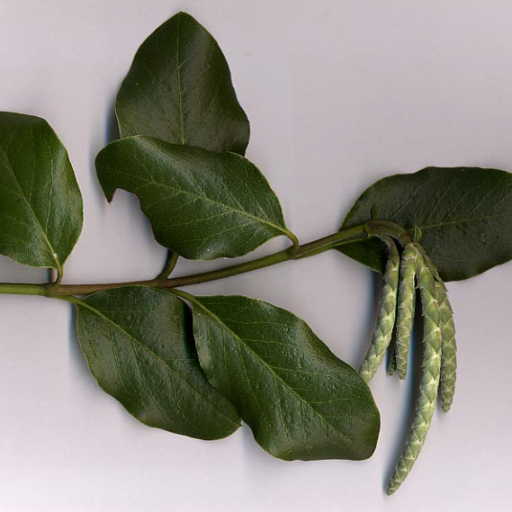
- 🧣 The Tassels: It produces long, pendulous catkins (male plants have the longest, reaching up to 12 inches) that hang vertically in elegant, swaying chains.
- 🍃 Leathery Foliage: The leaves are tough, oval, and a deep forest green on top, with a slightly felt-like, greyish underside.
- 🌊 Wavy Margins: Unlike many other evergreens, the leaf edges are distinctly undulating or "wavy," providing a unique texture even when not in bloom.
🏡 In Your Garden
- 🌬️ Coastal Warrior: Because it evolved along the Pacific coastline, it is exceptionally resistant to salt spray and buffeting winds, making it a "must-have" for seaside gardeners.
- 🚫 Avoid Moving: This plant is notoriously "root shy." It hates being transplanted once established due to its sensitive root system, so choose its forever-home carefully.
- ✂️ Post-Winter Pruning: To keep its shape, only prune immediately after the catkins have faded in late spring. Pruning too late in the year will accidentally remove the buds for next winter's display.
⚠️ Safety & Toxicity
- 🟢 Low Toxicity: Garrya elliptica is generally considered non-toxic to humans and common household pets.
- 🧤 Mechanical Irritation: While not chemically poisonous, the leathery, slightly hairy leaves can be scratchy. It is always best to wear gloves when pruning to avoid minor skin irritation.
✨ Fun Fact
The most popular garden variety, 'James Roof', was named after the first director of the Tilden Regional Park Botanic Garden in California. It is celebrated for having tassels that are significantly longer and more silvery than those found on wild specimens!

Detailed Care Instructions
| Lighting | Full Sun |
| Hardiness Zones | 7A - 11 |
To grow a Garrya elliptica plant, also known as the silk tassel bush, follow these steps:
- Choose the right location: Garrya elliptica thrives in full sun to partial shade. Ensure the location has well-draining soil with some organic matter mixed in.
- Planting: Dig a hole slightly larger than the root ball of the plant. Place the plant in the hole and fill it with soil, firming it gently around the base of the plant.
- Watering: Water the plant thoroughly after planting and keep the soil evenly moist. Use a soaker hose or drip irrigation to ensure the water reaches the root system without wetting the foliage excessively, as this can lead to fungal diseases.
- Mulching: Apply a layer of organic mulch around the base of the plant, about 2-3 inches thick. This will help retain soil moisture and suppress weed growth.
- Pruning: Pruning is generally not necessary for Garrya elliptica plants, but if desired, you can prune lightly after flowering to maintain a neat shape. Remove any dead or damaged branches.
- Fertilizing: Garrya elliptica usually does not require much fertilizing. However, you can apply a balanced, slow-release fertilizer in early spring to encourage growth if necessary. Follow the instructions on the fertilizer packaging for application rates.
- Winter protection: In colder climates, Garrya elliptica may require some winter protection. Apply a thick layer of mulch around the base of the plant, and if severe frosts are expected, consider covering the plant with a frost blanket or burlap to protect it from freezing temperatures.
- Troubleshooting: Watch out for signs of pests or diseases, such as aphids or powdery mildew. Treat any issues promptly with appropriate organic or chemical controls.
Remember, Garrya elliptica is a slow-growing plant, so be patient with its growth. With proper care, it can develop into an elegant, ornamental shrub with its unique tassel-like flowers.

Place in a bright room that is sun drenched almost all day. Or directly in a south-facing window.

To water this plant, you should provide it with consistent moisture without allowing it to become waterlogged. You can water it deeply once a week during the growing season and reduce watering in the winter months. It is recommended to water in the morning to allow any excess moisture to dry out by evening. You can test the soil moisture by inserting your finger into the soil up to the second knuckle to determine if watering is necessary. Avoid getting the leaves wet and water the base of the plant instead.
To provide proper nutrients for this plant, select a balanced fertilizer that is high in nitrogen but also contains phosphorous and potassium. Apply the fertilizer during the early spring, just before the growing season begins. Be sure to follow the instructions on the fertilizer label and do not over-fertilize, as it can harm the plant. Additionally, regularly applying compost or organic matter to the soil around the plant can provide beneficial nutrients and improve soil health.
Garrya elliptica requires a well-draining soil that is fertile and rich in organic matter. The soil should have a pH between 5.5-7.5 and be slightly acidic to neutral. It is recommended to use a mix of loam, sand, and peat moss to achieve the right texture and nutrient balance. The plant prefers to grow in soil that is moist but not waterlogged, so proper drainage is crucial. Additionally, using a slow-release fertilizer can help provide the necessary nutrients for healthy growth and development.
To propagate this plant, select healthy branches from the parent plant that are approximately 6-8 inches long and free of disease or pests.
Remove the lowest leaves from the stem, leaving a small cluster of leaves at the tip. Cut the stem at a 45-degree angle with clean, sharp garden clippers.
Dip the cut end of the stem into rooting hormone powder, coating it evenly. Rooting hormone can be purchased from a garden center.
Plant the stem into a container filled with a well-draining potting mix, such as a mix of peat moss and perlite.
Water the cutting so that the soil is evenly moist. Place a clear plastic bag over the container to create a mini greenhouse, which will help to maintain humidity and prevent the cutting from drying out.
Place the container in a warm and bright location, but out of direct sunlight. Check the moisture level of the soil regularly and water as needed.
After a few weeks, check for roots by gently tugging on the stem. If it resists, it has likely rooted. Once the plant has rooted, gradually acclimate it to the outdoors by increasing its exposure to sunlight and fresh air over several weeks.
Once the cutting has established roots and is growing robustly, it can be transplanted into the garden or a larger container.
Common pests of the silk tassel bush include Scale insect, spider mites, aphids. Make a habit of checking your silk tassel bush frequently for pests so that any infestations can be caught and managed early.








