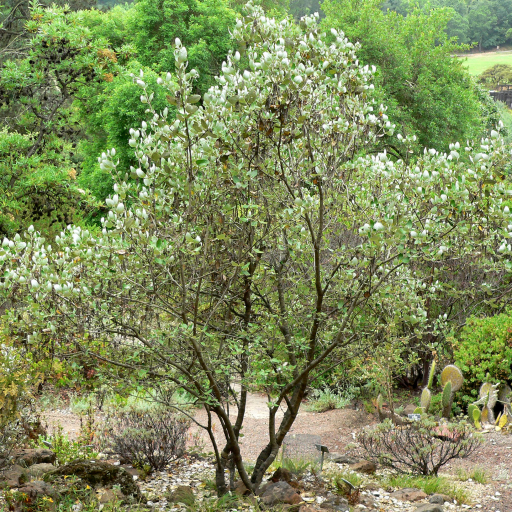
Plant Overview
Often called the Veatch Silktassel, this evergreen shrub is a hardy star of the California chaparral and mountain slopes. While most of the garden sleeps during the winter, Garrya veatchii wakes up, draping itself in dramatic, cascading tassels that look like decorative silver chains. It is a rugged, "tough-as-nails" plant that brings a touch of wild elegance to dry landscapes.
🔍 How to Identify
- 🧶 Silky Catkins: The most iconic feature is the hanging flower spikes (catkins) that appear in winter. Male plants produce long, shimmering yellowish-grey tassels, while female plants produce shorter, thicker ones.
- 🍃 Fuzzy Foliage: The oval, leathery leaves are a dusty green on top, but if you flip them over, you’ll find a dense "felt" of white, woolly hairs designed to trap moisture.
- 🪵 Rugged Structure: It grows as a dense, multi-branched shrub, often reaching 6 to 9 feet in height, with a sturdy, woody base that can withstand harsh winds.
🏡 In Your Garden
- ⛰️ The "Forever Home" Rule: This plant develops a deep, stubborn taproot very quickly. Because of this, it is notoriously difficult to transplant once established. It’s best to buy a young specimen and choose its permanent spot in your garden carefully.
- ☀️ Drought Specialist: Perfectly adapted to Mediterranean climates, it thrives in rocky, well-drained soil and requires very little water once its roots are down. It is an excellent choice for slope stabilization or as a windbreak in coastal or hillside gardens.
⚠️ Safety & Toxicity
- ✅ Generally Safe: Garrya veatchii is not known to be toxic to humans, cats, or dogs. It is a safe addition to family gardens.
- 🧤 Leaf Irritation: While not poisonous, the tiny "woolly" hairs on the underside of the leaves can be a minor irritant to people with very sensitive skin or allergies. Wearing gloves during heavy pruning is a good practice.
✨ Fun Fact
- The shimmering tassels aren't just for show—they are a specialized wind-pollination tool! Because they bloom in the gusty months of winter and early spring, the plant doesn't need to wait for bees; it simply lets the wind carry its pollen from the dangling male catkins to the female plants nearby.

Detailed Care Instructions
To grow a Garrya Veatchii plant, also known as silk tassel bush, follow these steps:
- Climate: Ensure you live in a suitable climate for growing Garrya Veatchii. This plant is native to California and Oregon and thrives in USDA hardiness zones 7 to 10.
- Location: Choose a well-draining site in your garden that receives full to partial sun exposure. Garrya Veatchii prefers direct sunlight but can tolerate some shade.
- Soil: Prepare the soil by adding organic matter, such as compost, to improve drainage. Garrya Veatchii prefers slightly acidic to neutral soil with a pH range of 6.0 to 7.0.
- Planting: Dig a hole that is slightly larger than the plant's root ball. Place the plant in the hole, ensuring that the top of the root ball is level or slightly higher than the surrounding soil. Fill the hole with soil, firming it gently around the base of the plant.
- Watering: Water regularly during the first year to establish a strong root system. Provide enough water to keep the soil consistently moist but not waterlogged. Once established, Garrya Veatchii is drought-tolerant and requires less frequent watering.
- Mulching: Apply a layer of organic mulch, such as wood chips or bark, around the base of the plant. This helps retain moisture in the soil, suppresses weeds, and protects the roots from extreme temperatures.
- Pruning: Prune Garrya Veatchii in late spring or early summer after it has finished flowering. Remove any dead or damaged branches and shape the plant as desired. Avoid heavy pruning, as this may interfere with future flowering.
- Fertilizing: Garrya Veatchii does not require heavy feeding. However, you can apply a balanced slow-release fertilizer once a year in early spring to provide a nutrient boost.
- Pests and Diseases: Garrya Veatchii is generally resistant to pests and diseases. However, keep an eye out for common garden pests, such as aphids or spider mites, and treat them accordingly if they appear.
By following these steps, you can successfully grow Garrya Veatchii and enjoy its beautiful silky tassels during the winter months.

Place in a bright room that is sun drenched almost all day. Or directly in a south-facing window.

To effectively water the Garrya Veatchii plant, you should follow these guidelines:
1. Assess the soil moisture level: Before watering, check the soil around the plant to ensure it is adequately dry. Stick your finger about an inch deep into the soil; if it feels dry, then it's time to water.
2. Choose the right time of day: Water the Garrya Veatchii plant early in the morning or late in the afternoon to minimize evaporation. Avoid watering during the hottest part of the day, as it may result in water loss due to evaporation.
3. Use the right watering method: To prevent waterlogging or uneven watering of the plant, it is recommended to use a gentle watering technique, such as a watering can or a hose with a gentle nozzle attachment. This allows for slow and targeted application of water directly to the plant's root zone.
4. Water deeply and thoroughly: Rather than giving the plant shallow and frequent watering sessions, it is better to water deeply to encourage the development of a robust root system. Slowly apply water around the base of the plant, ensuring it reaches the root zone.
5. Consider the weather conditions: Adjust the watering frequency based on the weather conditions. During hot and dry periods, the Garrya Veatchii plant may require more frequent watering. In contrast, during cooler or rainy periods, you can reduce the watering frequency to prevent over-saturation.
6. Monitor the plant's hydration needs: Periodically check the soil moisture around the plant to gauge its water requirements. Keep in mind that the Garrya Veatchii plant prefers slightly dry conditions rather than consistently moist soil.
7. Avoid water stress: It is crucial not to overwater or underwater the Garrya Veatchii plant. Overwatering can lead to root rot and other moisture-related issues, while underwatering may cause wilting and stress the plant. Strike a balance by keeping the soil moderately moist but not soggy.
Remember, each plant has individual water needs, and environmental factors may affect watering requirements. Observe your Garrya Veatchii plant closely to ensure it receives the appropriate amount of water for optimal growth and health.
To provide proper fertilizing instructions for Garrya Veatchii plants, it is important to consider their specific nutrient requirements and appropriate timing. Here are the instructions:
- Choose a balanced, slow-release fertilizer with a nitrogen-phosphorus-potassium (N-P-K) ratio of around 10-10-10 or similar.
- Begin fertilizing in early spring, ideally before new growth begins.
- Dilute the fertilizer following the manufacturer's instructions. Alternatively, use organic fertilizers following the recommended dosage.
- Apply the fertilizer evenly around the base of the plant, keeping it away from the trunk or stems.
- Gently work the fertilizer into the top few inches of soil using a small garden fork or hand tool.
- Water thoroughly after applying the fertilizer to ensure the nutrients are absorbed into the root zone.
- Avoid excessive fertilization, as it may result in nutrient imbalances and damage to the plant. Follow the recommended dosage and frequency provided by the fertilizer manufacturer.
- Repeat the fertilization process annually in early spring, preferably before the growing season begins.
- Monitor the plant for signs of over or under-fertilization, such as leaf yellowing, stunted growth, or nutrient deficiencies. Adjust the fertilization regimen accordingly.
Remember, it is essential to use the specific fertilizer mentioned above and follow the instructions provided to meet the specific needs of Garrya Veatchii plants.
When selecting soil for Garrya Veatchii plant, it is essential to consider its specific requirements. This plant tends to thrive in a well-draining soil mixture that retains some moisture while preventing excess waterlogging. A good soil choice would typically be loose, loamy, and slightly acidic with a pH range between 5.5 and 7.5. It is advantageous to provide a mix that is rich in organic matter, as this helps improve both drainage and moisture retention.
Avoid using heavy clay soils or those prone to compacting, as they can hinder root development and lead to waterlogging. Additionally, overly sandy soils may not retain enough moisture, which could result in drought stress for the plant.
To enhance drainage, it is recommended to amend the soil with materials like perlite, sand, or well-rotted compost. This improves aeration and ensures excess water can freely pass through the root zone.
Maintaining proper soil moisture is crucial for the healthy growth of Garrya Veatchii. It is a good idea to water the plant thoroughly upon planting and monitor the moisture levels thereafter. While it is important to avoid waterlogging, the soil must not dry out completely either. Striking a balance by allowing the soil to slightly dry between watering sessions is ideal.
Frequent and shallow watering should be avoided, as it may lead to shallow root development. Instead, it is better to provide deep, infrequent watering to encourage deeper root growth.
Regularly monitoring the plant's soil moisture level and adjusting the watering schedule accordingly helps ensure optimal growth. Remember to consider factors such as local climate, temperature, and humidity when determining the appropriate watering frequency.
Overall, providing well-draining, slightly acidic soil with appropriate moisture retention and aeration is key to maintaining healthy Garrya Veatchii plants.
To propagate Garrya Veatchii plant, you can follow the following steps:
- Select a healthy and mature plant: Choose a parent plant that is robust and disease-free. The plant should have reached maturity, which is typically around 3-5 years old.
- Timing: Propagation can be done during late summer to early autumn when the plant enters its dormant phase. This is the ideal time as the plant is more likely to root successfully.
- Prepare the cutting: Take a semi-hardwood cutting from the parent plant. Look for a non-flowering shoot that has matured but is not yet woody. It should be about 6-8 inches long, with several sets of leaves. Make a clean cut just below a node, which is where the leaf attaches to the stem.
- Remove lower leaves: Strip off the lower leaves from the cutting, leaving only a few sets of leaves at the top. This reduces water loss and redirects energy towards root development.
- Hormone treatment (optional): Some gardeners prefer to dip the base of the cutting in a rooting hormone powder or gel to promote root growth. This step is optional but may increase the chances of successful propagation.
- Prepare the planting medium: Use a mixture of perlite and peat moss or a well-draining soilless mix. Fill a small pot with the planting medium and moisten it slightly.
- Plant the cutting: Make a hole in the planting medium with a pencil or similar object. Insert the cutting into the hole, making sure that at least two nodes are buried in the medium. Gently firm the soil around the cutting to hold it upright.
- Provide the right environment: Place the pot in a warm location with indirect sunlight. Maintain a consistent temperature of around 68-77°F (20-25°C). Avoid direct sunlight as it can cause excessive heating and wilting of the cutting.
- Mist and cover (optional): To increase humidity and reduce moisture loss, you may cover the pot with a plastic bag or place a plastic dome over it. Mist the cutting occasionally to maintain moisture around the leaves.
- Watering: Keep the soil lightly moist but not waterlogged. Overwatering can lead to rot, while underwatering can cause the cutting to dry out. Check the moisture levels regularly and adjust watering accordingly.
- Rooting time: It may take several weeks to a few months for roots to develop. You can gently tug on the cutting after about 6 weeks to check for resistance, indicating root growth.
- Transplanting: Once roots have formed, and the cutting shows signs of healthy growth, it can be transplanted into a larger pot or directly into a prepared garden bed. Handle the roots gently to avoid damage.
By following these steps, you can successfully propagate the Garrya Veatchii plant and expand your garden or share it with other gardeners.








