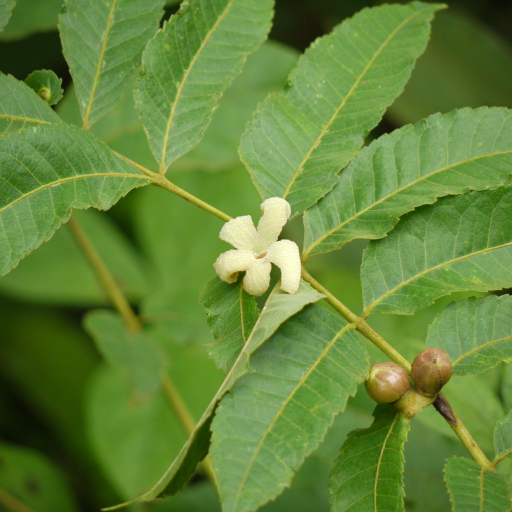
Plant Overview
Known as the Grey Downy Balsam or Kharpat, Garuga pinnata is a resilient deciduous tree that paints a beautiful silhouette against the skyline of tropical Asian forests. Often used in traditional medicine and valued for its edible, acidic fruits, this tree is a master of survival, thriving in rocky terrains and dry climates where other plants might struggle.
🔍 How to Identify
- 🌿 The Leaves: Look for "pinnate" (feather-like) leaves that can grow up to 18 inches long. Each leaf is composed of multiple leaflets with slightly jagged (serrated) edges.
- ☁️ Velvety Texture: True to its "Downy" name, the younger branches and the undersides of leaves are often covered in fine, soft hairs that feel like velvet to the touch.
- 🍒 The Fruit: It produces small, round, fleshy drupes. They start as a pale green and ripen into a dark, blackish-purple, hanging in heavy, tempting clusters.
🏡 In Your Garden
- 🌳 Space Requirements: This is not a "potted plant" for long! It grows into a large tree with a spreading canopy. If planting one, ensure it has plenty of room away from power lines and foundations.
- 🍂 Seasonal Character: It is a deciduous species, meaning it will shed its leaves during the dry season. This "winter rest" is natural and helps the tree conserve water, revealing its beautiful, smooth, greyish bark.
⚠️ Safety & Toxicity
- 🟢 Safe for Humans: The fruits are technically edible and are frequently used in traditional pickles (achar) or jams due to their high Vitamin C content.
- 🐾 Pet Caution: While not listed as highly toxic, the high tannin content in the bark and unripe fruit can cause stomach upset in curious dogs or cats if ingested in large quantities.
- 🖐️ Skin Sensitivity: The sap or bark extracts are used in tanning; some people with very sensitive skin may experience mild irritation if they come into contact with the raw sap.
✨ Fun Fact
The leaves of the Garuga tree are often covered in small, round "galls" caused by insects. While they might look like a disease, these galls are actually a fascinating example of symbiosis, and in some cultures, the leaf galls themselves are collected and used for their medicinal properties!

Detailed Care Instructions

Place in a bright room that is sun drenched almost all day. Or directly in a south-facing window.

When the top few inches of soil dry out, water your plants. If the top few inches of soil are still moist, do not water your plant. Wait a few days, then poke your finger into the soil to see if anything has changed. Overwatering poses a disease risk, such as the development of fungal diseases in the roots. These plants have adaptations in there leaves that allow them to survive in low water supply.








