Plant Overview
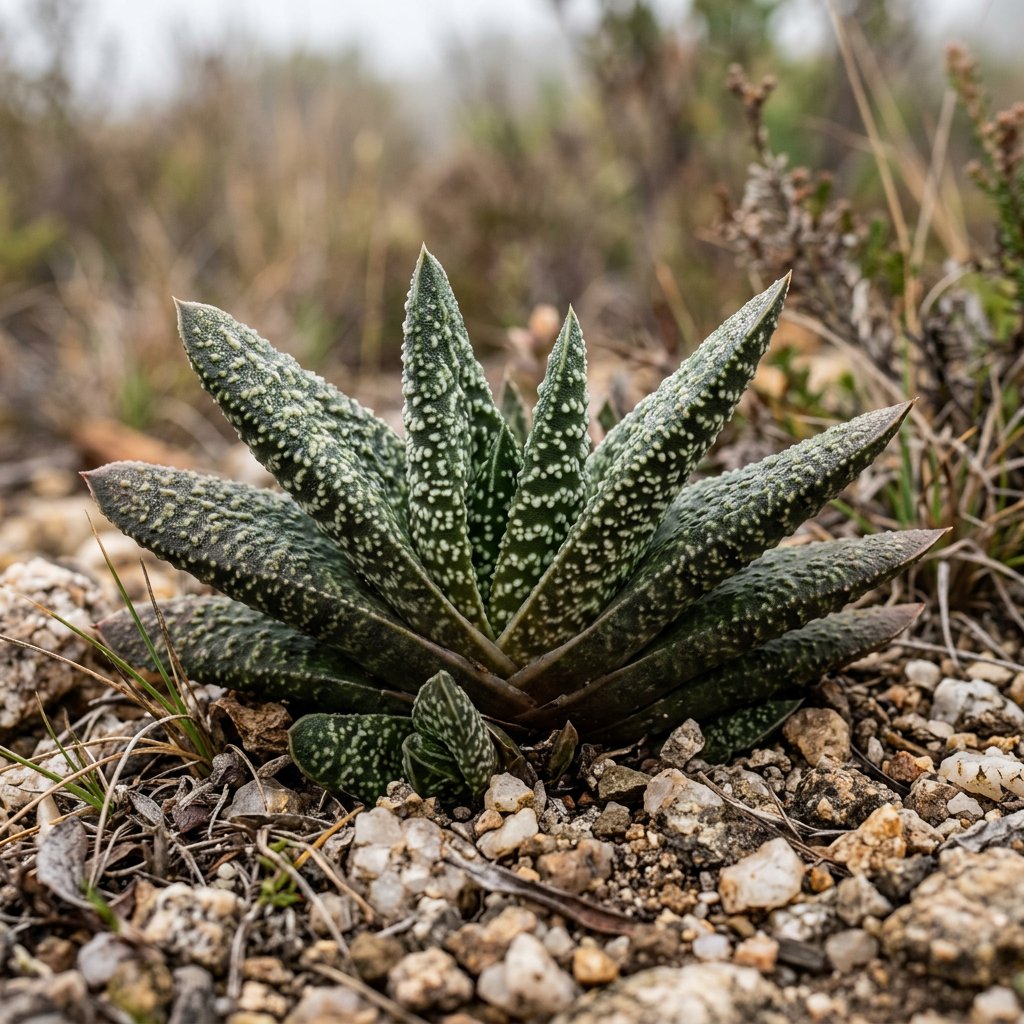
Often called the Ox Tongue or Lawyer's Tongue, Gasteria is a genus of succulents native to the rocky landscapes of South Africa. These sturdy plants are beloved for their thick, tongue-shaped leaves and their incredible resilience in low-light conditions that would make other succulents wither. If you tend to forget about your plants or have a home with limited direct sunlight, Gasteria is your new best friend.
🔍 How to Identify
- 👅 The Leaves: Fleshy, thick, and usually shaped like a long tongue. They often grow in two opposite rows (distichous) when young, though some species transition into a rosette shape as they mature.
- ⚪ The Texture: Most species are covered in distinctive "warts" or white tubercles that give the leaves a rough, sandpaper-like feel.
- 🌸 The Flowers: They produce tall, arching stems with pendulous, stomach-shaped flowers, usually in shades of pink, orange, or coral.
🏡 In Your Garden
- ☁️ Low-Light Champion: Unlike many of its desert cousins, Gasteria evolved in the shade of bushes and rock crevices. This means it thrives in bright indirect light and can even tolerate deep shade, making it one of the few succulents suitable for indoor hallways or north-facing windows.
- 🐌 Patience is a Virtue: These are incredibly slow-growing plants. They won't outgrow their pots quickly, making them perfect for small decorative containers or "fairy gardens."
- 💧 The Rot Risk: Because they store so much water in their thick leaves, their biggest enemy is a soggy bottom. They prefer "neglect" over "nurture"—always wait until the soil is bone-dry before offering a drink to prevent root rot.
⚠️ Safety & Toxicity
- ✅ Pet Friendly: Gasteria is generally considered non-toxic to cats, dogs, and horses. It is a safe choice for households with curious nibblers.
- 👶 Child Safe: These plants lack the sharp spines found on many cacti, though the leaf edges can be slightly tough. They are a great "starter plant" for teaching children about nature.
✨ Fun Fact
The name "Gasteria" comes from the Greek word gaster, which means "stomach." This isn't because the plant is edible, but because the base of its unique flower is swollen, looking remarkably like a tiny, colorful belly!

Detailed Care Instructions
| Humidity | Normal |
| Lighting | Part Sun |
| Difficulty | Medium |
| Hibernation | Cold Period |
| Temperature | 18°C - 25°C |
| Hardiness Zones | 10A - 11B |
To grow Gasteria plants successfully, follow these tips:
- Choose a suitable pot: Gasteria plants prefer well-draining pots. Opt for a clay pot or one with drainage holes at the bottom to prevent waterlogging.
- Soil mix: Use a well-draining soil mix specifically formulated for succulents or cacti. You can also make your own mix by combining potting soil, perlite, and coarse sand in a 1:1:1 ratio.
- Planting: Gently place the Gasteria plant in the prepared pot, ensuring the roots are adequately covered with soil. Lightly press down the soil around the base of the plant for stability.
- Light requirements: Gasteria plants thrive in bright, indirect light. Place them near a south or west-facing window. However, avoid exposing them to direct sunlight for extended periods, as it can scorch the leaves.
- Watering: Gasteria plants are succulents and have low water requirements. Water the plant thoroughly once the top inch of soil feels dry. Ensure that excess water drains out of the pot, as waterlogged soil can lead to root rot.
- Temperature and humidity: Gasteria plants prefer average room temperatures between 65-75°F (18-24°C). They can tolerate slightly cooler temperatures during the winter. They thrive in average household humidity levels.
- Fertilization: Gasteria plants are not heavy feeders. Fertilize them sparingly with a diluted succulent or cacti fertilizer during the growing season (spring and summer). Avoid fertilizing during winter dormancy.
- Propagation: Gasteria plants can be propagated through offsets or leaf cuttings. To propagate offsets, gently separate them from the parent plant and plant them in a separate pot. Leaf cuttings can be placed on top of moist soil until new roots and shoots form.
- Pruning: Remove any dead or wilted leaves to maintain the plant's appearance and overall health. Trim any leggy growth to promote a compact, bushier plant.
- Pests and diseases: Gasteria plants are generally resistant to pests and diseases. However, watch out for common succulent pests like mealybugs or spider mites. If an infestation occurs, treat it promptly using an appropriate insecticidal soap or dilute neem oil.
Remember, proper care and attention are crucial for the healthy growth of Gasteria plants. Monitor their water and light requirements and adjust as necessary.

Place in a window with dappled sun or a spot in the middle of a room. Or directly in a window facing west or east.

To water this type of plant, you should allow the top inch of soil to dry out completely between waterings. When watering, pour the water into the soil around the base of the plant and avoid getting water on the leaves as this can cause damage. It is important not to overwater this plant as it can be susceptible to root rot. In the winter months, water sparingly as the plant goes into a period of dormancy.
To fertilize this type of plant, you should dilute a balanced liquid fertilizer to half the recommended strength and apply it to the soil during the growing season, which is typically spring and summer. Avoid fertilizing during the plant's dormant period in fall and winter. It's also important to flush the soil with water before and after fertilizing to prevent the buildup of salts that can harm the plant.
Grown under bright light, this plant needs soil that is well-draining and able to retain some moisture but not become too waterlogged. It's recommended to use a mixture of sand, perlite, and peat moss or coco coir. The pH level of the soil should be slightly acidic to neutral, between 6.0 and 7.0. When repotting, only move up one pot size, and avoid burying the plant too deep.
There are a few ways to propagate this plant. One method is to use offsets, which are small plantlets that develop at the base of the parent plant. To propagate using offsets, gently separate them from the parent plant using a clean, sharp knife or scissors. Make sure each offset has a few roots attached. Let the cuttings dry for a day or two, then plant them in a well-draining potting mix.
Another method is to take leaf cuttings. Cut a healthy, mature leaf from the plant, making sure you include the stem. Let the cutting dry for a day or two, then plant it in a well-draining potting mix. Keep the soil moist and in a bright, warm location. After a few weeks, you should see roots and new growth.
You can also propagate this plant from seed. Collect the seeds from the parent plant when they are ripe and dry. Soak the seeds in water for a few hours, then plant them in a well-draining potting mix. Keep the soil moist and in a bright, warm location. The seeds should germinate in a few weeks.
Common pests of the gasterias include Mealybugs, thrips. Make a habit of checking your gasterias frequently for pests so that any infestations can be caught and managed early.







