Plant Overview
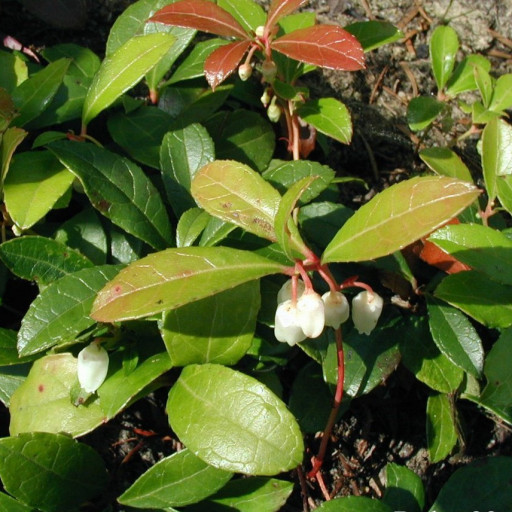
Often called the Eastern Teaberry, Checkerberry, or simply American Wintergreen, Gaultheria procumbens is a charming, low-growing evergreen that carpets the forest floors of North America. Known for its signature "minty" aroma when the leaves are crushed, this resilient little shrub provides a splash of scarlet red during the bleakest winter months. It has long been a favorite for woodland gardeners looking to add year-round texture and a touch of folklore to their landscape.
🔍 How to Identify
- 🍃 Foliage: Leathery, oval, dark green leaves that feature a glossy sheen and often turn a beautiful burgundy or bronze hue as temperatures drop in autumn.
- 🔔 Flowers: Small, waxy, white to pale pink bell-shaped blossoms that dangle delicately beneath the foliage during the early summer months.
- 🍒 Berries: Bright, fleshy red fruits that ripen in late autumn and persist through the winter, hanging on the plant like tiny natural ornaments.
🏡 In Your Garden
- 🌲 Acid Lover: As a woodland native, this plant thrives in acidic, organic-rich soil. It is the perfect companion for Azaleas, Rhododendrons, or under the canopy of Pine trees where needles naturally acidify the earth.
- 🌱 Creeping Habit: It spreads slowly via underground runners (rhizomes). This makes it an excellent "slow-motion" groundcover that fills in gaps and suppresses weeds without becoming aggressive or invasive.
- 💧 Drainage is Key: While it appreciates consistent moisture to mimic a damp forest floor, it cannot tolerate "wet feet." Ensuring the soil is well-draining is vital to prevent root rot in garden settings.
⚠️ Safety & Toxicity
- 🧪 Chemical Content: The entire plant contains methyl salicylate, which is the chemical compound that gives it its distinct "wintergreen" scent and medicinal properties.
- 🐾 Pets & Kids: The berries are technically edible for humans and have a mild, minty flavor, but they can cause digestive upset in cats and dogs if consumed in large quantities.
- 💊 Aspirin Warning: Because methyl salicylate is chemically similar to aspirin, individuals with aspirin allergies or those on blood-thinning medication should avoid consuming any part of the plant.
✨ Fun Fact
🍬 The Original Flavor: Long before synthetic flavorings were invented in labs, Gaultheria procumbens was the primary source of oil used to flavor chewing gum, toothpaste, and even traditional root beer! If you’ve ever tasted a "pink" wintergreen candy, you've tasted the legacy of this little forest plant.

Detailed Care Instructions
To grow Gaultheria procumbens, also known as wintergreen or teaberry, follow these steps:
- Choose the right location: Gaultheria procumbens prefers partially shaded areas with well-draining soil. It can also tolerate full shade or full sun, but it may need more moisture in those conditions.
- Prepare the soil: Ensure the soil is rich and acidic, with a pH level between 4.5 and 5.5. If your soil is too alkaline, consider adding organic matter or peat moss to make it more acidic.
- Planting: Dig a hole that is slightly larger and wider than the plant's root ball. Gently remove the plant from its container and place it in the hole. Backfill the hole with soil, making sure the plant is at the same level as it was in the container. Lightly press down the soil around the plant.
- Watering: Gaultheria procumbens prefers consistently moist soil. Water the plant thoroughly after planting, and continue to water it regularly, especially during dry periods. Avoid overwatering, as it can lead to root rot.
- Mulching: Apply a layer of organic mulch around the plant to help retain moisture and suppress weed growth. This will also help maintain a more acidic soil environment.
- Pruning: Prune dead or damaged branches as needed to maintain the plant's overall health and shape. Pruning can be done in early spring or after flowering.
- Fertilizing: Gaultheria procumbens generally doesn't require much fertilization. However, if you'd like to provide some nutrients, you can apply a slow-release, balanced fertilizer in early spring.
- Propagation: Gaultheria procumbens can be propagated through seed or by taking stem cuttings. If using seeds, sow them in a tray or pot with a well-draining potting mix. Keep the soil consistently moist, and the seeds should germinate within a few weeks. If using stem cuttings, take a 4-6 inch cutting from a healthy, established plant. Dip the cut end in rooting hormone and plant it in a pot with a well-draining potting mix. Keep the soil moist and provide indirect light until the cutting develops roots.
By following these steps, you should be able to successfully grow Gaultheria procumbens. Remember to research and understand the specific growing conditions and climate requirements for your region to ensure optimal growth.

Place in a window with dappled sun or a spot in the middle of a room. Or directly in a window facing west or east.

Water the plant thoroughly, making sure to moisten the soil evenly. Avoid over-watering as this can lead to root rot. Check the soil regularly and water whenever the top inch of soil feels dry to the touch. Use room temperature water to avoid shocking the plant. Water the plant from the base, allowing the water to soak into the soil rather than spraying it on the foliage. Keep the plant in a well-draining pot to prevent water from sitting in the bottom.
To fertilize this plant, you should use a plant food with equal parts nitrogen, phosphorus, and potassium. Apply the fertilizer once every four weeks during the growing season, which is typically from spring to fall. Be sure to follow the dosage instructions on the fertilizer closely, as overfertilizing can damage the plant's roots. Additionally, water the plant well before and after fertilizing to avoid root burn.
For optimal growth and health, the Gaultheria Procumbens plant requires soil that is acidic, well-draining, and rich in organic matter. An ideal soil mix for this plant would consist of a blend of peat moss, perlite, and pine bark fines. This type of soil mix will help to maintain the correct pH level, prevent waterlogging, and provide the necessary nutrients for the plant's growth. Additionally, it is important to avoid using soil with high levels of lime or calcium, as this can cause the plant's leaves to turn yellow and stunted growth.
To propagate this plant, you will need to take stem cuttings from the parent plant. The best time to take the cuttings is in early spring or late summer.
- Using clean pruning shears, cut a stem from the parent plant that is approximately 4-6 inches long and has several leaves attached.
- Remove the lower leaves on the stem, leaving only the top 2-3 leaves.
- Dip the cut end of the stem in rooting hormone powder, if desired.
- Fill a small container with well-draining potting soil and water it lightly.
- Using a pencil or other tool, create a small hole in the soil and carefully insert the stem cutting into the hole.
- Gently press the soil around the stem to hold it in place.
- Water the cutting thoroughly and place it in a warm and humid location, such as a greenhouse or covered container.
- Keep the soil moist but not waterlogged and provide indirect light.
- After a few weeks, you should start to see new growth emerging from the stem cutting, indicating that it has successfully rooted.
- Once the roots are established and the new plant is growing strongly, you can transplant it into a larger container or directly into the ground.








