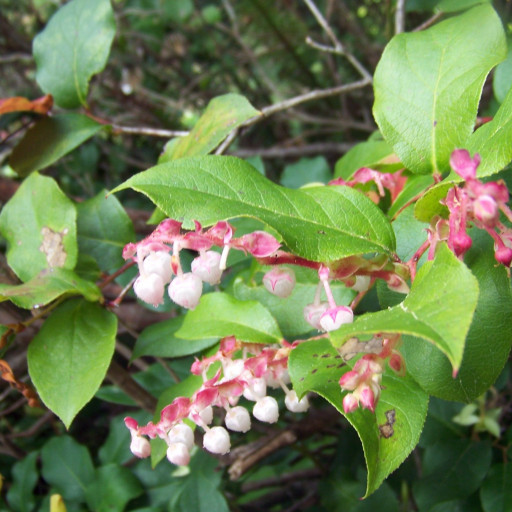
Plant Overview
Known affectionately as Salal, Gaultheria shallon is the rugged, leathery heart of the Pacific Northwest forests. This evergreen shrub is famous for its nearly indestructible nature and its role as a staple in the floral industry worldwide. Indigenous peoples have long revered Salal for its nutritious berries and medicinal leaves, making it far more than just a background plant.
🔍 How to Identify
- 🍃 The Foliage: Large, egg-shaped leaves that feel thick and leathery to the touch. They have a glossy, dark green upper surface and a distinctively "waxy" texture.
- 🔔 The Flowers: Delicate, urn-shaped blossoms that resemble Lily of the Valley. They range from white to pale pink and grow in unique, one-sided drooping clusters.
- 🍓 The Fruit: In late summer, the plant produces dark purple, almost black, "berries" (which are actually fleshy sepals) that are covered in fine, sticky hairs.
- 🌿 The Stems: Young stems often have a reddish tint and are noticeably hairy or bristly, becoming woody as the plant matures.
🏡 In Your Garden
- 🌲 Shade Specialist: Salal is a champion of the understory. It thrives in deep shade where other plants struggle, making it an ideal choice for woodland gardens or north-facing walls.
- ⛰️ The Acid Test: Like its cousins the Blueberries and Rhododendrons, Salal demands acidic, organic-rich soil. It is particularly fond of "humus," so don't be afraid to mulch with pine needles or leaf mold.
- 🛡️ Slow but Steady: While it may take a year or two to settle in, once established, it spreads via underground runners (rhizomes) to create a lush, weed-smothering groundcover.
⚠️ Safety & Toxicity
- ✅ Status: Generally considered safe and non-toxic.
- 🫐 Edibility: The berries are edible and have a unique flavor—sweet and slightly earthy, often compared to a cross between a blueberry and a currant.
- 🐾 Pet Friendly: There are no known toxic effects for dogs, cats, or horses, making it a "worry-free" addition to a family backyard.
✨ Fun Fact
If you’ve ever received a professional bouquet of flowers, you’ve likely held Salal! Because the leaves stay green and glossy for weeks after being cut, "Lemon Leaf" (as florists call it) is one of the most widely used greenery fillers in the global floral trade.

Detailed Care Instructions
| Humidity | Normal |
| Lighting | Full Sun |
| Difficulty | Medium |
| Hibernation | Cold Period |
| Hardiness Zones | 5 - 9 |
To grow Gaultheria Shallon, also known as salal or shallon, you can follow these steps:
- Select a suitable location: Gaultheria Shallon prefers partial shade to full sun and acidic soil. Choose a location in your garden that receives dappled sunlight or morning sun, but also has some shade during the hottest part of the day. The soil should be well-draining and slightly acidic, with a pH between 4.5 and 6.0.
- Prepare the soil: Before planting, amend the soil with organic matter such as compost or well-rotted manure to improve drainage and fertility. Remove any weeds or rocks from the planting area.
- Planting: Dig a hole slightly larger and deeper than the rootball of the Gaultheria Shallon plant. Place the plant into the hole, making sure the top of the rootball is level with or slightly above the soil surface. Backfill the hole with soil, firming it gently around the roots. Water the plant thoroughly after planting to settle the soil.
- Mulch and water: Apply a layer of organic mulch around the base of the plant, such as wood chips or bark, to help retain moisture and suppress weeds. Water deeply and regularly, especially during the establishment period and drier periods. Gaultheria Shallon prefers moist soil but can tolerate some dryness once established.
- Pruning: Prune the plant lightly to shape it or remove any dead or damaged branches. Pruning can be done in early spring before new growth begins.
- Fertilization: Gaultheria Shallon generally does not require heavy fertilization. However, if the soil is deficient in nutrients, you can apply a slow-release acid-based fertilizer in spring or early summer according to the label instructions.
- Harvesting berries: Gaultheria Shallon produces edible berries that ripen in late summer or early fall. Harvest the berries when they are deep purple and slightly soft. They can be eaten fresh or used in jams, jellies, pies, or other culinary applications.
Remember to research and follow any specific care instructions and considerations for your specific region and climate, as the optimal conditions may vary.

Place in a window with dappled sun or a spot in the middle of a room. Or directly in a window facing west or east.

Water the plant regularly, but be careful not to overwater it as it prefers well-draining soil. Allow the soil to dry somewhat between waterings. When watering, aim to moisten the soil to a depth of several inches. Avoid watering the leaves or foliage as this can lead to fungal issues. In periods of drought or high temperatures, increase the frequency of watering. Use lukewarm water and avoid using hard water as this can lead to leaf discoloration. It is also important to ensure that the plant is receiving adequate sunlight and nutrients for optimal growth and health.
To encourage healthy growth and fruit production in this shrub, apply a balanced fertilizer in the early spring before new growth emerges. Follow the instructions on the label for the correct amount to apply. Fertilize again in late spring or early summer if necessary. Avoid fertilizing in the fall or winter as this can stimulate new growth that may be damaged by cold weather. Apply fertilizer evenly around the base of the plant and water thoroughly after application.
The appropriate soil type for the plant should be moist and well-drained, with a pH level of about 5.5-6.5. It should be rich in organic matter and have good aeration. The plant grows best in a loamy soil that is slightly acidic. It requires a soil that is slightly sandy as it needs good drainage to prevent root rot. The soil should be amended with organic matter such as compost or leaf mold to create a suitable growing environment. It prefers a soil that is not too heavy, but not too light either, and one that is loose and crumbly to allow for good moisture retention and root development. It is best to avoid compacted or waterlogged soils, as the plant cannot grow well in such conditions. Overall, the recommended soil should have good drainage, be slightly acidic, and have plenty of organic matter to support healthy root growth and overall plant development.
To propagate this plant, select healthy young stems that are about 4-6 inches long. Remove the leaves from the bottom half of the stem, leaving a node or two at the bottom. Dip the cut end into rooting hormone and insert it into a pot or tray filled with moist, well-draining soil. Cover the pot or tray with a plastic bag or dome to create a humid environment, and place it in a warm, bright spot with indirect sunlight. Keep the soil moist but not soggy, and mist the cuttings regularly. In about 4-6 weeks, the cuttings should start to develop roots, at which point they can be transplanted into individual pots or directly into the garden.








