Plant Overview
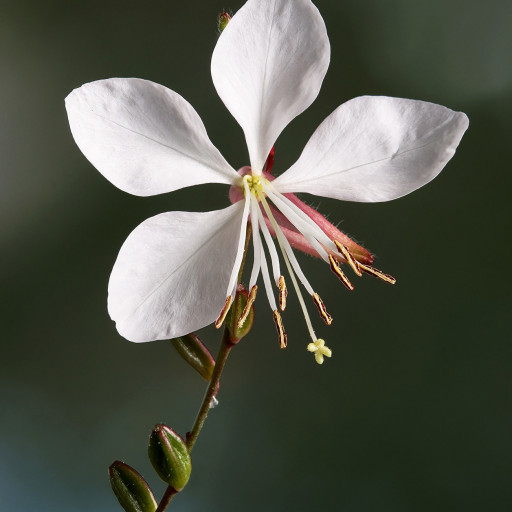
Often called "Whirling Butterflies" or "Bee Blossom," Gaura lindheimeri is a delicate-looking but incredibly tough perennial. Native to the sun-drenched prairies of Texas and Louisiana, it brings an airy, wild-meadow aesthetic to any landscape. Its slender stems sway with the slightest breeze, making the blossoms appear like a cloud of tiny insects hovering in mid-air.
🔍 How to Identify
- 🌸 The "Butterfly" Bloom: Features four delicate petals that are wider at the top than the bottom, looking remarkably like a small moth or butterfly.
- 🧚 Wand-like Stems: Long, thin, and wiry stems that can reach up to 4 or 5 feet, giving the plant a see-through, ethereal quality.
- 🍃 Lance-shaped Foliage: Small, narrow leaves that are roughly 1 to 3 inches long; some varieties feature maroon spotting or a reddish tint on the edges.
🏡 In Your Garden
- 🏜️ The Taproot Secret: Gaura develops a deep, sturdy taproot, which is its superpower for surviving intense heat and drought. However, this means it strongly dislikes being moved; once planted, it should stay in its "forever home" to avoid root shock.
- ✂️ The Mid-Summer Haircut: Because it can become a bit "leggy" or floppy after the first flush of flowers, cutting the stems back by half in midsummer will encourage a tidier shape and a massive second wave of blooms in the fall.
- ☀️ Drainage is Non-Negotiable: While it is a hardy survivor, it will quickly succumb to root rot in heavy, wet clay. It prefers "lean" soil that drains quickly, mimicking its native prairie habitat.
⚠️ Safety & Toxicity
- ✅ Non-Toxic: Gaura lindheimeri is generally considered safe and non-toxic for humans, dogs, and cats.
- 🐝 Bee Activity: While the plant itself is safe, it is a high-octane nectar source. Be mindful if you have pets or children who are sensitive to bee stings, as the plant will be buzzing with activity from dawn until dusk.
✨ Fun Fact
This plant was discovered by Ferdinand Lindheimer, often called the "Father of Texas Botany." He spent years traveling the dangerous Texas frontier in a two-wheeled cart, collecting thousands of plant species to send back to Harvard University.

Detailed Care Instructions
| Color | White, Pink, White-Pink |
| Soil Ph | 6.5 To 7.5 (Slightly Acid To Slightly Alkaline) |
| Humidity | Normal |
| Lighting | Part Sun |
| Soil Type | Light, Sandy |
| Bloom Time | Early Summer To Mid-Fall |
| Difficulty | Easy |
| Plant Type | Herbaceous Perennial |
| Mature Size | 15 To 48 Inches Tall And Wide |
| Native Area | North America |
| Temperature | 20°C - 30°C |
| Sun Exposure | Full Sun |
| Hardiness Zones | 5, 6, 7, 8, 9 |
To grow Gaura Lindheimeri plant, also known as butterfly bush, follow these steps:
- Choose a suitable location: Gaura Lindheimeri prefers full sun to partial shade and well-drained soil. Select a spot in your garden that meets these criteria.
- Prepare the soil: Loosen the soil with a garden fork or tiller, removing any weeds or rocks. Gaura Lindheimeri prefers slightly acidic to neutral soil (pH 5.5-7.0). If necessary, amend the soil with organic matter such as compost to improve drainage and fertility.
- Planting: Dig a hole that is slightly larger and deeper than the root ball of the plant. Place the Gaura Lindheimeri in the hole, backfill with soil, and gently firm it around the plant. Make sure the crown or base of the plant is level with or slightly above the soil surface.
- Watering: After planting, water the Gaura Lindheimeri thoroughly to settle the soil around the roots. Water regularly during the first growing season to establish a strong root system. Once established, the plant is somewhat drought-tolerant and requires less watering.
- Mulching: Apply a layer of organic mulch around the base of the plant to help retain soil moisture, suppress weeds, and regulate soil temperature. Keep the mulch a few inches away from the plant's stem to prevent rot.
- Pruning: Groom the plant by deadheading or cutting off spent flowers regularly. This encourages continuous blooming. In late winter or early spring, you may also cut back the plant to about 6 inches from the ground to promote new growth and prevent legginess.
- Fertilizing: Gaura Lindheimeri generally does not require heavy fertilizing but benefits from a balanced, slow-release fertilizer once per year in the spring. Follow the manufacturer's instructions for proper dosage.
- Pest and disease management: Gaura Lindheimeri is relatively resistant to pests and diseases. However, monitor for issues like aphids, caterpillars, or powdery mildew, and take appropriate measures to treat them if necessary.
- Winter care: In regions with freezing temperatures, Gaura Lindheimeri may die back during the winter. Apply a layer of mulch around the base of the plant for insulation. If necessary, protect the plant with a frost cloth or move it to a sheltered location until the cold weather passes.
By following these steps and providing proper care, you can successfully grow Gaura Lindheimeri plants in your garden.

Place in a bright room that is sun drenched almost all day. Or directly in a south-facing window.

1. Determine the watering needs of the plant based on the soil type, weather conditions, and overall health of the plant.
2. Use a watering can or hose with a gentle spray nozzle to avoid damaging the plant's delicate foliage.
3. Water the plant at the base, avoiding the leaves and flowers.
4. Water deeply enough to saturate the soil to the root level.
5. Allow the soil to dry out slightly between waterings to prevent root rot.
6. Adjust the frequency of watering based on the season and weather conditions.
7. Monitor the plant for signs of over or under watering such as yellowing leaves, wilting, or and water-logged soil.
- Choose a balanced fertilizer with equal amounts of nitrogen, phosphorus, and potassium.
- Apply the fertilizer in the spring when new growth begins.
- Use a slow-release granular fertilizer for longer-lasting results.
- Spread the fertilizer evenly around the base of the plant.
- Water the plant thoroughly after fertilizing to ensure proper absorption.
- Do not over-fertilize as this can lead to excessive foliage growth but fewer flowers.
Gaura Lindheimeri plants thrive in well-draining soil that is rich in nutrients. The ideal soil for these plants should be slightly acidic with a pH range of 6.0 to 7.0. The soil should also be able to hold moisture without becoming waterlogged, as the plants do not tolerate soggy conditions.
A good soil mix for Gaura Lindheimeri plant would be a combination of organic matter such as compost or aged manure, mixed with sandy soil to improve drainage. It is also recommended to add perlite or vermiculite to the soil mix to improve aeration.
When planting Gaura Lindheimeri plants, it is important to ensure that the soil is well-prepared and free of weeds, as these can compete for nutrients and water. The plants should be watered deeply after planting and then regularly thereafter, but care should be taken not to overwater them as this can lead to root rot.
Overall, a well-draining, slightly acidic soil that is rich in nutrients, but not too heavy or dense, is ideal for Gaura Lindheimeri plants.
Propagation of this plant can be accomplished through stem cuttings. Select a healthy stem from the parent plant, preferably one that is not currently flowering. Cut the stem at a 45-degree angle just below a node. Trim away any leaves on the lower third of the stem. Dip the cut end in rooting hormone, then plant it in a well-draining potting mix. Keep the soil moist and provide bright, indirect light. After several weeks, roots should begin to form and new growth should appear. Once the new plant is established, it can be transplanted into its permanent location.
Common pests of the butterfly gaura include Spider mites, thrips, larvae. Make a habit of checking your butterfly gaura frequently for pests so that any infestations can be caught and managed early.








