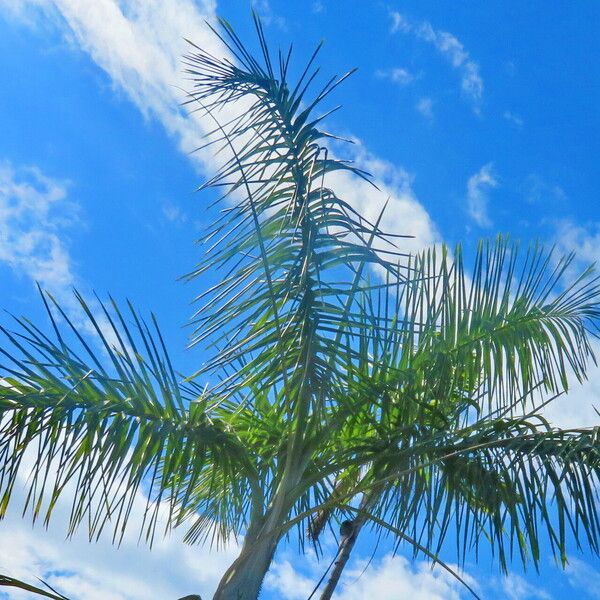
Plant Overview
Known as the Sierra Palm or the Mogote Palm, Gaussia princeps is a botanical acrobat. Endemic to the sheer limestone cliffs of western Cuba, it spends its life clinging to steep, rocky outcroppings where few other plants can survive. Its dramatic, swollen base and windswept crown make it a living piece of tropical sculpture, highly prized by rare palm collectors.
🔍 How to Identify
- 🫙 The Swollen Base: The most striking feature is its "pachycaul" trunk—a base that starts out bulbous and thick (resembling a bottle), tapering significantly as it reaches toward the sky.
- 🪶 Plumose Fronds: It sports elegant, feather-like (pinnate) leaves that are slightly curved and densely packed, giving the crown a compact, bushy appearance compared to more common palms.
- 🐘 Elephant-Skin Trunk: The bark is a smooth, light grey, often marked with subtle horizontal rings left behind by old leaf scars as the tree matures.
🏡 In Your Garden
- 🪨 Limestone Lover: Because it hails from the Cuban "Mogotes" (limestone hills), this palm thrives in alkaline environments. It specifically appreciates a bit of lime or calcium in its substrate to mimic its native rocky home.
- 💧 Drainage is Key: Think of this as a "succulent palm." It is highly adapted to drought and will quickly suffer from root rot if kept in soggy, heavy soil. It prefers to dry out significantly between waterings and requires a very porous, gritty potting mix.
⚠️ Safety & Toxicity
- ✅ Safe Status: Gaussia princeps is generally considered non-toxic to humans and common household pets like cats and dogs.
- 🍒 Fruit Caution: While not known to be poisonous, the small, bright red fruits produced by mature palms are not for human consumption and could pose a mild choking hazard for curious pets or toddlers.
✨ Fun Fact
- 👑 The Latin name princeps translates to "first" or "noble." It earned this title because it grows on the very crests of the highest limestone cliffs, standing like a prince overlooking the Cuban valleys below.

Detailed Care Instructions







