Plant Overview
Often called the Black Huckleberry, this resilient shrub is a staple of Eastern North American woodlands and barrens. Unlike its famous cousin the blueberry, this plant offers a deeper, more resinous flavor that has fueled both wildlife and foraging traditions for centuries. It is the "wild soul" of the heath family, known for its ability to thrive where other plants surrender.
🔍 How to Identify
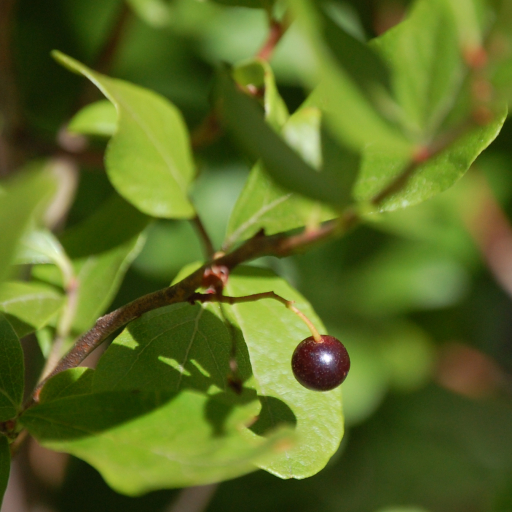
- 🍃 Resinous Leaves: The oval leaves are a soft green, but the real secret is on the underside; if you look closely (or use a magnifier), you’ll see tiny, glistening yellow resin dots that feel slightly sticky.
- 🔔 Bell-Shaped Blooms: In late spring, the plant produces clusters of drooping, tubular flowers that range from greenish-pink to a striking, deep red.
- 🍇 Glossy Fruit: The berries transition from green to red and finally to a deep, shiny black when ripe. Unlike blueberries, which have a waxy "bloom," these are often very dark and polished.
🏡 In Your Garden
- 🧪 Acid Addict: This plant is a strict "acidophile." It thrives in sandy, peaty, or rocky soils with a low pH. If your garden soil is alkaline, the plant will struggle to absorb nutrients, leading to yellowing leaves.
- 🌱 Root Sensitivity: Black Huckleberry is notoriously difficult to transplant because of its delicate, spreading root system. It prefers to stay exactly where it was planted, so choose its "forever home" carefully, ideally in a spot that mimics a sunny woodland edge.
- 🔥 Fire Adaptation: In the wild, this shrub is a phoenix. it is highly adapted to forest fires and will often sprout back more vigorously from its underground rhizomes after a burn.
⚠️ Safety & Toxicity
- 🍴 Status: Edible and delicious. The berries are safe for human consumption and are often used in jams, pies, or eaten fresh off the bush.
- 🐾 Pet Safety: There are no known toxicities for dogs, cats, or horses. However, always ensure you have correctly identified the plant before letting a pet (or yourself) snack on wild berries, as some "look-alike" berries in the woods can be toxic.
✨ Fun Fact
You can tell a Huckleberry from a Blueberry with your teeth! While blueberries have many tiny, unnoticeable seeds, every Black Huckleberry contains exactly 10 large, hard seeds (nutlets). This gives the berry a signature "crunch" that distinguishes it from any other wild fruit.

Detailed Care Instructions
To grow Gaylussacia Baccata, also known as black huckleberry or fly honeysuckle, you can follow these steps:
- Choose a suitable location: Black huckleberries prefer full sun to partial shade, so select a spot in your garden that receives at least 6-8 hours of sunlight each day.
- Prepare the soil: The plant tolerates a wide range of soil types but prefers acidic, well-draining soil. If your soil is heavy or clayey, consider adding organic matter like compost or peat moss to improve drainage and nutrient content.
- Planting: Dig a hole twice as wide and deep as the plant's root ball. Carefully remove the plant from its container and place it in the hole. Make sure the top of the root ball is level with or slightly above the soil surface. Backfill the hole with soil, gently firming it around the plant.
- Watering: After planting, water the plant thoroughly to ensure good root establishment. Keep the soil consistently moist, especially during dry periods, but avoid overwatering, as excessive moisture can lead to root rot.
- Mulching: Apply a layer of organic mulch, like wood chips or straw, around the plant to help conserve moisture, suppress weeds, and regulate soil temperature.
- Pruning: Regularly monitor the plant's growth and prune any dead, damaged, or overcrowded branches. Prune the plant after it finishes flowering to maintain its shape and encourage new growth.
- Fertilization: Black huckleberries generally don't require much fertilization. However, you can apply a balanced, slow-release fertilizer in early spring to provide additional nutrients.
- Protection: Protect the plant from strong winds and extreme temperatures, especially in colder climates where the plant might be susceptible to frost or freezing.
- Maintenance: Regularly monitor the plant for any signs of pests or diseases. Black huckleberries are generally resistant to most common pests, but paying attention to any issues can help catch and address problems early.
By following these steps, you should be able to successfully grow Gaylussacia Baccata plants in your garden.

Place in a bright room that is sun drenched almost all day. Or directly in a south-facing window.

The Gaylussacia Baccata plant requires regular watering, especially during the growing season. When it comes to watering, it is important to keep the soil consistently moist but not waterlogged. In order to achieve this, the plant should be watered deeply but infrequently, allowing the soil to dry out slightly between waterings. When watering, it is best to water at the base of the plant, avoiding the leaves and flowers as much as possible. This helps prevent the development of fungal diseases and other problems. Additionally, it is important to provide the plant with good drainage to prevent standing water around the roots, which can also lead to disease and rot. Finally, be sure to water in the morning or early afternoon to allow the foliage to dry out before nightfall, which reduces the risk of fungal infections.
To fertilize this plant, use a balanced fertilizer with equal amounts of nitrogen, phosphate, and potassium in the spring, before new growth starts. Apply the fertilizer evenly around the plant's drip line and water thoroughly afterward. Avoid fertilizing in the fall or winter as the plant is dormant during these times. Monitor the plant's growth and adjust fertilization rates accordingly.
The ideal soil for this plant prefers acidic, moist, well-drained soils with a pH range of 4.0 to 6.0. A rich, loamy soil is best for promoting healthy growth and development. Additionally, it is recommended that the soil be amended with organic matter, such as compost or leaf litter, to improve soil structure and provide important nutrients for the plant. It is also important to avoid planting this species in soils that are heavy in clay or have poor drainage, as this can lead to root rot and other issues.
Propagation of this plant can be done by collecting its ripe seeds in the fall and sowing them in prepared soil in the spring. Alternatively, stem cuttings can be taken in the spring or early summer and placed in a rooting hormone solution before being planted in soil. It is important to keep the soil moist and provide adequate light for the young plants to thrive. Once the plants have established, they can be transplanted into individual pots or planted directly into the ground in their desired location.








