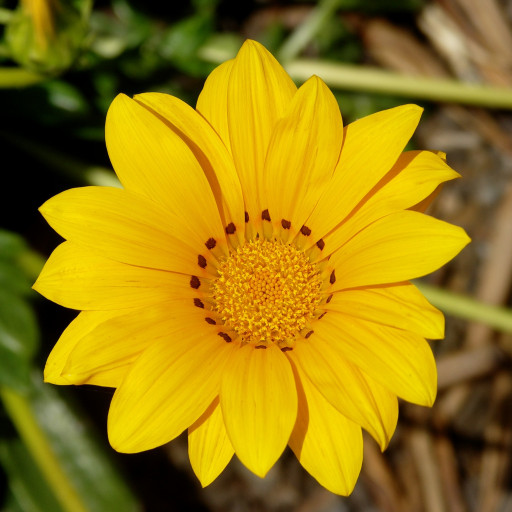
Plant Overview
Known widely as the Treasure Flower, the Gazania rigens is a living burst of sunshine that turns any garden into a vibrant Mediterranean escape. Originally hailing from the coastal cliffs and sandy plains of South Africa, these plants are celebrated for their dazzling, metallic-sheen petals and their uncanny ability to "wake up" and "sleep" with the sun. If you are looking for a hardy survivor that thrives on heat and minimal attention, this golden treasure is your best bet.
🔍 How to Identify
- 🌼 The Blooms: Large, daisy-like flower heads in fiery shades of yellow, orange, or bronze, often featuring a distinct dark "halo" or a ring of contrasting spots around the central disk.
- 🌿 The Foliage: Long, narrow, leathery leaves that are typically deep green on top with a surprising silvery-white, felted underside that helps the plant retain moisture.
- 📏 Growth Habit: A low-growing, clumping, or trailing plant that rarely exceeds 12 inches in height, making it an ideal groundcover for sunny borders.
🏡 In Your Garden
- ☀️ Sun Worshiper: These plants are strictly "diurnal," meaning they require direct, intense sunlight to fully open their petals. In the shade or on cloudy days, they will stay tightly tucked in to protect their pollen.
- 🏜️ Drought Specialist: Thanks to their South African heritage, they have evolved to survive in poor, sandy soils and are highly tolerant of salt spray. This makes them a "rockstar" for coastal gardens or rocky outcrops where other plants might wither.
- 💧 Drainage is Key: Their biggest enemy is "wet feet." Gazanias have a deep root system that can rot quickly in heavy clay or over-watered pots; always prioritize sharp-draining soil over high-nutrient fertilizers.
⚠️ Safety & Toxicity
- ✅ Safe Status: Gazania rigens is considered non-toxic to humans, dogs, and cats, making it a "worry-free" addition to family landscapes.
- 👐 Mild Irritation: While not poisonous, some gardeners may experience very mild skin irritation from the tiny hairs on the leaves or the sap if they have highly sensitive skin.
✨ Fun Fact
- 🕰️ The Botanical Clock: Gazanias exhibit a behavior called nyctinasty. This is a circadian rhythmic movement where the plant closes its petals at night to keep its reproductive organs dry and warm, effectively acting as a natural, solar-powered clock for your garden!

Detailed Care Instructions
| Color | Red, Orange, Yellow, White, Pink, Variegated |
| Soil Ph | Neutral (Near 7.0 Ph) But Will Tolerate Acidic And Alkaline Soil |
| Soil Type | Sandy, Dry, Well-Draining |
| Bloom Time | Late Spring And Early Summer |
| Plant Type | Annual |
| Mature Size | 6 To 10 Inches Tall And 10 Inches Wide |
| Native Area | South Africa |
| Sun Exposure | Full Sun |
| Hardiness Zones | 4 - 10 |
To grow Gazania Rigens plants, you can follow these steps:
- Choose a suitable location: Gazania Rigens plants prefer full sun and well-draining soil. Select a spot in your garden that receives at least 6-8 hours of direct sunlight each day.
- Prepare the soil: Gazania plants thrive in well-draining soil. If your soil is heavy or compacted, mix in organic matter such as compost or aged manure to improve drainage and fertility.
- Sow seeds or transplant seedlings: You have two options for growing Gazania Rigens plants. You can sow seeds directly into the garden bed, or you can start seeds indoors 6-8 weeks before the last frost to transplant seedlings later. If sowing directly, lightly press the seeds onto the soil surface as they need light to germinate.
- Watering: Water the plants regularly, keeping the soil lightly moist but not waterlogged. Gazanias are drought-tolerant once established but still benefit from regular watering during dry spells.
- Fertilization: Fertilize the plants once a month during the growing season with a balanced, slow-release fertilizer according to the package instructions. Avoid over-fertilizing, as it can inhibit flower production.
- Pruning: Deadhead spent flowers regularly to encourage continuous blooming throughout the season. This will also prevent the plant from setting seeds and divert energy towards flower production.
- Pest and disease control: Gazania Rigens plants are generally resistant to pests and diseases. However, keep an eye out for aphids, spider mites, or snails. If necessary, treat them with appropriate organic or chemical controls.
- Winter care: Gazanias are frost-sensitive plants, so if you live in a cold climate, you may need to protect them during winter. Mulch around the base of the plant to retain soil warmth and cover with a frost cloth or move containers indoors.
By following these steps, you can successfully grow Gazania Rigens plants and enjoy their vibrant, daisy-like flowers in your garden.

Place in a bright room that is sun drenched almost all day. Or directly in a south-facing window.

To properly water this plant, one should start by checking the soil moisture level regularly and only water when the soil is dry to the touch. It is important to avoid overwatering as this can lead to root rot. When watering, one should aim to water the soil directly and not the leaves. The plant should be watered in the morning or evening to avoid water evaporation. It is recommended to use room temperature water and avoid using cold water as it can shock the plant. It is also important to ensure proper drainage to prevent water buildup in the soil.
To fertilize this plant, use a balanced fertilizer with equal parts nitrogen, phosphorus, and potassium. Apply the fertilizer every two weeks during the growing season. Ensure that the soil is moist before fertilizing, and avoid fertilizing when the soil is dry. Over-fertilization can cause damage to the plant, so it is important to follow the instructions on the fertilizer package carefully.
Gazania rigens plant requires a well-draining and fertile soil that is loamy and has a pH ranging from slightly acidic to neutral. The soil should be a mixture of sand, perlite, and organic matter, such as compost or peat moss. The plant prefers soil that is moist but not waterlogged and can tolerate temporary periods of drought. It is important to avoid compacted soil, as it can cause poor drainage and stunt the growth of the plant. Additionally, the plant is sensitive to salt, so using soil that is low in salinity is recommended.
Gazania rigens plant can be propagated through two main methods: by seed or by division.
Propagation by seed involves collecting mature seeds from the plant and planting them in a well-draining soil mix. The seeds should be sown just below the surface of the soil and kept moist until they germinate, which usually takes between 10-14 days. Once the seedlings have grown to a suitable size, they can be transplanted to their permanent positions.
Propagation by division involves separating an established plant into smaller sections, each with their own root system. This method should be done in early spring and involves carefully digging up the plant, separating the root system, and planting the new sections in their own pots or in the ground. The new plants should be kept moist and in a shady spot until they have established a new root system.
Both methods of propagation require patience and careful attention to ensure successful growth.
Common pests of the treasure-flower include Spider mites, aphids. Make a habit of checking your treasure-flower frequently for pests so that any infestations can be caught and managed early.








