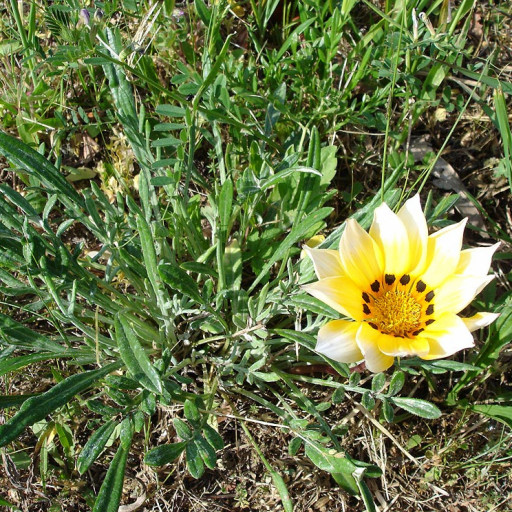
Plant Overview
Known as the "Treasure Flower" for its jewel-toned petals and metallic centers, the Gazania is a sun-worshiping beauty hailing from South Africa. These resilient plants are the gold standard for low-maintenance color, often found carpeting dry banks or trailing elegantly out of sunny containers. If you see them "sleeping" on a cloudy day, don't worry—they are simply waiting for the spotlight of the sun to return.
🔍 How to Identify
- 🌼 The "Treasure" Ring: Daisy-like blooms that feature a distinctive, dark contrasting ring of spots around the central disk, resembling a circle of jewels.
- 🍃 Two-Tone Foliage: Narrow, lance-shaped leaves that are a glossy deep green on the surface but hide a fuzzy, silver-white underside designed to trap moisture.
- 🌱 Low-Profile Growth: They typically form low-growing, spreading mats or neat mounded clumps, rarely reaching more than 10 to 12 inches in height.
🏡 In Your Garden
- ☀️ Sun Worshipers: These plants are strictly diurnal; they require intense, direct light to trigger their blooms. If planted in the shade, the flowers will remain stubbornly closed, and the stems may become "leggy" as they stretch for light.
- 🏜️ Drainage is Vital: Because they evolved in sandy coastal and desert regions, they despise "wet feet." They thrive in poor, sandy soil where other plants might struggle, making them perfect for rock gardens or coastal properties.
- ✂️ The Deadheading Trick: To keep the plant from entering a seed-producing dormant phase, pinch off faded flower heads. This tells the plant to keep pumping out new buds all through the heat of summer.
⚠️ Safety & Toxicity
- 🐾 Non-Toxic: Good news for pet owners! Gazanias are listed as non-toxic to dogs, cats, and horses by major veterinary organizations.
- 🧤 Mild Sensitivity: While safe to have around, some gardeners with very sensitive skin might experience mild irritation from the sap or the tiny hairs on the leaves, so wearing gloves during heavy pruning is recommended.
✨ Fun Fact
Gazanias exhibit a fascinating behavior called nyctinasty. They have a "hinge" at the base of their petals that reacts to light and temperature, causing the flowers to physically fold shut at night or during heavy cloud cover to protect their precious pollen from dew and rain.

Detailed Care Instructions
To grow a Gazania plant, you can follow these steps:
- Choose a suitable location: Gazanias thrive in full sun, so select a spot in your garden which receives at least 6-8 hours of direct sunlight.
- Prepare the soil: Gazanias prefer well-drained soil with good organic content. Before planting, amend the soil by adding compost or well-rotted manure to improve its fertility and drainage.
- Sow or plant the seeds: You can either sow the seeds directly in the ground or start them indoors and then transplant them once they have grown a few inches. Sow the seeds at a depth of about ¼ inch and keep them well-watered until germination occurs.
- Watering: While Gazanias are drought-tolerant plants, they still require regular watering to become established. Water the plants deeply but infrequently, allowing the top layer of soil to dry out between waterings.
- Fertilizing: Gazanias are not heavy feeders, but you can add a slow-release granular fertilizer or a balanced liquid fertilizer during the growing season to promote healthy growth and vibrant flowers.
- Mulching: Apply a layer of organic mulch around the base of the plants to help retain moisture, suppress weed growth, and regulate soil temperature.
- Pruning: Gazanias don't require much pruning, but you can deadhead spent flowers to encourage continuous blooming. Additionally, remove any damaged or wilted leaves to maintain a neat appearance.
- Pest and disease control: Gazanias are generally resistant to pests and diseases, but keep an eye out for common issues like aphids or powdery mildew. Treat any problems promptly using organic methods or suitable insecticides/fungicides.
- Overwintering: Gazanias are tender perennials in warmer regions but often treated as annuals in cooler climates. If you live in an area with mild winters, you can protect the plants by providing a thick layer of mulch or moving them to a sheltered location.
By following these steps and providing proper care, you should be able to grow healthy Gazania plants with beautiful flowers.

Place in a bright room that is sun drenched almost all day. Or directly in a south-facing window.

To water this plant, first check the soil moisture level by inserting your finger about an inch deep into the soil. If the soil feels dry, it is time to water the plant. Use a watering can or a hose with a gentle stream to water the plant at the base, making sure not to overwater. Avoid getting water on the leaves, as this can encourage fungal growth. Water the plant early in the morning or in the evening when the sun is not too strong. During hot and dry weather, the plant may need to be watered more frequently. When watering, aim to soak the soil to a depth of about 6 inches to ensure the roots are receiving enough moisture.
To fertilize this plant, apply a balanced fertilizer with equal parts nitrogen, phosphorus, and potassium. Use a slow-release fertilizer once a month during the growing season, or a liquid fertilizer every two weeks. Be sure to water the plant thoroughly before applying fertilizer, and follow the instructions on the package for specific application rates. Over-fertilizing can harm the plant, so it is important to use the appropriate amount.
The ideal soil for Gazania plant is well-draining soil that is rich in organic matter. It should be slightly acidic to neutral with a pH range of 5.5 to 7.0. The soil should be loose and crumbly, allowing for good air circulation and water drainage.
The plant prefers sandy or loamy soil, but it can also grow in clay soil if it is well-drained. The soil should be kept moist, but not waterlogged, to prevent root rot. Adding a layer of mulch around the plant can help to retain moisture in the soil and keep the roots cooler in hot weather.
It is important to avoid using heavy or compacted soil which may inhibit root growth. Additionally, soil that is too alkaline can lead to nutrient deficiencies in the plant, so it is best to test the soil before planting. Adding compost or other organic matter can help to improve the soil structure and fertility.
To propagate this plant, you will need to follow these steps:
- Fill a small container with a well-draining soil mix.
- Take a cutting from the mother plant that is about 4-6 inches long and has several sets of leaves.
- Remove any leaves from the lower half of the stem.
- Dip the cut end of the stem in rooting hormone powder.
- Make a small hole in the soil with a pencil or similar object.
- Insert the stem into the soil, making sure the remaining leaves are above the soil line.
- Water the cutting lightly.
- Cover the container with a clear plastic bag to create a mini greenhouse that will keep the cutting humid.
- Place the container in a warm, bright place but out of direct sunlight.
- Check the cutting daily for signs of new growth or roots.
- Once roots have developed, gradually acclimate the new plant to the outdoor environment by increasing its exposure to sunlight and reducing the humidity inside the plastic bag.
- Transplant the plant into a larger container or in your garden when it has grown enough.
Common pests of the treasure flower include Spider mites, aphids. Make a habit of checking your treasure flower frequently for pests so that any infestations can be caught and managed early.







