Plant Overview
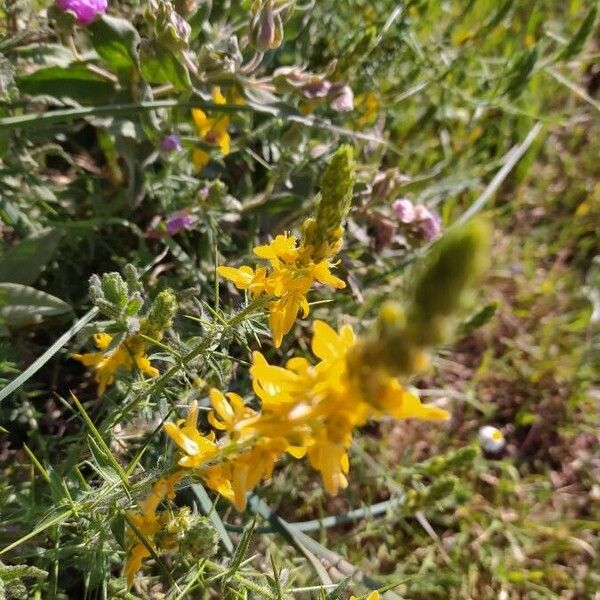
Often called the Hairy Broom, Genista hirsuta is a rugged survivor of the sun-drenched Mediterranean scrublands. This spiny, low-growing shrub is famous for its "hirsute" (hairy) appearance, which acts as a natural coat of armor against the intense Iberian heat. In late spring, it transforms from a prickly green mound into a glowing golden cushion, blanketing hillsides in Spain and Portugal with vibrant yellow blooms.
🔍 How to Identify
- 🌿 Hirsute Texture: True to its name, the stems and young leaves are covered in dense, soft white hairs that often give the plant a silvery or grayish-green shimmer.
- 🌼 Pea-Like Flowers: It produces bright, sunny-yellow flowers typical of the legume family, which appear in dense clusters at the ends of the branches.
- ⚔️ Spiny Defense: Beneath the soft-looking hairs lie sharp, rigid spines that protect the plant from grazing animals in its wild habitat.
- 🌳 Growth Habit: It typically forms a low, spreading mound, rarely exceeding 50–100 centimeters in height, making it look like a prickly hedge.
🏡 In Your Garden
- ☀️ Sun and Drainage: This plant is a true "sun worshiper." It thrives in poor, rocky, or sandy soils where other plants might struggle, provided it has excellent drainage.
- ⚓ The Taproot Rule: Like many members of the Broom family, it develops a deep taproot early in life. This makes it incredibly drought-tolerant but means it hates being moved. Choose its forever-home carefully, as transplanting an established plant is often fatal.
- ✂️ Pruning Style: To keep it from looking "leggy" or woody, lightly prune it after the flowering season, but avoid cutting back into the very old wood, as it may not sprout new growth from the base.
⚠️ Safety & Toxicity
- 🚫 Toxic if Ingested: Like most Genista species, the Hairy Broom contains alkaloids (such as cytisine). It should never be consumed by humans.
- 🐾 Pet & Livestock Warning: The seeds and foliage are toxic to dogs, cats, and horses. If you have curious pets that like to chew on garden greenery, this may not be the best choice for your yard.
- 🧤 Physical Irritation: While not chemically "poisonous" to the touch, the spines can easily puncture the skin, leading to irritation or minor scratches. Always wear thick gloves when pruning.
✨ Fun Fact
The name Genista has royal roots! It is the source of the name for the Plantagenet dynasty of English kings. Count Geoffrey of Anjou, the father of King Henry II, famously wore a sprig of common broom (Planta genista) in his hat, eventually giving his entire royal line their name.

Detailed Care Instructions
To grow Genista Hirsuta, also known as Hairy Greenweed, you can follow these steps:
- Plant selection: Choose a suitable location, as Genista Hirsuta prefers full sun and well-drained soil.
- Soil preparation: Prepare the soil beforehand by removing any weeds or stones. The soil should be loose and well-draining.
- Planting: Dig a hole slightly wider and deeper than the root ball of the Genista Hirsuta plant. Place the plant into the hole and gently firm the soil around it. Make sure the top of the root ball is level with the soil surface.
- Watering: After planting, water the Genista Hirsuta thoroughly to moisten the soil. Then, maintain regular watering until the plant becomes established.
- Mulching: Apply a layer of organic mulch, such as wood chips or straw, around the base of the plant. This will help conserve moisture and suppress weed growth.
- Maintenance: Regularly remove any weeds that may compete with the Genista Hirsuta for nutrients and water. Also, prune the plant after flowering to maintain its shape and promote new growth.
- Fertilization: Although Genista Hirsuta generally does not require much fertilization, you can apply a slow-release fertilizer in spring to provide it with nutrients.
- Pests and diseases: Keep an eye out for common garden pests, such as aphids or spider mites, and treat them promptly if necessary. Genista Hirsuta is generally resilient to diseases.
By following these steps, you should be able to grow Genista Hirsuta successfully in your garden or landscape.

Place in a bright room that is sun drenched almost all day. Or directly in a south-facing window.

To effectively water this particular plant, you should thoroughly moisten the soil in the surrounding area. Ensure that the water reaches the roots of the plant and that excess water is drained away to prevent waterlogging. It is best to water this plant sparingly and regularly instead of drenching it with water in a single session. However, ensure that the soil remains consistently moist but not saturated. In hotter climates or during the summer months, this plant may require more frequent watering to retain its lush appearance. Avoid getting water on the leaves as this may lead to fungal diseases or cause leaf scorch.
To fertilize this plant, you should use a balanced, general-purpose fertilizer with an N-P-K ratio of 10-10-10. Apply the fertilizer in the spring when new growth appears, and again in mid-summer. Do not over-fertilize as this can burn the roots and damage the plant. Water the plant before and after fertilizing to help the nutrients reach the roots.
Genista hirsuta, a plant known for its vibrant yellow blooms, thrives in well-draining, sandy soil. It prefers slightly acidic to neutral pH levels and does well in soil with low to moderate fertility. Avoid heavy or clay soils, as they can lead to root rot and poor growth. To promote healthy growth and blooming, mix in organic matter such as compost or peat moss to improve soil structure and fertility. Water the plant regularly, allowing the soil to dry out slightly between waterings to prevent waterlogged conditions. Ensure good drainage to prevent water stagnation and root rot. Overall, providing a well-draining, sandy soil with adequate nutrients and proper watering will promote the health and growth of Genista hirsuta.
To propagate this plant, you will need to gather mature seeds from a healthy parent plant. Once you have collected the seeds, plant them in a seed tray with a mixture of soil, sand, and peat moss. Keep the soil moist and the tray in a warm, bright location until the seeds germinate. Once the seedlings have developed two to three leaves, you can transplant them into individual pots or a larger container filled with well-draining soil. Water the plants regularly, and keep them in a sunny location with good air circulation. Over time, the plants will grow and mature, eventually producing their own seeds that you can use to propagate more plants.








