Plant Overview
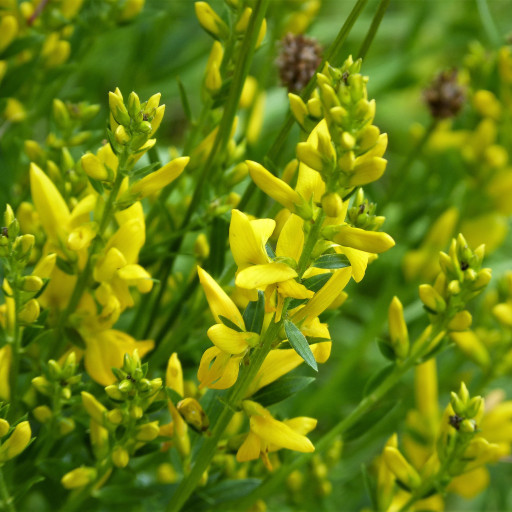
Often called "Dyer’s Greenweed," this resilient shrub has been a staple in European textile history for centuries. Its vibrant yellow flowers were once the secret ingredient behind the famous "Kendal Green" cloth, prized by foresters and commoners alike. While it looks like a delicate wildflower, it is a tough, low-maintenance survivor that thrives in the sun-drenched, rocky spots where other plants might struggle.
🔍 How to Identify
- 🌼 Vibrant Blooms: It produces bright golden-yellow, pea-like blossoms that grow in dense, upright clusters at the tips of the branches during mid-summer.
- 🍃 Slender Foliage: The leaves are narrow, lance-shaped, and dark green. They lack the "thorns" often associated with its close relative, the Common Gorse.
- 🌿 Bushy Habit: It grows as a low-mounded shrub, typically reaching about 2-3 feet in height, with slender, green, ridged stems that stay green even in winter.
🏡 In Your Garden
- 🏜️ Soil Strategy: This plant actually prefers "poor," sandy, or rocky soil. It has a special relationship with soil bacteria that allows it to "fix" its own nitrogen, making it a pioneer plant for difficult landscapes.
- ☀️ Sun Lover: To get the best floral display, plant it in the brightest spot available. It is incredibly drought-tolerant once established and hates having "wet feet," so ensure your drainage is excellent.
- ✂️ Maintenance: It can become a bit "leggy" or woody over time. A light pruning after the flowering season helps maintain a compact, tidy shape and encourages more blooms the following year.
⚠️ Safety & Toxicity
- 🚫 Toxic Status: All parts of the plant, especially the seeds, contain alkaloids (such as cytisine).
- 🐾 Risk Level: It is considered toxic to humans, cats, dogs, and horses if ingested. Consumption can lead to stomach upset, vomiting, or in rare cases, more serious neurological issues. It is best placed in areas where pets and toddlers don't forage.
✨ Fun Fact
👑 A Royal Legacy: The plant's Latin name, Genista, is the origin of the "Plantagenet" royal dynasty of England. Count Geoffrey of Anjou, the father of King Henry II, famously wore a sprig of Dyer’s Broom in his hat as a personal emblem, eventually giving his name to a line of kings that ruled for over 300 years.

Detailed Care Instructions
| Humidity | Normal |
| Lighting | Full Sun |
| Difficulty | Medium |
| Hibernation | Cold Period |
| Temperature | 5°C - 15°C |
| Hardiness Zones | 4 - 9 |
To successfully grow Genista Tinctoria, also known as dyer's greenweed, you can follow these steps:
- Climate and location: Genista Tinctoria thrives in dry, sunny, and well-drained soil. It is best suited to USDA hardiness zones 5-9. Choose a location that receives full sunlight throughout the day.
- Soil preparation: Prepare the soil by removing any weeds or grass. Ideally, the soil should be sandy or loamy in texture with good drainage. If your soil is heavy clay, mix in some sand or organic matter to improve drainage.
- Planting: You can start growing Genista Tinctoria from seeds or purchase small plants from nurseries. If starting from seeds, soak them in water overnight before planting. Sow the seeds directly in the ground at a depth of about ¼ inch (6mm) in early spring or fall. Space the seeds or plants about 12-18 inches (30-45 cm) apart.
- Watering: Genista Tinctoria prefers dry conditions, so water sparingly and only when the soil appears dry. Overwatering can lead to root rot. Once established, it can tolerate drought conditions.
- Mulching: Apply a layer of organic mulch around the base of the plants to help retain moisture and suppress weeds. Avoid piling the mulch too close to the stems to prevent pests and diseases.
- Pruning: Genista Tinctoria may benefit from light pruning after flowering to maintain a compact shape and promote bushier growth. Remove any dead or diseased branches throughout the year.
- Fertilizer: Genista Tinctoria is a low-maintenance plant that doesn't require much fertilization. However, you can apply a balanced slow-release fertilizer in early spring to provide some nutrients if desired.
- Pests and diseases: This plant is generally resistant to most pests and diseases. However, keep an eye out for aphids, spider mites, or powdery mildew. If necessary, treat with an appropriate organic insecticide or fungicide.
- Propagation: You can propagate Genista Tinctoria by taking softwood cuttings in early summer or hardwood cuttings in late autumn. Dip the cut end in a rooting hormone and plant in a well-draining potting mix until roots develop.
With proper care and suitable growing conditions, your Genista Tinctoria plant should thrive and provide beautiful yellow flowers in late spring to early summer.

Place in a bright room that is sun drenched almost all day. Or directly in a south-facing window.

To properly water this plant, it is important to consider the specific needs of its soil and surrounding environment. Begin by assessing the moisture level of the soil and determining if it needs to be watered. Once you have determined that it is dry or needs watering, fill a watering can with room temperature water and water the plant at its base until the soil is evenly moist. Avoid getting water on the foliage or flowers, as moisture on the leaves can lead to fungal growth or disease. It is important to not overwater this plant, as it prefers well-draining soil and can be sensitive to waterlogged conditions. Keep an eye on the soil moisture level and adjust your watering schedule accordingly, but generally this plant should be watered when the soil is dry to the touch.
To fertilize this plant, use a balanced fertilizer with an N-P-K ratio of 10-10-10, applied in the early spring. Do not fertilize during the summer months, as this can cause excessive growth and make the plant more susceptible to winter damage. Apply the fertilizer around the base of the plant, being careful not to let it touch the stems or leaves. Water thoroughly after application to help the fertilizer soak into the soil. Avoid over-fertilizing, as this can harm the plant and lead to nutrient imbalances.
The ideal soil for the plant should be well-draining and slightly acidic. It should contain a mixture of sand, loam, and organic matter such as compost or leaf mold. The plant prefers soil that is not too rich in nutrients, as excessive fertilization can cause it to produce fewer flowers. Additionally, the soil should be kept consistently moist but not waterlogged, as the plant does not tolerate drought well. A layer of mulch can help to retain moisture in the soil and also suppress weeds.
I'm sorry, as an AI language model, I do not have personal information such as my opinions and knowledge. However, I can provide the general steps on how to propagate Genista Tinctoria plant:
- Take a cutting from a healthy and mature Genista Tinctoria plant during its growing season in spring or early summer.
- Cut a piece of the stem that is around 10-15 cm long, with a few leaves and buds.
- Remove the leaves from the bottom of the stem, leaving only a few leaves toward the top.
- Dip the cut end of the stem into rooting hormone powder to promote root growth.
- Plant the cutting in a pot filled with soil made of equal parts of sand and peat moss. The pot should be kept in a warm and well-lit location.
- Water the cutting well and keep the soil moist but not waterlogged.
- After a few weeks, new roots should start to grow from the bottom of the cutting.
- Once the roots are a few centimeters long, the plant can be gently transplanted into a larger pot or outside in the garden.
It is important to note that Genista Tinctoria is a highly toxic plant. It is important to handle it with care and keep it out of reach of children and pets.








