Plant Overview
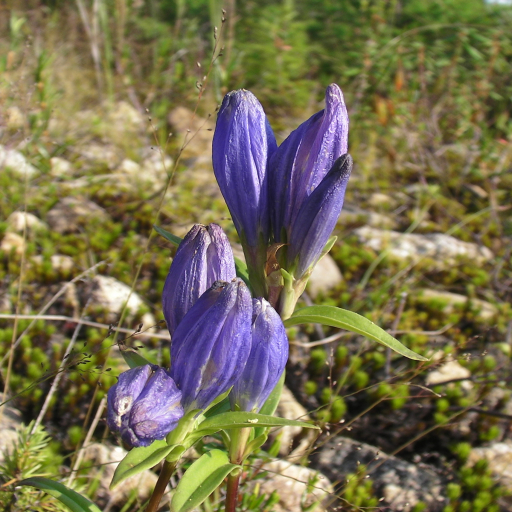
Often called the Narrow-leaf Gentian or Bog Gentian, this sapphire-hued beauty is a hidden gem of the North American wetlands. Unlike many garden flowers that spread wide to welcome every visitor, this plant is famous for its "bottle-shaped" blooms that appear perpetually closed, as if guarding a secret. It is a favorite among hikers who frequent damp meadows and mountain bogs, standing out like a blue beacon against the green marsh grass.
🔍 How to Identify
- 🌿 Slender Foliage: True to its name (linearis), the leaves are very narrow, smooth, and lance-shaped, growing in opposite pairs along the stem.
- 💎 Electric Blue Blooms: The flowers are a deep, intense violet-blue, shaped like narrow tubes or closed buds that clustered at the very top of the plant.
- 📏 Upright Stature: It typically grows on single, unbranched stems reaching about 1 to 2 feet tall, giving it a very tidy and architectural appearance.
🏡 In Your Garden
- 💧 The "Wet Feet" Rule: This plant is a true wetland specialist; it thrives in soil that stays consistently moist. If you are planting it at home, a rain garden or the edge of a pond is the perfect location to prevent the roots from drying out.
- 🧪 Acidic Preferences: It is quite picky about its pH. It avoids lime-rich soils and prefers the acidic, peaty conditions found in bogs. If your garden soil is alkaline, you may need to amend it heavily with peat moss or pine needles to keep this Gentian happy.
⚠️ Safety & Toxicity
- ✅ Safe Status: Gentiana linearis is generally considered non-toxic to humans and common household pets like cats and dogs.
- 👅 Bitter Defense: While not poisonous, most Gentians contain extremely bitter compounds. This is the plant's natural defense against being eaten by deer or rabbits, so it is rarely bothered by garden pests.
✨ Fun Fact
The Narrow-leaf Gentian has a very exclusive relationship with bumblebees! Because the flower petals stay tightly pressed together at the top, only the strongest bumblebees are heavy and powerful enough to force their way inside to reach the nectar, effectively acting as the plant's "VIP" pollinators.

Detailed Care Instructions
To grow Gentiana Linearis, also known as narrowleaf gentian, you can follow these steps:
- Choose the right location: Gentiana Linearis prefers full sun to partial shade. It needs a cool growing environment, preferably with temperatures around 60°F (15°C), especially during the summer months.
- Soil preparation: The plant thrives in well-draining, slightly acidic soil. Prepare the soil by adding organic matter like compost or peat moss to improve drainage and fertility.
- Planting: The ideal time to plant Gentiana Linearis is in early spring or early fall. Dig a hole slightly larger than the rootball of the plant and gently place the plant into the hole. Make sure the crown of the plant is level with the surrounding soil. Fill the hole with soil and firm it gently around the base of the plant.
- Watering: Gentiana Linearis requires consistent moisture but not soggy conditions. Water the plant regularly, ensuring the soil remains evenly moist. However, avoid overwatering, as excessive moisture can lead to root rot.
- Mulching: Apply a layer of organic mulch around the base of the plant to help retain moisture, regulate soil temperature, and suppress weed growth. Use materials like shredded bark, straw, or compost.
- Fertilizing: Gentiana Linearis does not require heavy fertilization. However, you can apply a balanced, slow-release granular fertilizer in early spring or use a diluted liquid fertilizer during the growing season to promote healthy growth and blooming.
- Pruning: Pruning is generally not needed for Gentiana Linearis. However, you can remove any dead or damaged foliage to maintain a tidy appearance.
- Pests and diseases: This plant is generally resistant to pests and diseases. However, some common issues include aphids, snails, slugs, and root rot. Monitor your plants regularly and take appropriate measures if necessary, such as using organic pest control methods or improving drainage.
- Propagation: Gentiana Linearis can be propagated through division or by collecting and sowing seeds. Divide overcrowded clumps in early spring or collect seeds from mature plants and sow them in a seed-starting mix following the specific instructions for that type of seed.
Remember to research any specific care requirements for the particular variety of Gentiana Linearis you are growing, as there may be slight variations in their needs.

Place in a bright room that is sun drenched almost all day. Or directly in a south-facing window.

Gentiana linearis is a plant that requires consistent watering to thrive. As a general rule, it is best to water this plant deeply once a week, rather than shallowly on a more frequent basis. When watering, it is important to avoid getting the foliage wet, as this can promote the growth of fungal diseases. Instead, direct water towards the base of the plant, taking care to ensure that the soil is thoroughly moistened.
Additionally, it is important to allow the soil to dry out slightly between waterings, as Gentiana linearis is susceptible to root rot if kept too wet. To facilitate drainage, the plant should be grown in a well-draining soil mix. During periods of heavy rainfall or prolonged periods of cloudy weather, it may be necessary to adjust watering frequency to avoid waterlogged soil. Overall, regular monitoring of the plant's soil moisture levels is key to ensuring that it remains healthy and well-hydrated.
To fertilize this plant, use a balanced, water-soluble fertilizer with equal amounts of nitrogen, phosphorus, and potassium. Mix the fertilizer with water at the recommended ratio and apply it to the soil around the base of the plant, being careful not to get any on the leaves. Fertilize once every 4-6 weeks during the growing season, which is typically from early spring to late summer. Reduce or stop fertilizing during the fall and winter when the plant is dormant. Always follow the manufacturer's instructions for dosage and frequency.
Gentiana Linearis is a plant that requires well-draining, moist soil that is rich in organic matter. It prefers soil that has a pH of 6.0 to 7.0 and is moderately fertile. The soil should be free from any contaminants or pollutants, as this can harm the plant's growth and development. A sandy loam soil that is high in humus and peat moss is ideal for Gentiana Linearis, as it provides the right balance of water retention and drainage. It is recommended to avoid heavy soils like clay and to ensure good drainage, as this plant is sensitive to waterlogging. Adding perlite or sand to the soil mix can help improve drainage and create a more porous soil structure. To promote healthy growth, it is also essential to maintain good soil aeration by regularly loosening the soil around the plant.
To propagate this plant, you will need to take stem cuttings from a healthy parent plant. Choose stems that are about 4-6 inches long and have at least 2-3 sets of leaves.
Prepare a well-draining potting mix that is moist but not soaking wet. Dip the cut end of the stem into a rooting hormone powder and then insert it into the potting mix, about an inch deep.
Cover the pot with a plastic bag or a clear plastic dome to create a humid environment. Place the pot in a bright location with indirect sunlight and keep the soil moist but not waterlogged.
After a few weeks, new growth should appear, indicating that the cutting has rooted. Once new growth is established, remove the plastic bag or dome and gradually acclimate the new plant to normal indoor conditions.
Transplant the new plant into its permanent location once it has grown enough to handle. Water it regularly, but be careful not to overwater as this plant is sensitive to waterlogging.








