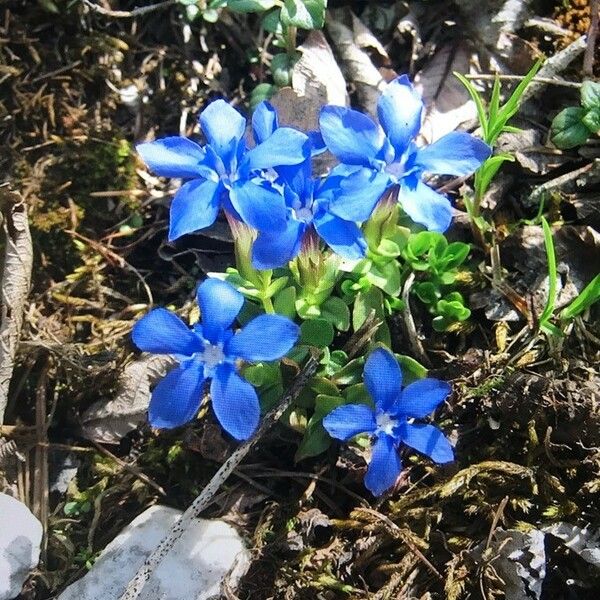
Plant Overview
Often referred to as the Round-leaved Gentian, this high-alpine treasure is a living sapphire of the mountain peaks. Found primarily in the limestone crevices of the Alps, it is famous for its "electric" blue color that seems almost too vibrant to be natural. In mountain folklore, finding a blooming Gentian is often seen as a reward for the most daring climbers reaching the highest altitudes.
🔍 How to Identify
- 💙 The Bloom: Features a brilliant, deep-blue, funnel-shaped flower with five petals. The throat of the flower often has subtle white or greenish spots.
- ⭕ Leaf Shape: Unlike its cousins, its basal leaves are distinctly rounded or elliptical (hence orbicularis), forming a tight, ground-hugging rosette.
- 📏 Stature: A true "cushion" plant, it rarely grows taller than a few inches, hugging the earth to protect itself from harsh mountain winds.
🏡 In Your Garden
- 🏔️ Alpine Aspirations: This is not a "set and forget" garden plant. It requires a specialized rock garden or "alpine house" that mimics the high mountains—think perfect drainage, gritty limestone soil, and very cool roots.
- ❄️ Winter Chill: It thrives on cold. It needs a distinct winter dormancy period under a "blanket" (traditionally snow) to reset its internal clock for spring flowering.
⚠️ Safety & Toxicity
- ✅ Status: Generally non-toxic.
- 🐾 Details: There are no known toxic effects for cats, dogs, or humans. However, because it is a rare and often protected species in the wild, it should never be foraged or disturbed in its natural habitat.
✨ Fun Fact
Gentians are masters of "weather-sensing." To protect their precious pollen from being washed away or diluted, the flowers will tightly fold their petals shut when they sense high humidity or approaching rain clouds.

Detailed Care Instructions








