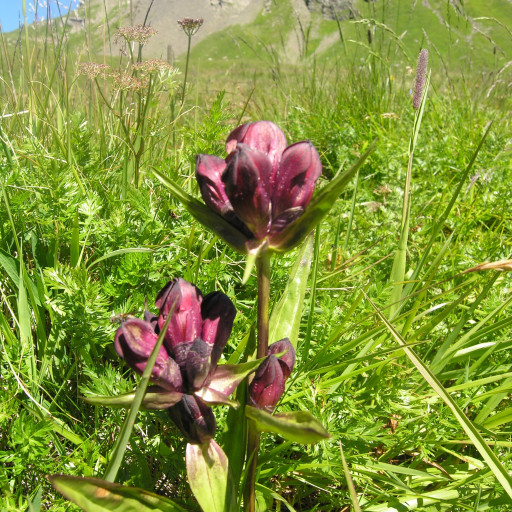
Plant Overview
Deep in the sub-alpine meadows of Europe, the Purple Gentian stands as a moody, elegant relative of the famous bright blue gentians. Often called the "Alpine Gentian," it is known for its distinct, dark-red to brownish-purple bell flowers that look almost like they are waiting to be rung by a mountain sprite. Unlike its sun-loving cousins, this plant thrives in the cool, misty heights of the Alps and Scandinavia.
🔍 How to Identify
- 🌸 The Bloom: Look for clusters of bell-shaped flowers that are a deep, dusky purple on the outside and often a lighter, yellowish-green speckled with purple on the inside.
- 🍃 The Foliage: Broad, lance-shaped leaves with very prominent parallel veins. The leaves grow in pairs directly opposite each other along the stem.
- 📏 The Growth: It is a sturdy, upright perennial that typically reaches between 20 to 60 centimeters in height, standing much taller than the creeping "ground-cover" varieties of Gentian.
🏡 In Your Garden
- 🏔️ Alpine Aspirations: This plant is a "cool-weather specialist." It struggles in hot, humid climates and prefers the rocky, acidic soil of a traditional rock garden or a cool, north-facing slope that mimics its mountain home.
- 🚫 Don't Move Me: The Purple Gentian grows a long, thick taproot designed to anchor it against mountain winds. Because of this, it absolutely hates being transplanted. Choose its "forever home" carefully, as moving it often results in the plant failing to recover.
⚠️ Safety & Toxicity
- 👅 Intensely Bitter: While not considered a "poisonous" plant in the traditional sense, it contains gentiopicrin, one of the bitterest substances known to man.
- 🐾 Pet & Child Safety: The extreme bitterness usually prevents any significant ingestion. However, if a pet or child were to eat it, it may cause nausea, drooling, or a mild stomach upset. It is generally considered safe to handle without gloves.
✨ Fun Fact
- 🥃 The Spirit of the Alps: In many mountain cultures, the roots of the Purple Gentian were traditionally fermented and distilled to create a potent, bitter spirit or "Schnapps." It was believed to be a cure-all for digestive issues and a way to "strengthen the blood" after a long winter.

Detailed Care Instructions
| Humidity | Normal |
| Lighting | Full Sun |
| Difficulty | Medium |
| Hardiness Zones | Max 5 |
To grow Gentiana Purpurea (also known as the Gentian flower), you can follow these steps:
- Choose a suitable location: Gentiana Purpurea prefers a cool, moist environment, so it is best to choose a planting site with partial shade or filtered sunlight. The soil should be well-draining and slightly acidic.
- Prepare the soil: Before planting, prepare the soil by removing any weeds or rocks. Spade or till the soil to a depth of about 8-10 inches (20-25 cm), and amend with organic matter like compost or well-rotted manure to improve drainage and fertility.
- Planting: Dig a hole slightly deeper and wider than the root ball of the Gentiana Purpurea plant. Place the plant in the hole, making sure that the top of the root ball is level with or slightly above the soil surface. Gently backfill the hole and firm the soil around the plant, ensuring there are no air pockets.
- Watering: Gentiana Purpurea requires consistent moisture, especially during its active growth periods. Water the plant deeply after planting and then keep the soil consistently moist but not waterlogged. Mulching around the plant helps to retain moisture and suppress weeds.
- Fertilizing: Gentiana Purpurea does not typically require heavy fertilization. However, a light application of a balanced, slow-release fertilizer in early spring can provide the necessary nutrients. Be sure to follow the package instructions for application rates.
- Pruning: After the flowering period in late summer or early fall, you can deadhead the spent flowers to encourage more blooms and prevent self-seeding. In the winter, after the foliage has died back, you can cut it back to ground level to tidy up the plant.
- Winter protection: Gentiana Purpurea needs protection in colder climates. Apply a layer of mulch over the plant in winter to insulate the roots from freezing temperatures. Alternatively, you can grow Gentiana Purpurea in containers and move them indoors or to a protected area during the winter months.
Remember that Gentiana Purpurea is a slow-growing perennial and may take a few years to reach its full potential. Be patient and provide consistent care to enjoy the beautiful blooms of this plant.

Place in a bright room that is sun drenched almost all day. Or directly in a south-facing window.

To water this plant, wait until the surface of the soil feels slightly dry to the touch before watering. Use a watering can or hose with a gentle spray nozzle to water the soil around the base of the plant. Avoid getting water on the leaves as this can lead to fungal diseases. Water deeply and thoroughly, allowing the water to soak into the root zone. Do not allow the plant to sit in standing water, as this can lead to root rot. Provide regular watering throughout the growing season, tapering off in the fall as the plant goes dormant.
To fertilize this plant, apply a balanced fertilizer with equal amounts of nitrogen, phosphorus, and potassium every 4-6 weeks during the growing season. Use a liquid fertilizer and dilute it to half strength before applying to the soil around the plant. Avoid fertilizing during winter or dormant periods. Amend the soil with organic matter such as compost or aged manure to improve fertility. Avoid applying too much fertilizer as it can burn the plant and harm its growth.
Gentiana Purpurea plant requires well-draining soil that is moist but not waterlogged. The soil should be slightly acidic with a pH level of around 5.5 to 6.5. It also prefers soil that is rich in organic matter, such as compost or well-rotted manure. The plant does not do well in heavy clay soils or soils that are too sandy. It is important to ensure that the soil is free of weeds and debris that can cause damage or competition with the plant's roots. Proper soil preparation before planting is critical to the plant's success, and it is recommended to amend the soil as necessary to create the ideal growing conditions.
Gentiana Purpurea can be propagated through either seed or stem cuttings. If propagating through seed, collect the seeds from the plant when they are ripe and sow them in seed trays or pots containing a sandy soil mixture. The seeds should be lightly covered with soil and kept moist, but not waterlogged. Germination usually takes around two to three weeks.
If propagating through stem cuttings, take cuttings from the plant in the spring or early summer when the plant is actively growing. Cut a stem about 4 inches long, making sure it has at least two or three pairs of leaves. Remove the leaves from the bottom pair and dip the cut end into a rooting hormone. Plant the cutting into a well-draining potting mix and water it well. Keep the potting mix moist but not waterlogged and place the pot in a bright location, but out of direct sunlight. In about a month, new roots should form, and the plant can be transplanted into a new container or garden.








