Plant Overview
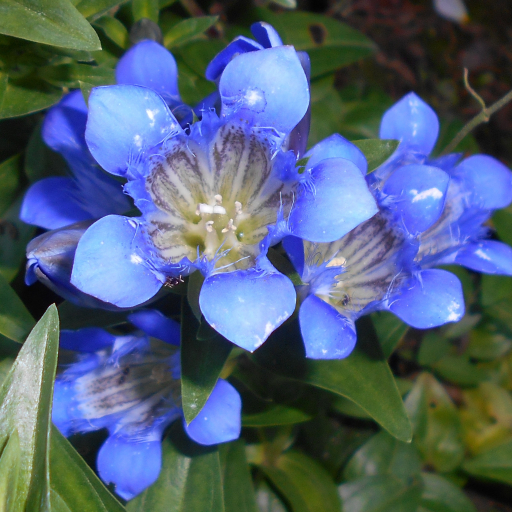
Often called the Crested Gentian, this stunning alpine perennial is a true showstopper for those seeking that elusive "true blue" for their garden. Originating from the rocky slopes of the Caucasus and Turkey, it brings a touch of high-altitude magic to rockeries and borders. Unlike many of its notoriously finicky gentian cousins, the Septemfida variety is famously more forgiving and easier for the home gardener to maintain.
🔍 How to Identify
- 💙 The Flowers: Deep, electric blue trumpet-shaped blooms that appear in dense clusters. Look closely for the delicate white streaks inside the "throat" and the unique "crested" or fringed folds between the flower lobes.
- 🌿 The Foliage: Small, pointed, lance-shaped leaves that grow in opposite pairs along the stems. They are a deep, glossy green, providing a rich backdrop for the vivid summer flowers.
- 📐 Growth Habit: This is a semi-prostrate plant, meaning its stems tend to sprawl across the ground before curving gracefully upward at the ends, creating a lush, leafy mat.
🏡 In Your Garden
- 🏔️ Alpine Roots: Because it is a mountain native, this plant loves "cool feet." It prefers soil that stays consistently moist but never soggy. Mulching with grit or small stones can help keep the root zone cool while preventing the crown from sitting in standing water.
- 🥣 Soil Nuance: It thrives best in neutral to acidic soil. If your garden is naturally alkaline (heavy lime or chalk), the plant may struggle to take up nutrients, often resulting in yellowing leaves.
- 🏠 Settling In: Gentians have sensitive, fleshy root systems and generally dislike being moved once established. It is best to choose a permanent spot with morning sun and afternoon shade, especially in warmer climates.
⚠️ Safety & Toxicity
- ✅ Status: Gentiana septemfida is generally considered non-toxic to humans, cats, and dogs.
- 👅 Bitter Defense: While not poisonous, gentians contain some of the most bitter substances known to science. This extreme bitterness usually acts as a natural deterrent, preventing pets or curious children from eating more than a tiny, unpleasant nibble.
✨ Fun Fact
👑 A Royal Discovery: The genus name Gentiana is a tribute to King Gentius of Illyria (2nd century BC). Legend says he was the first to discover the medicinal properties of these plants, using their incredibly bitter roots to treat fevers and even the plague!

Detailed Care Instructions
To grow Gentiana septemfida, also known as the crested gentian, you can follow these steps:
- Choose a suitable location: Crested gentians thrive in full sun to partial shade. Select a spot in your garden that receives at least 4-6 hours of sunlight per day.
- Prepare the soil: These plants prefer well-draining soil that is rich in organic matter. Amend the soil with compost or well-rotted manure to improve fertility and drainage.
- Sow seeds or start with seedlings: You can sow seeds directly in the garden in early spring or start with nursery-bought seedlings. If starting from seeds, surface sow them and lightly press them into the soil. Keep the soil consistently moist until the seeds germinate, which can take several weeks.
- Transplanting: If you started with seedlings, gently tease the roots before transplanting them into the prepared soil. Space the plants about 8-12 inches apart to allow for their growth.
- Watering: During the growing season, crested gentians require consistent moisture. Water the plants deeply, but avoid overwatering or allowing the soil to become waterlogged.
- Mulching: Spread a layer of organic mulch around the plants to help conserve soil moisture, control weeds, and moderate soil temperature.
- Fertilization: Apply a balanced, slow-release fertilizer once or twice during the growing season to promote healthy growth. Follow the manufacturer's instructions for application rates.
- Pruning: After the blooming period, you can trim back the spent flowers to maintain a neat appearance, but avoid cutting back any new growth.
- Winter care: Crested gentians are typically hardy plants, but in colder regions, you can apply a layer of mulch around the base of the plants to protect them from freezing temperatures.
- Propagation: You can propagate crested gentians by division. Dig up the plants in early spring or fall, carefully divide the clumps, and replant them in prepared soil.
By following these steps, you should be able to successfully grow Gentiana septemfida in your garden. Remember to provide the appropriate conditions and care to ensure healthy growth and blooming.

Place in a bright room that is sun drenched almost all day. Or directly in a south-facing window.

The plant should be watered with care and caution, ensuring that the roots are not waterlogged but have sufficient moisture to sustain themselves. The soil around the plant should be checked regularly to ensure that it remains moist and not dry, but not too damp to prevent root rot. It is recommended to water the plant once or twice a week depending on the weather conditions and humidity level in the environment. The water should be applied at a slow and steady rate to allow the soil to absorb it properly. Overwatering, especially during the dormant period, should be avoided as it can cause the plant to decline and possibly even die.
To fertilize this plant, use a balanced fertilizer with equal amounts of nitrogen, phosphorus, and potassium. Apply the fertilizer in the early spring, just as new growth appears. Use a slow-release fertilizer and apply it according to the package instructions. Be careful not to over-fertilize, as this can damage the roots. Water the plant thoroughly after fertilizing to help distribute the nutrients throughout the soil.
The ideal soil for Gentiana Septemfida plant is slightly acidic with a pH between 5.5 to 6.5. It should be well-draining and rich in organic matter. The plant prefers rocky or gravelly soil, which allows for good drainage and the retention of moisture. Additionally, the soil should be able to hold water evenly since Gentiana Septemfida needs consistently moist soil. Clay soil should be avoided since it can retain too much water and lead to root rot. In summary, the best soil for Gentiana Septemfida is a well-draining, slightly acidic soil that is rich in organic matter and can hold moisture evenly.
Propagating this plant can be done through division. In the spring, when the plant is actively growing, carefully dig up the clump and separate the root system into smaller divisions. Each division should have a healthy amount of roots and at least one shoot. Plant these divisions in the desired location and keep them well-watered until they establish themselves. It is important to handle the roots gently and avoid damaging them during the division process to ensure successful growth.








