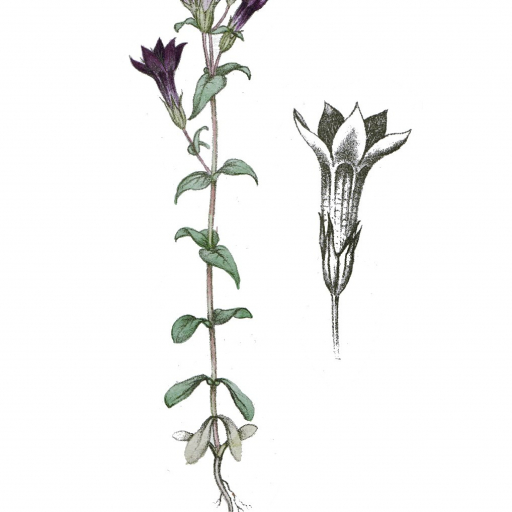
Plant Overview
Commonly known as the Autumn Gentian or Felwort, this charming wildflower is a resilient survivor of the late summer grasslands. While many flowers begin to fade as autumn approaches, Gentianella amarella bursts into life with delicate, purplish-lilac blooms. Historically, it was a staple in folk medicine for its intense bitterness, earning it a reputation as a "bitter herb" used to stimulate the spirit and the stomach.
🔍 How to Identify
- 💜 The Bloom: Look for small, tubular, five-petaled flowers that range from pale lilac to deep reddish-purple.
- 🧔 The "Hairy" Throat: A key giveaway is the fringe of fine, upright hairs inside the mouth of the flower tube, which protects the nectar from unwanted tiny crawlers.
- 🍃 The Foliage: The leaves are lance-shaped, dark green, and grow in opposite pairs along a sturdy, often purplish stem.
- 📏 Stature: It is a modest plant, usually standing between 10 to 30 centimeters tall, often hiding amongst shorter grasses.
🏡 In Your Garden & Wild Spaces
- ☁️ The Calcareous Choice: This plant is a specialist; it thrives in alkaline (lime-rich) soils. If you find it in the wild, you are likely standing on chalky or limestone-rich ground.
- ⏳ A Two-Year Journey: As a biennial, it spends its first year forming a quiet rosette of leaves on the ground. It only sends up its flowering spike in the second year, meaning it requires patience and undisturbed soil to complete its life cycle.
- ✂️ Low Competition: It hates being crowded out. In nature, it relies on grazing animals or light mowing to keep taller grasses at bay, ensuring its seeds find a bare patch of earth to call home.
⚠️ Safety & Toxicity
- ✅ Status: Generally considered non-toxic to humans and common pets.
- 👅 Bitter Defense: While not poisonous, the plant contains extremely bitter compounds. Most pets and livestock will naturally avoid eating it because of the unpleasant taste, so it rarely poses a risk in the garden or pasture.
✨ Fun Fact
In the world of flower essences, Gentian is the go-to remedy for "discouragement." It was famously used by Dr. Edward Bach, who believed the plant’s ability to thrive in harsh, rocky conditions could help people find the strength to persevere after a setback.

Detailed Care Instructions
Gentianella amarella, also known as autumn gentian, is a beautiful wildflower that can be grown in your garden with a little care and attention. Here are some tips on how to successfully grow Gentianella amarella:
- Soil: Gentianella amarella prefers well-draining, slightly acidic soil with organic matter. Make sure the soil is loose and fertile.
- Light: Plant Gentianella amarella in a location that receives full sun to partial shade. It thrives in bright, indirect light.
- Watering: Keep the soil consistently moist but not waterlogged. Water the plant when the top inch of soil feels dry to the touch.
- Temperature: Gentianella amarella prefers cool temperatures and can tolerate frost. It is best grown in USDA hardiness zones 5-9.
- Mulch: Apply a layer of mulch around the base of the plant to help retain moisture and suppress weeds.
- Fertilizing: Gentianella amarella does not require heavy fertilization. You can apply a balanced fertilizer in spring to promote healthy growth.
- Propagation: You can propagate Gentianella amarella by division or by sowing seeds. Division is best done in early spring or fall, while seeds can be sown in early spring.
- Maintenance: Remove any dead or faded flowers to encourage new blooms. You can also cut back the plant after flowering to promote bushier growth.
By following these tips, you can successfully grow Gentianella amarella in your garden and enjoy its beautiful blue flowers in the autumn months.

Place in a bright room that is sun drenched almost all day. Or directly in a south-facing window.

Gentianella amarella plants should be watered deeply but infrequently. When watering, it is important to saturate the soil around the plant to encourage deep root growth. However, it is also essential to allow the soil to dry out slightly between waterings to prevent root rot. It is advisable to water the plant in the morning to allow excess moisture to evaporate during the day and minimize the risk of fungal diseases. Additionally, it is important to avoid getting water on the leaves of the plant, as this can lead to issues such as leaf spot or mildew. To ensure proper watering, it is recommended to monitor the soil moisture levels regularly and adjust the watering schedule as needed based on the plant's requirements and environmental conditions.
To fertilize the Gentianella Amarella plant, mix a balanced, slow-release fertilizer into the soil in early spring before new growth appears. Fertilize the plant again in late summer or early fall to promote healthy growth and flowering. Avoid over-fertilizing, as this can cause burning of the roots. Water the plant thoroughly after fertilizing to help distribute the nutrients evenly throughout the soil.
Gentianella Amarella plants thrive in well-draining soil that is slightly acidic to neutral in pH. A mix of sandy loam or loamy soil with good organic matter content is ideal for these plants. Avoid heavy clay soils, as they can lead to waterlogged conditions that may harm the plant. Additionally, adding perlite or coarse sand to the soil mix can further improve drainage and prevent root rot. It is also important to ensure that the soil is nutrient-rich, so incorporating a balanced fertilizer or compost into the soil before planting can help support healthy growth and blooming. Regularly amending the soil with organic matter or a slow-release fertilizer will help maintain the plant's vigor and enhance its overall health.
One way to propagate Gentianella Amarella is through division. To do this, carefully dig up the plant and separate the roots into smaller sections, making sure each division has a good amount of roots and shoots. Replant these divisions into separate containers or directly into the ground, ensuring they are well-watered and have sufficient sunlight.
Another method of propagation is through seed. Collect the seeds from the plant and sow them in a well-prepared bed or container, making sure to cover them lightly with soil. Keep the soil consistently moist and provide adequate sunlight for germination. As the seedlings grow, transplant them to larger pots or into the garden once they are strong enough.
Gentianella Amarella can also be propagated by stem cuttings. Take a cutting from a healthy, mature plant and remove the lower leaves. Dip the cut end in rooting hormone and plant it in a well-draining soil mix. Ensure the cutting is kept consistently moist and place it in a warm, bright location to encourage root development.
By following these propagation methods, you can successfully propagate Gentianella Amarella and expand your collection of this beautiful plant.








