Plant Overview
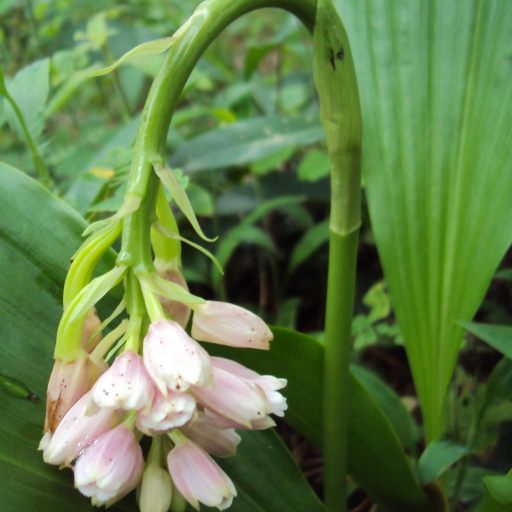
Commonly known as the Pink Shepherd’s Crook or the Nodding Orchid, Geodorum densiflorum is a fascinating terrestrial orchid that defies the typical "air-plant" orchid stereotype. Native to Southeast Asia and Northern Australia, it is best known for its peculiar flower spike that bends sharply downward like a hooked staff. In many indigenous cultures, it has been valued for its medicinal properties, though in a garden setting, it is cherished for its shy, understated elegance.
🔍 How to Identify
- 🦯 The "Crook" Stem: Its most defining feature is the fleshy flower stalk that curves 180 degrees at the top, pointing the flower cluster toward the ground.
- 🍃 Pleated Foliage: It produces large, bright green leaves that are deeply ribbed or "pleated," emerging from underground pseudobulbs that look like small, flattened onions.
- 🌸 Bell-Shaped Blooms: The flowers are pale pink or white with a purple-veined "lip," tightly packed at the end of the curved stem and often only partially opening.
🏡 In Your Garden
- 💤 The Disappearing Act: This plant is deciduous and completely dies back to its underground bulbs during the dry or cold season. Many gardeners accidentally throw them away thinking they've died, but they are simply resting!
- 🍂 Terrestrial Needs: Unlike tropical orchids that grow on trees, this species thrives in soil. It prefers a mix rich in leaf mold and organic matter that mimics the forest floor, rather than standard orchid bark.
- 🌤️ Dappled Light: It is a "Goldilocks" plant regarding sun—it needs enough light to trigger flowering but will scorch if placed in the direct, harsh afternoon sun.
⚠️ Safety & Toxicity
- 🟢 Status: Generally considered non-toxic.
- 🐾 Details: While there are no recorded cases of high toxicity to cats, dogs, or humans, it is not an edible plant. Its sap can occasionally cause mild skin irritation for those with sensitive skin, so it’s best to wash your hands after repotting.
✨ Fun Fact
The "Shepherd's Crook" is a master of timing. Once the flowers are successfully pollinated, the curved stem undergoes a dramatic transformation—it straightens out and grows much taller, lifting the seed pods high into the air so the wind can carry the tiny seeds further away!

Detailed Care Instructions
To grow Geodorum densiflorum, also known as the False Saffron Orchid, follow these steps:
- Obtain a healthy Geodorum densiflorum plant from a reputable nursery or orchid supplier. Ensure that the plant has a well-developed root system and several healthy pseudobulbs.
- Choose a suitable growing location. Geodorum densiflorum prefers partial shade or filtered sunlight. It can tolerate a range of temperatures, but it does best in warm and humid conditions.
- Prepare a well-draining potting mix. You can use a combination of potting soil, orchid bark, perlite, and charcoal. Avoid using regular garden soil as it tends to retain too much moisture.
- Select a suitable pot. Ideally, the pot should be larger than the plant's current root system with proper drainage holes.
- Gently remove the Geodorum densiflorum plant from its nursery pot, being careful not to damage the roots. If the roots are tightly wound, you can carefully loosen them to promote better growth.
- Place the plant in the new pot, ensuring that the pseudobulbs are partially exposed above the potting mix's surface. Fill the remaining space with the potting mix, gently pressing it around the roots to secure the plant.
- Water the plant well after repotting, ensuring that the potting mix is thoroughly moistened. However, avoid overwatering, as Geodorum densiflorum dislikes constantly wet conditions. Allow the top inch of the potting mix to dry out between watering.
- Provide adequate humidity. Geodorum densiflorum plants appreciate higher humidity levels. You can create a humid environment by placing the pot on a tray filled with pebbles and water. Avoid placing the pot directly in standing water.
- Fertilize the plant regularly during the growing season. Use a balanced orchid fertilizer diluted to half strength. Apply every 2-4 weeks, following the package instructions.
- Monitor for pests and diseases. Geodorum densiflorum can be susceptible to common orchid pests such as aphids, mealybugs, and scale insects. Treat with appropriate insecticides if necessary.
- In its natural habitat, Geodorum densiflorum experiences a dormant period during the dry season. To mimic this, reduce watering and fertilizer application during winter. This period of rest can help promote better blooming in the following growing season.
- During the growing season, Geodorum densiflorum may produce tall flower spikes with multiple yellowish-orange flowers. Enjoy the beauty and fragrance of its blooms.
Remember to research specific care requirements for Geodorum densiflorum to ensure its optimal growth in your specific growing conditions.

Place in a bright room that is sun drenched almost all day. Or directly in a south-facing window.

To properly water the Geodorum Densiflorum plant, it is important to take into consideration the soil type and growing conditions. One should avoid over-watering or under-watering the plant, as it can lead to serious damage. It is recommended to water the plant thoroughly and deeply, allowing the soil to absorb as much water as possible. The frequency of watering may vary depending on the temperature and humidity levels in the surrounding environment. It is also important to provide proper drainage for the plant, as excess water can lead to root rot. One should regularly check the soil for moisture level to determine when to water the Geodorum Densiflorum plant.
For best results, fertilize this plant every two weeks with a balanced liquid fertilizer diluted to half strength. During the plant's active growing season, which typically occurs in spring and summer, increase the frequency of fertilization to once a week. Be sure to water the plant thoroughly before and after fertilizing to avoid burning the roots. Avoid over-fertilization, as this can lead to excessive foliage growth at the expense of blooms.
Geodorum densiflorum plant prefers a well-draining soil with a neutral to slightly acidic pH. It thrives in a soil that is rich in organic matter and retains some moisture. A suitable soil for this plant can be a blend of peat moss, perlite, and vermiculite or a combination of sandy loam and sphagnum peat. It is important to ensure that the soil is not compacted and provides good drainage to prevent root rot. Additionally, adding a slow-release fertilizer to the soil can help provide essential nutrients to the plant for healthy growth.
Geodorum Densiflorum plant can be propagated by dividing the rhizomes.
To propagate, start by carefully digging up the plant from the soil. Gently remove any excess soil from the roots.
Next, use a sharp and sterilized knife to cut through the rhizome sections, making sure to include at least one healthy growth point on each section.
After dividing the rhizomes, replant them in fresh soil in a new pot. Make sure to keep the soil moist but not waterlogged.
It is important to maintain a warm environment for the new plants and regular watering and fertilizer will ensure successful growth.








