Plant Overview
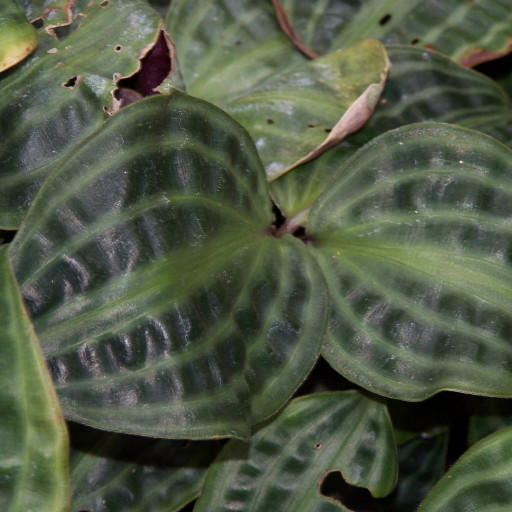
Commonly known as the Seersucker Plant, this Amazonian beauty is a showstopper for indoor enthusiasts who love unique textures. Named for its puckered, "quilted" leaves that resemble the classic seersucker fabric, it is a low-growing gem from the rainforest floors of Peru and Brazil. It’s the perfect choice for anyone looking to add a touch of prehistoric, deep-jungle mystery to their shelf.
🔍 How to Identify
- 🍃 The Leaf Texture: The most striking feature is the "puckered" or quilted surface of the leaves, which feel surprisingly thick and rubbery to the touch.
- 🎨 Striking Coloration: The top of the leaf boasts bold, silvery-green stripes against a dark emerald background, while the undersides are a stunning, deep royal purple.
- 🌱 Growth Habit: It stays relatively low to the ground, growing in a compact, clumping fashion rather than trailing or climbing.
🏡 In Your Garden
- ☁️ Humidity is Non-Negotiable: Because this plant originates from the damp floor of the Amazon, it craves high humidity. It is an ideal candidate for a large terrarium or a spot near a high-quality humidifier; otherwise, those beautiful leaves may crisp at the edges.
- 💧 Thirst for Consistency: Unlike succulents, the Seersucker Plant has a shallow root system and hates to dry out completely. However, it also dislikes "wet feet," so use a well-draining potting mix that retains moisture without becoming soggy.
- ⛅ Shadow Dweller: In the wild, it lives under the dense canopy of giant trees. In your home, it prefers bright, indirect light. Direct sun will quickly bleach its dark colors and scorch the delicate ridges of its leaves.
⚠️ Safety & Toxicity
- 🐾 Pet Friendly: Good news for animal lovers! Geogenanthus poeppigii is generally considered non-toxic to cats and dogs.
- 👶 Safe for Humans: It is non-toxic to humans, though as with any ornamental plant, it’s best to keep it out of reach of curious toddlers to prevent accidental choking or stomach upset from ingesting leaves.
✨ Fun Fact
The name Geogenanthus literally translates to "earth-born flower," referring to the way its small, fringed purple flowers often emerge right at the base of the plant, very close to the soil surface!

Detailed Care Instructions
To grow a Geogenanthus Poeppigii plant, also known as pink quill plant or Tillandsia cyanea, follow these steps:
- Purchase a healthy Geogenanthus Poeppigii plant from a reputable nursery or plant store. Look for a plant with vibrant pink bracts and green leaves.
- Geogenanthus Poeppigii plants are epiphytic, meaning they naturally grow on other trees. They do not require soil but need good air circulation. You have two options for growing them:
- Mounting: Attach the plant to a mount such as a piece of wood or bark. Use a non-toxic adhesive or fishing line to secure the plant to the mount.
- Potting: If you prefer to pot the plant, use a well-draining, porous medium such as orchid bark, sphagnum moss, or a mixture of the two.
- Mounting: Attach the plant to a mount such as a piece of wood or bark. Use a non-toxic adhesive or fishing line to secure the plant to the mount.
- Position the plant in a location with bright, indirect light. Geogenanthus Poeppigii plants thrive in bright but filtered light, such as near an east or west-facing window. Avoid exposing them to direct sunlight, as it can scorch the leaves.
- Maintain a warm and humid environment. Geogenanthus Poeppigii plants prefer temperatures between 65°F and 80°F (18°C-27°C). They also thrive in higher humidity levels, around 50-60%. You can increase humidity by misting the plant regularly or placing a tray with water nearby. Avoid misting if you live in a particularly humid climate.
- Water the plant properly. Geogenanthus Poeppigii plants like to be watered regularly but not excessively. Allow the potting medium or mount to completely dry out between waterings. The easiest way to water them is by dunking the plant in a container of water for about 10-20 minutes, then allowing it to drain fully. If you're using a pot, ensure the excess water can drain away to prevent root rot.
- Fertilize your Geogenanthus Poeppigii plant sparingly. Use a diluted, water-soluble fertilizer formulated for epiphytic plants or bromeliads. Apply it once every two to three months during the growing season (spring and summer). Avoid fertilizing during the plant's resting period in fall and winter.
- Prune and groom as needed. Remove any dead, damaged, or yellowing leaves by snipping close to the base. Groom the plant by gently removing any dust or debris from the leaves with a soft brush or by rinsing with water.
With proper care, your Geogenanthus Poeppigii plant will grow and produce beautiful pink bracts and small, blue flowers. Enjoy the unique and tropical beauty it adds to your indoor or outdoor space!

Place in a window with dappled sun or a spot in the middle of a room. Or directly in a window facing west or east.

To properly water this plant, it is important to consider its natural habitat and growing conditions. This plant is native to a region with moderate to high rainfall and humidity, so it requires consistent moisture to thrive.
When watering, use room temperature water and do not allow the soil to dry out completely. Check the top inch of soil and water when it feels slightly dry to the touch. However, be careful not to overwater as this can lead to root rot.
It is best to water from the base of the plant rather than from above to avoid getting water on its leaves, which can cause damage and increase the risk of fungal growth.
It is also beneficial to provide high humidity for this plant by misting the leaves or placing a tray of water nearby. This will help prevent the tips of the leaves from drying out and promote healthy growth.
In summary, water Geogenanthus Poeppigii consistently, avoid overwatering and provide high humidity to promote healthy growth.
To fertilize this plant, use a balanced fertilizer with a NPK (nitrogen, phosphorus, potassium) ratio of 10-10-10 or 20-20-20. Apply the fertilizer once a month during the growing season, which is typically from late spring to early fall. Dilute the fertilizer to half strength before applying and water the plant thoroughly after fertilizing. Avoid fertilizing during the winter months, as the plant is likely dormant and does not require extra nutrients.
Geogenanthus Poeppigii is a plant that prefers soil that is well-draining and remains slightly moist throughout the growing season. The soil should be a blend of organic matter such as compost, peat moss or coconut coir, and coarse sand or perlite to ensure good drainage.
It is important to avoid soils that are heavy in clay, as this will lead to poor drainage and can cause root rot and other issues. The pH level of the soil should be slightly acidic to neutral, around 5.5 to 7.0.
When planting, it is important to ensure that the soil is free of debris, such as rocks and sticks, to prevent damage to the plant's roots. Additionally, adding a layer of mulch to the surface of the soil can help retain moisture and regulate temperature, providing a healthy growing environment for Geogenanthus Poeppigii.
Geogenanthus Poeppigii is a plant that can be propagated through the division of its rhizomes. To begin, select a healthy plant with a well-established root system. Carefully remove the plant from its pot and gently separate the rhizomes into smaller sections, making sure that each section has a healthy root system and a few leaves. It is important to handle the plant gently to avoid damaging the roots or stems.
Next, prepare a suitable, well-draining potting mix and plant each division into its own pot. Water the plants thoroughly and place them in a warm, humid location with indirect sunlight. It is important to keep the soil moist but not waterlogged.
Within a few weeks, new growth should appear from the divided rhizomes. At this stage, it is important to periodically fertilize the plants with a balanced fertilizer to encourage healthy growth.
In summary, Geogenanthus Poeppigii can be propagated through the division of its rhizomes. To ensure success, handle the plant carefully, plant each division in a suitable potting mix, keep the soil moist and not waterlogged, and fertilize periodically to encourage healthy growth.
Common pests of the seersucker plant include Mealybugs, spider mites, aphids, thrips. Make a habit of checking your seersucker plant frequently for pests so that any infestations can be caught and managed early.








