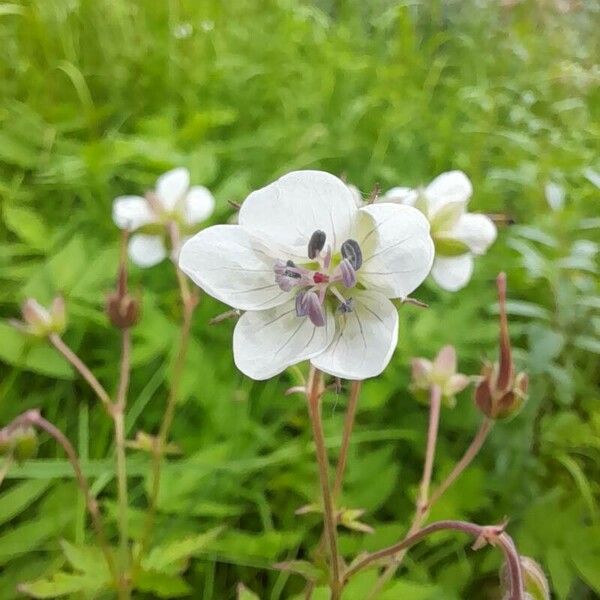
Plant Overview
Often referred to as the White Cranesbill, Geranium albiflorum is an elegant, hardy perennial that brings a touch of wild, woodland charm to any landscape. While many of its cousins boast vibrant pinks and purples, this species is celebrated for its ethereal, snowy blooms that seem to glow in the dim light of dawn or dusk. Native to the cool, mountainous regions of Northern Europe and Siberia, it is a rugged survivor masquerading as a delicate wildflower.
🔍 How to Identify
- 🌸 The Bloom: Small, cup-shaped flowers featuring five pure white petals. If you look closely, you may see incredibly faint, translucent veins running toward the center.
- 🌿 The Foliage: Deeply divided, medium-green leaves that grow in a palmate (hand-like) shape. The leaves form a dense, attractive mound even when the plant isn't in flower.
- 🏗️ The Habit: It is a "clump-forming" plant, meaning it grows in neat, rounded tufts rather than sending out invasive runners across your garden bed.
🏡 In Your Garden
- ☁️ The Shade Seeker: Because it hails from cool forest edges, this Geranium is perfect for "lighting up" partially shaded corners. It performs best where it can escape the scorching heat of the afternoon sun.
- 💧 Cool Feet: It prefers soil that mimics a forest floor—rich in organic matter and consistently moist. It doesn't handle extreme drought well, so a layer of mulch helps keep its roots cool and happy.
- ✂️ The Mid-Summer Haircut: Once the main flowering period ends, you can shear the plant back to the ground. This encourages a fresh flush of lush green foliage and prevents the plant from looking "leggy" or tired in the late summer.
⚠️ Safety & Toxicity
- 🐾 Pet Safety: Good news for pet owners! Geranium albiflorum is generally considered non-toxic to dogs, cats, and horses, making it a worry-free addition to a family yard.
- 🖐️ Skin Sensitivity: While not poisonous, the essential oils in the foliage can occasionally cause mild skin irritation for people with very sensitive skin. Wearing gloves while pruning is a simple precaution.
✨ Fun Fact
The common name "Cranesbill" comes from the plant's unusual seed pods. After the white petals fall away, the remaining seed head elongates into a sharp, pointed shape that looks remarkably like the long beak of a crane. When the seeds are ripe, this "beak" acts like a spring-loaded catapult, flinging the seeds away from the parent plant!

Detailed Care Instructions
To grow Geranium Albiflorum (also known as White Alpine Geranium) successfully, follow these steps:
- Climate and Location: Ensure that your region and climate are suitable for growing this plant. Geranium Albiflorum thrives in cool to moderate temperatures and prefers partially shaded areas.
- Soil Preparation: Prepare well-draining soil for your Geranium Albiflorum. Amending the soil with organic matter, such as compost or well-rotted manure, can enhance its fertility and drainage capabilities.
- Planting: Select a healthy Geranium Albiflorum plant from a reputable nursery or start it from seeds. If planting seeds, sow them in a seed tray or small pots filled with potting mix, and keep them moist in a warm location until they germinate. Transplant the seedlings into individual pots once they have developed a few sets of leaves. If planting a nursery-grown plant, dig a hole slightly larger than the root ball, place the plant, and backfill the hole, gently firming the soil around the roots.
- Watering: Geranium Albiflorum prefers moderate watering. Keep the soil evenly moist, but avoid overwatering or waterlogging, as this can lead to root rot. Water the plant when the top inch of soil feels dry, and make sure not to wet the leaves to reduce the risk of fungal diseases.
- Fertilization: Apply a balanced, slow-release fertilizer during the growing season to promote healthy growth and blooming. Follow the manufacturer's instructions for application rates and frequency.
- Pruning: Geranium Albiflorum benefits from occasional pruning to maintain a compact shape and encourage more blooms. In spring, remove any dead or damaged branches, and trim back leggy growth. Cutting back spent flowers can also stimulate further blooming.
- Mulching: Apply a layer of organic mulch around the base of the plant to help retain moisture, control weeds, and regulate soil temperature. Keep the mulch a few inches away from the plant's stem to prevent rot.
- Winter Care: In colder regions, provide protection to Geranium Albiflorum during winter. Apply a layer of mulch around the base of the plant to insulate the roots and avoid extreme temperature fluctuations. If winters are severe, consider overwintering the plant indoors or in a greenhouse.
- Pests and Diseases: Monitor the plant regularly for pests like aphids, mealybugs, or spider mites. Treat any infestations promptly using organic insecticidal soap or a suitable pesticide. Prune and remove any infected or diseased plant parts to prevent the spread of diseases.
Follow these guidelines, and with care and attention, your Geranium Albiflorum should grow and flourish, producing attractive white flowers.

Place in a bright room that is sun drenched almost all day. Or directly in a south-facing window.

Geranium albiflorum, a perennial plant native to the Rocky Mountains, requires a consistent watering routine to thrive. Here are some details on how to properly water this plant:
1. Watering Frequency: Geranium albiflorum generally prefers regular watering to maintain even moisture levels in its soil. The frequency may vary depending on the climate, season, and soil conditions. It is ideal to water this plant approximately once a week during the growing season, but adjust the frequency as necessary to avoid overwatering.
2. Soil Moisture: Before watering, always check the moisture level of the soil. Stick your finger about an inch into the soil surrounding the plant to determine if it feels dry. Only water the plant when the top inch of soil feels dry to the touch.
3. Watering Method: When watering, it is recommended to use a gentle watering technique. Avoid using a strong stream of water, as it may dislodge the soil or cause damage to the plant's delicate foliage. Instead, use a gentle flow of water, such as from a watering can or a hose with a gentle sprayer attachment.
4. Watering Amount: Each watering session should provide enough water to thoroughly moisten the root zone of the plant. Be careful not to overwater, as excessive moisture can lead to root rot. Ensure that water penetrates deeply into the soil, reaching the roots beneath the surface.
5. Time of Day: It is generally preferable to water Geranium albiflorum in the morning or early afternoon. This ensures that excess moisture on the foliage can evaporate before nightfall, reducing the chances of fungal diseases.
6. Rainfall Considerations: If your region receives adequate rainfall, you may not need to water the Geranium albiflorum as frequently. However, monitor the soil moisture level regularly to determine the need for supplemental watering.
7. Drought Tolerance: While Geranium albiflorum prefers consistent moisture, it does have some tolerance to drought conditions. Nevertheless, it is essential to avoid allowing the soil to dry out completely for extended periods of time, as this can stress the plant and hinder its growth.
Remember that while these guidelines are generally suitable for Geranium albiflorum, individual plant requirements may vary. Monitoring the plant's specific needs and adjusting your watering routine accordingly will help promote healthy growth and overall plant success.
To provide proper fertilizing instructions for the Geranium Albiflorum plant, follow these guidelines:
- Select a balanced water-soluble fertilizer suitable for flowering plants. Look for a fertilizer with an N-P-K ratio of 10-10-10 or 20-20-20.
- Dilute the fertilizer according to the manufacturer's instructions. Generally, a dilution ratio of 1 teaspoon of fertilizer per gallon of water is recommended.
- Water the Geranium Albiflorum plant thoroughly before fertilizing to prevent any potential root burn from the concentrated fertilizer solution.
- Apply the diluted fertilizer solution to the soil around the base of the plant, taking care not to splash it onto the foliage or flowers.
- Fertilize the plant once every four to six weeks during the growing season, which typically spans from spring to early fall. Avoid fertilizing during the winter months when the plant is dormant.
- Monitor the plant's response to the fertilizer and adjust the frequency or concentration if necessary. If the plant shows signs of nutrient deficiencies, such as yellowing leaves or poor growth, increase the fertilizer application. Conversely, if the plant shows signs of overfertilization, such as burnt or wilting foliage, reduce the amount or frequency of fertilizing.
- Always follow the fertilizer manufacturer's instructions and guidelines for specific dosage and application recommendations.
Geranium Albiflorum is a type of plant that thrives in well-draining soil. It prefers soil that is slightly acidic to neutral, with a pH level ranging from 6.0 to 7.0. The ideal soil for this plant should be rich in organic matter, providing essential nutrients for healthy growth.
It is recommended to use a loamy or sandy soil mix with good drainage properties, as excessive moisture can lead to root rot. Adding perlite or coarse sand to the soil mixture can improve drainage. This plant also benefits from soil that is moisture-retentive but not waterlogged, striking a balance between the two is crucial.
Additionally, adding organic matter such as compost or well-rotted manure to the soil before planting can further enhance its fertility and water retention capabilities. This aids in promoting healthy root development and overall plant vigor.
Regularly checking the moisture level of the soil by lightly touching the surface with your finger can help determine if it requires watering. It is important to allow the top inch (2.5 cm) of soil to dry out between watering sessions to prevent overwatering.
In summary, Geranium Albiflorum requires well-draining, slightly acidic to neutral soil that is rich in organic matter. A loamy or sandy soil mix with good drainage properties would be suitable for this plant.
Geranium albiflorum is a perennial plant known for its beautiful white flowers. To propagate this plant, you can follow these steps:
- Selecting a healthy parent plant: Choose a mature Geranium albiflorum plant with strong stems and good overall health. Make sure it is free from diseases and pests.
- Choosing the propagation method: There are several ways to propagate Geranium albiflorum, including through stem cuttings and division. Both methods have proven to be successful.
- Propagating through stem cuttings:
a. Prepare a clean and sharp cutting tool, such as sterilized pruning shears or a sharp knife.
b. Locate a healthy stem on the parent plant, preferably one that is somewhat woody and not too soft or succulent.
c. Cut a 4-6 inch section of the stem just below a leaf node.
d. Remove the lower leaves, leaving only a couple of upper leaves intact.
e. Dip the cut end in a rooting hormone to encourage root development (optional but recommended).
f. Fill a small pot or container with a well-draining soil mixture, such as a combination of peat moss and perlite.
g. Make a small hole in the soil and place the cutting inside, burying it about an inch deep.
h. Water the cutting lightly and place the pot in a warm and bright location, preferably with indirect sunlight.
i. Keep the soil slightly moist but not soaked, misting the cutting occasionally to maintain humidity.
j. After a few weeks, roots should start to form, and the cutting will establish itself as a new plant.
- Propagating through division:
a. Carefully dig up the parent plant from the ground or remove it from its pot.
b. Gently shake off excess soil to expose the root system.
c. Use a clean knife or garden shears to divide the root ball into separate sections. Ensure each section has healthy stems and roots.
d. Replant the divided sections separately, using well-draining soil in new pots or planting holes in the ground.
e. Water the newly divided plants thoroughly but avoid overwatering.
f. Place the plants in a suitable location with partial shade to encourage root development and reduce stress.
Remember to provide regular care and maintenance to the new Geranium albiflorum plants, including adequate watering, sunlight, and protection from harsh weather conditions. With proper attention, these propagated plants will flourish and reward you with their elegant white blossoms.








