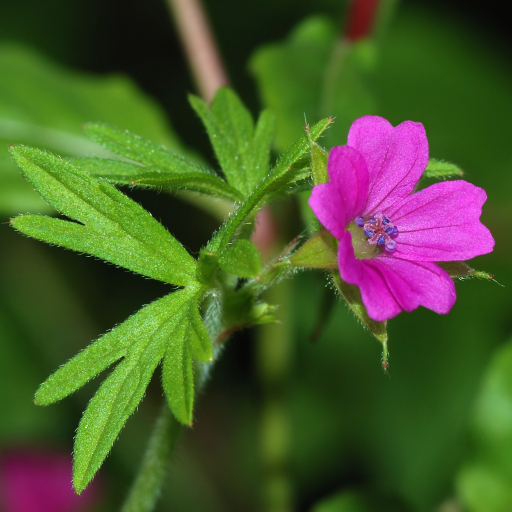
Plant Overview
Often called the Cut-leaved Crane's-bill, this delicate annual is a master of disguise, blending into grassy meadows with its deeply lobed, feathery foliage. While some gardeners label it a "weedy" interloper, it is a charming wildflower that provides a vital early-season nectar source for tiny pollinators. Its name comes from the peculiar shape of its seed pods, which look remarkably like the long, pointed beak of a crane.
🔍 How to Identify
- 🌿 The Leaves: Look for circular leaves that are "dissected" (deeply cut) into five to seven narrow, jagged segments. This gives the plant a distinctively shredded or feathery appearance compared to other geraniums.
- 🌸 The Blooms: Features tiny, five-petaled flowers that range from pale pink to deep magenta. Each petal usually has a small notch at the tip, and the flowers typically grow in pairs.
- 🐦 The "Beak": After the flowers fade, the plant develops long, upright seed capsules. These "crane's bills" are hairy and pointed, standing prominently above the foliage.
🏡 In Your Garden
- 🌱 Opportunistic Growth: This plant is an annual that thrives in disturbed soil, often popping up in garden borders, lawns, or gravel paths. It isn't fussy about soil quality but prefers a spot with moderate moisture and decent sunlight.
- 🐝 Ecological Role: While it can spread quickly, it is a fantastic "utility plant" for biodiversity. It attracts solitary bees and hoverflies, making it a great addition to a wilder, "no-mow" section of your yard.
⚠️ Safety & Toxicity
- ✅ Safe Status: Geranium dissectum is generally considered non-toxic to humans, cats, and dogs. It does not contain the concentrated essential oils found in some ornamental Pelargonium species.
- 🧤 Mild Irritation: The stems and leaves are covered in fine, stiff hairs. While not dangerous, handling the plant frequently with bare hands might cause very mild itching for individuals with highly sensitive skin.
✨ Fun Fact
The Cut-leaved Crane's-bill doesn't just drop its seeds—it launches them! When the seed pod dries out, it acts like a spring-loaded catapult, "exploding" to fling seeds several feet away from the parent plant to ensure they have enough space to grow without competition.

Detailed Care Instructions
Here are some tips for growing Geranium Dissectum plants:
- Planting: Choose a location with well-draining soil and partial shade to full sun exposure. Prepare the soil by loosening it and removing any weeds or debris.
- Watering: Water regularly to keep the soil consistently moist but not waterlogged. Geranium Dissectum plants prefer evenly moist soil. Water at the base of the plant to avoid wetting the leaves, which could lead to fungal diseases.
- Fertilizing: Apply a balanced, slow-release fertilizer in the spring and mid-summer to provide essential nutrients for healthy growth. Follow the manufacturer's instructions for the proper dosage.
- Pruning: Trim back any dead or damaged foliage to promote new growth and maintain the plant's shape. You can also prune to control its size and prevent it from becoming leggy.
- Mulching: Apply a layer of organic mulch, such as wood chips or compost, around the base of the plant. Mulching helps retain moisture, suppress weeds, and protect the roots from extreme temperatures.
- Winter care: In colder regions, Geranium Dissectum plants may die back in winter. Cut back the stems to the ground in late autumn and apply a thick layer of mulch over the root zone to protect it during the winter months.
- Propagation: Geranium Dissectum plants can be propagated through division or from cuttings. Division involves separating the plant into smaller sections, each with its own set of roots. Cuttings can be taken from healthy shoots, placed in well-draining soil, and kept indoors until they establish roots.
Remember to monitor the plant for any signs of pests or diseases, such as aphids or powdery mildew, and take appropriate measures if needed. Regularly inspect the plant for any issues and provide proper care and maintenance to ensure healthy growth for your Geranium Dissectum plant.

Place in a bright room that is sun drenched almost all day. Or directly in a south-facing window.

When watering this plant, it is important to ensure that the soil is moist but not waterlogged. Typically, it is best to water deeply once per week rather than shallowly more frequently. This allows the water to penetrate deeply into the soil and encourages the roots to grow deeper as well. Avoid getting water on the leaves or flowers of the plant as this can lead to disease or rot. Additionally, be sure to monitor the plant for signs of overwatering or underwatering, such as yellowing leaves or wilting, and adjust your watering frequency accordingly.
- Choose a well-draining soil mix that is rich in nutrients.
- Mix a slow-release fertilizer into the soil before planting.
- Water the plant deeply after planting and then allow the soil to dry out slightly before watering again.
- Once the plant is established, fertilize every 4-6 weeks with a balanced liquid fertilizer.
- Avoid over-fertilizing as this can lead to excess foliage growth and a decrease in flower production.
- Trim back any dead or yellowing leaves to promote healthy growth.
The ideal soil for the plant in question should be well-draining and rich in nutrients. It should be a balanced mixture of loam, sand, and organic matter, with a slightly acidic pH level between 6.0 and 6.5. The soil should be moist but not waterlogged, and it is important to avoid overwatering the plant. Additionally, it is recommended to add fertilizer to the soil every few weeks during the growing season to promote healthy growth and abundant blooming.
Geranium Dissectum plants can be propagated by taking stem cuttings in the early summer. Cut a stem that is around 4-6 inches long and remove the lower leaves from the stem. Dip the cut end of the stem into rooting hormone powder, and then plant the stem into a pot of moist potting mix. Keep the pot in a warm, bright location but out of direct sunlight, and ensure that the soil remains moist. After 4-6 weeks, new roots should have formed, and you can transplant the plant into a larger pot.








