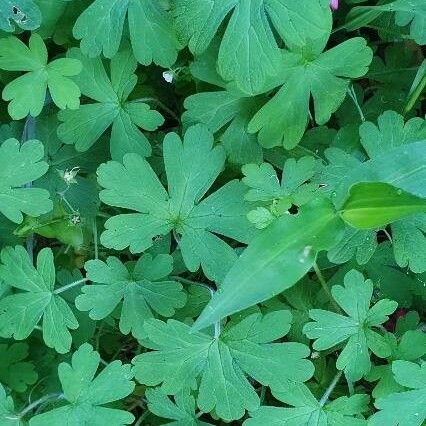
Plant Overview
Meet the Australasian Cranesbill, a delicate yet resilient wanderer from the southern hemisphere. Often found weaving through the undergrowth in Australia and New Zealand, this plant is a master of the "woodland look." It earns its nickname from the peculiar, elongated shape of its seed pods, which look remarkably like the beak of a crane.
🔍 How to Identify
- 🌸 The Bloom: Small, five-petaled flowers that range from pale pink to almost white, often decorated with faint, translucent veins.
- 🌿 The Leaf: Deeply lobed, kidney-shaped leaves that grow in a soft, low-lying rosette. They often have a slightly fuzzy texture.
- 📍 The "Beak": Look for the seed heads after the flowers fade; they stand tall and pointed, a signature trait of the Geranium family.
🏡 In Your Garden
- 🌦️ Shade Seeker: Unlike the flashy "Zonal Geraniums" (which are actually Pelargoniums), Geranium homeanum prefers the quiet life. It thrives in dappled light and cool, moist soil, making it perfect for under-planting beneath trees.
- 🕸️ Living Mulch: This plant is a "weaver." It fills the gaps between larger shrubs with a delicate green carpet, helping to keep the soil cool and suppress smaller weeds without being aggressive.
⚠️ Safety & Toxicity
- 🐾 Pet Safety: True Geraniums like this one are generally considered non-toxic to pets, though it is always best to discourage chewing as any plant matter can cause mild stomach upset.
- 👶 Human Safety: It is non-toxic to humans. Some people with very sensitive skin may experience mild redness if they handle the crushed foliage extensively, but this is rare.
✨ Fun Fact
- 🚀 Seed Ballistics: The "Crane’s Bill" isn’t just for show! When the seeds are ripe, the pod dries and creates a spring-like tension. It eventually "snaps," catapulting the seeds several feet away from the mother plant to help the colony expand.

Detailed Care Instructions

Place in a bright room that is sun drenched almost all day. Or directly in a south-facing window.

To water this plant, it is important to ensure that the soil is almost completely dry before watering again. This plant does not do well in waterlogged soil, so overwatering should be avoided. When watering, aim to moisten the soil evenly and avoid getting water on the leaves or stem to prevent rot and fungal growth. The frequency of watering will depend on factors such as temperature, humidity, and sunlight, but generally, watering once or twice a week should suffice. It is also advisable to use room temperature water, as cold water can shock the roots and affect the plant's overall health.
The best soil to use for the Geranium Homeanum plant is a well-draining, fertile soil that is rich in organic matter. It should have a pH range between 6.0 and 7.0, and should provide good drainage to prevent waterlogging. The soil should be moist, but not overly wet or dry, and should be able to retain moisture without becoming too compacted. Adding compost or other organic matter to the soil can help to improve its fertility and overall quality. Additionally, adding sand or perlite to the soil can help to improve drainage and prevent the soil from becoming waterlogged. Overall, the soil should be suitable for growing a range of plants, and should provide good support and nourishment for the Geranium Homeanum plant.








