Plant Overview
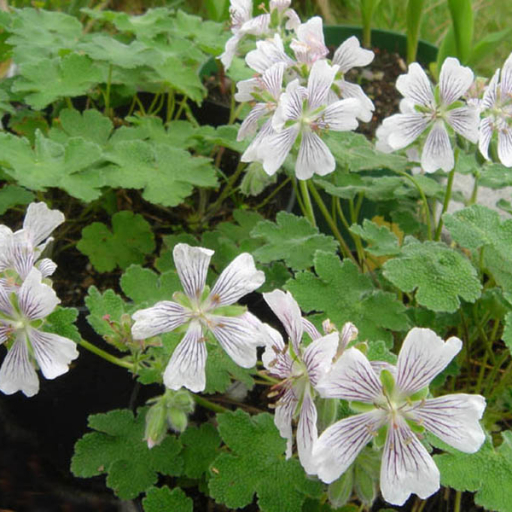
Often called the "Satin Geranium" or "Renard's Cranesbill," this plant is a sophisticated choice for gardeners who value foliage just as much as flowers. Hailing from the rugged Caucasus Mountains, Geranium renardii is famous for its "seersucker" leaves that look like they’ve been fashioned from soft, crushed velvet. It is the ultimate "quiet luxury" plant, providing a tidy, architectural look that remains beautiful long after its delicate spring blooms have faded.
🔍 How to Identify
- 🍃 Velvety Foliage: The leaves are the star—sage-green, circular, and deeply divided into five to seven lobes with a distinctively wrinkled or "puckered" texture that feels soft to the touch.
- 🌸 Veined Blooms: It produces five-petaled flowers that are white to very pale lavender, featuring dramatic, dark violet-purple veins that radiate from the center like a roadmap.
- Compact Mound:** Unlike many "leggy" wild geraniums, this species forms a tight, cushion-like mound that stays close to the ground, rarely exceeding 12 inches in height.
🏡 In Your Garden
- 🪨 The Drainage Specialist: Because it originated in rocky mountain terrain, this geranium hates "wet feet." It thrives in gravel gardens or well-drained borders where water doesn't sit around the roots.
- ✂️ Post-Bloom Refresh: While it is low-maintenance, a quick "haircut" after the first flush of flowers in early summer will encourage a fresh crop of that beautiful velvet foliage to last until frost.
- ☀️ Sun Lover: It is much more sun-tolerant than its forest-dwelling cousins, using its textured, hairy leaves to reflect heat and conserve moisture during dry spells.
⚠️ Safety & Toxicity
- ✅ Generally Safe: Geranium renardii is considered non-toxic to humans and is generally safe to handle without gloves.
- 🐾 Pet Caution: While "True Geraniums" (like this one) are significantly less toxic than "Pelargoniums" (common window-box geraniums), they still contain essential oils that can cause mild digestive upset or skin irritation in sensitive cats or dogs if eaten in large quantities.
✨ Fun Fact
The common name "Cranesbill" refers to the plant's fascinating seed pods. After the flower fades, the seed head elongates into a long, pointed shape that looks exactly like the beak of a crane. When the seeds are ripe, this "beak" acts like a spring, catapulting the seeds away from the mother plant!

Detailed Care Instructions
To grow Geranium Renardii, follow these steps:
- Choose the right location: Geranium Renardii prefers a sunny spot with well-drained soil. It can tolerate some shade, but it thrives best in full sun.
- Prepare the soil: Ensure that the soil is well-draining and slightly acidic. Amend the soil with organic matter, such as compost, to improve its fertility and drainage if needed.
- Planting: In early spring or fall, dig a hole slightly larger than the plant's root ball. Place the plant in the hole, ensuring that the top of the root ball is level with or slightly above the soil surface. Fill in the hole with soil, gently firming it around the plant. Space plants around 12 to 18 inches apart to allow for their spreading habit.
- Watering: Give the plant a deep watering after planting, and then water regularly until it gets established. Once established, Geranium Renardii is moderately drought tolerant and does not require excessive watering. However, it's always beneficial to keep the soil evenly moist but not waterlogged. Ensure that the soil dries out slightly between waterings.
- Mulching: Apply a layer of organic mulch around the plant, such as straw or wood chips. Mulch helps retain moisture, suppress weeds, and regulate soil temperature.
- Fertilization: Geranium Renardii generally doesn't require much fertilization. However, you can apply a balanced, slow-release fertilizer in early spring to give it a nutrient boost for the growing season. Follow the package instructions for the recommended dosage.
- Pruning: Geranium Renardii is relatively low-maintenance and does not require heavy pruning. However, you can trim back any dead or damaged foliage to promote new growth and maintain the plant's shape. After the first flush of flowers, you may also trim back the spent blooms to encourage additional blooming.
- Pests and diseases: Geranium Renardii is generally resistant to pests and diseases. However, keep an eye out for common issues like aphids or slugs. If required, use organic pest control methods or consult a local nursery for appropriate solutions.
With proper care and maintenance, your Geranium Renardii plant should grow and flourish, providing you with beautiful foliage and delicate flowers.

Place in a bright room that is sun drenched almost all day. Or directly in a south-facing window.

To water this specific plant, you should first ensure that the soil is dry to the touch before watering. When watering, you should aim to water directly at the soil level rather than on the leaves. It is also important to make sure that the water is able to drain freely from the pot as this plant does not like to sit in water. Finally, it is best to water this plant in the early morning or late afternoon to avoid evaporation and to not shock the plant during the hot midday sun.
Apply a balanced fertilizer that contains equal amounts of nitrogen, phosphorus, and potassium. Fertilize once every 4-6 weeks during the growing season, which typically begins in the spring and continues through the summer. Use a slow-release fertilizer or dilute liquid fertilizer according to package instructions. Avoid over-fertilizing, as this can lead to excessive leaf growth at the expense of flowers. Water the plant deeply before and after fertilizing to prevent root burn.
Geranium Renardii is a beautiful flowering plant that requires a specific type of soil in order to thrive. For best results, this plant should be grown in soil that is well-draining and fertile. The soil should be rich in nutrients, with a pH level that is slightly acidic to neutral. It is recommended to use a mix of compost and sand to improve drainage, while also providing the necessary nutrients for the plant to grow. Avoid using heavy, clay soils or soils that are too alkaline. Adequate moisture is also important for Geranium Renardii, so be sure to water regularly but avoid waterlogged soil, which could lead to root rot.
To propagate this plant, you will need to take stem cuttings from a healthy and mature plant. Select a stem that is at least 4 inches long and has several sets of leaves.
Using a sharp and clean pair of pruning shears or scissors, cut the stem just below a node (the point where a leaf is attached to the stem). Remove any leaves from the bottom two-thirds of the stem, leaving only a few leaves at the top.
Dip the cut end of the stem in rooting hormone powder to encourage root growth. Then, plant the stem in a well-draining potting mix, making sure to keep the soil moist but not waterlogged.
Place the pot in a bright and warm location, but avoid direct sunlight. Cover the pot with a plastic bag or a clear plastic dome to create a humid environment that will help the cutting root.
Check the soil moisture regularly and mist the cutting and the inside of the plastic cover occasionally. After a few weeks, you should see roots growing from the cut end of the stem.
Once the roots are well-established, you can transplant the new plant into a larger container or in your garden bed. Make sure to acclimate it to the new environment gradually and protect it from direct sunlight and extreme temperatures.








