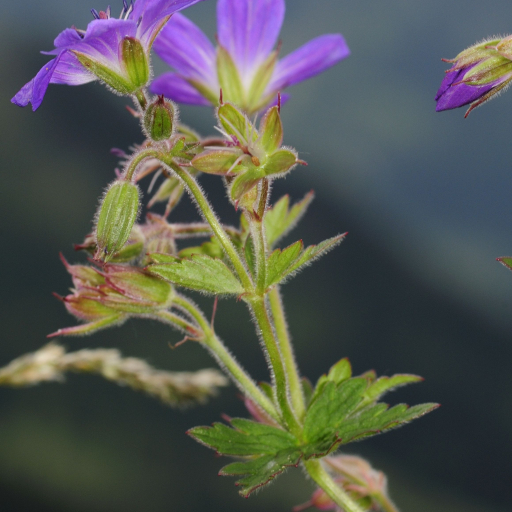
Plant Overview
Known as the Wood Cranesbill, this hardy perennial is a beloved staple of European meadows and shaded woodland fringes. Its Latin name, sylvaticum, translates to "of the woods," perfectly describing its preference for dappled sunlight and cool, leafy environments. In the language of flowers, it represents steadfastness, likely due to its ability to survive harsh mountain winters and return with a sea of violet-blue blooms every spring.
🔍 How to Identify
- 🌸 The Bloom: Look for five-petaled flowers ranging from soft lilac to deep violet-blue, often featuring a distinct white center and delicate dark veins that act as "nectar guides" for bees.
- 🍃 The Foliage: Its leaves are deeply divided into five to seven pointed lobes, creating a textured, "toothy" appearance that forms a dense, attractive mound of green.
- 🏗️ The Stature: It grows in an upright, bushy habit, typically reaching about 2 feet in height, with hairy stems that feel slightly rough to the touch.
🏡 In Your Garden
- 🌳 The Perfect Shade-Seeker: Unlike its sun-loving cousins, the Wood Cranesbill thrives in partial shade. It is the ideal candidate for planting under deciduous trees where it can enjoy the morning sun but escape the scorching afternoon heat.
- 🌱 Low Maintenance Resilience: It isn't picky about soil as long as it stays relatively moist. Once established, it is incredibly long-lived and will "self-clean" by dropping its petals, though cutting it back after the first flush of flowers can often trigger a second bloom in late summer.
⚠️ Safety & Toxicity
- ✅ Safe for All: Geranium sylvaticum is considered non-toxic to humans, cats, dogs, and horses.
- 🧤 Skin Sensitivity: While not poisonous, the fine hairs on the stems and leaves can occasionally cause very mild skin irritation for people with highly sensitive skin or allergies.
✨ Fun Fact
In ancient Scandinavia, the Wood Cranesbill was a prized resource for weavers; the flowers were gathered and processed to create a beautiful, soft blue-gray dye for wool garments.

Detailed Care Instructions
| Lighting | Full Sun |
| Hardiness Zones | Max 9B |
To grow Geranium sylvaticum (Wood Cranesbill) successfully, follow these steps:
- Location: Choose a suitable location that receives partial shade to full sun. The soil should be well-draining and rich in organic matter.
- Soil preparation: Amend the soil by adding compost or well-rotted manure to enrich it. This will improve drainage and provide necessary nutrients. Remove any weeds or debris from the planting area.
- Planting: Dig a hole slightly larger than the root ball of the Geranium sylvaticum plant. Place the plant in the hole, ensuring that the top of the root ball is level with the soil surface. Backfill the hole with soil, gently firming it around the plant.
- Watering: After planting, water the Geranium sylvaticum thoroughly to settle the soil and encourage root establishment. Keep the soil consistently moist but not waterlogged. Water deeply when the top inch of soil feels dry.
- Mulching: Apply a layer of organic mulch, such as wood chips or straw, around the base of the plant. Mulching helps retain moisture, suppresses weeds, and regulates soil temperature.
- Fertilizing: Geranium sylvaticum generally doesn't require heavy feeding, as it can tolerate various soil conditions. However, a slow-release balanced fertilizer can be applied in early spring to boost growth.
- Pruning: Trim back any dead or damaged foliage to maintain the plant's appearance and prevent disease. After the blooming period, you can also cut the plant back by about a third to promote new growth and prolong the flowering season.
- Dividing: Geranium sylvaticum can become overcrowded over time. Every few years, divide the plant in early spring or fall to maintain its vigor. Dig up the clump, carefully separate the roots, and replant the divisions in suitable locations.
- Pests and diseases: Geranium sylvaticum is generally resistant to most pests and diseases. However, it can be susceptible to powdery mildew. To prevent this, ensure good air circulation around the plant and avoid watering the leaves.
- Winter care: Geranium sylvaticum is a hardy plant that can withstand frost and cold temperatures. However, in exceptionally harsh winters, you can protect the plant by applying a layer of mulch around the base.
By following these steps, you should be able to grow Geranium sylvaticum successfully and enjoy its beautiful blooms.

Place in a window with dappled sun or a spot in the middle of a room. Or directly in a window facing west or east.

To properly water this plant, you first need to consider the type of soil it is growing in. This plant prefers well-draining soil that is kept consistently moist, but not waterlogged. When watering, avoid getting water on the leaves as this can lead to fungal growth. It is best to water from the base of the plant, allowing the water to soak into the soil.
In terms of frequency, you should water this plant when the top layer of soil feels dry to the touch. During hot, dry weather, you may need to water more frequently, but be careful not to overwater as this can cause root rot.
To ensure the plant is getting enough water, you can also check the soil moisture level using a moisture meter or by sticking your finger a few inches into the soil. If it feels dry, it is time to water.
Overall, the key to watering this plant is to keep the soil consistently moist, but not waterlogged, and to avoid getting water on the leaves.
To fertilize the plant, apply a balanced fertilizer with equal ratios of nitrogen, phosphorus, and potassium. Apply the fertilizer in early spring and mid-summer to promote healthy growth and blooming. Use a slow-release fertilizer to prevent over-fertilization and burn. Water the plant thoroughly after applying the fertilizer to ensure the nutrients reach the root system. Avoid fertilizing during the dormant period in winter.
Geranium Sylvaticum is a plant that prefers well-drained soil that is rich in organic matter. The soil should be slightly acidic to neutral with a pH level of around 6.0 to 7.0. Avoid using heavy, clay soils that retain too much water as it can cause root rot. Instead, use a sandy loam soil mix that drains well. Add organic matter such as compost or well-rotted manure to improve soil structure and fertility. Also, make sure the soil has good air circulation to prevent waterlogging.
To propagate this plant, the first step is to take stem cuttings from the mother plant in early summer. Make sure the cuttings are about 4 inches long with several leaves at the top. Remove the lower leaves from the stem cutting, leaving only a few at the top.
Next, dip the lower end of the stem cutting in rooting hormone powder. This will help promote root growth. Then, plant the cutting in a pot filled with well-draining soil. Water the cutting lightly and cover it with a plastic bag to create a humid environment.
Place the pot in a bright, shaded area and keep the soil damp but not waterlogged. After a few weeks, the cutting should begin to produce new growth, indicating that roots have formed. At this point, remove the plastic bag and allow the plant to acclimate to its surroundings.
Once the plant has grown several leaves, it can be transplanted into a larger pot or into the garden. Make sure to keep the new plant well-watered and provide it with plenty of indirect sunlight. With good care, the new plant should grow into a healthy adult Geranium Sylvaticum plant.








