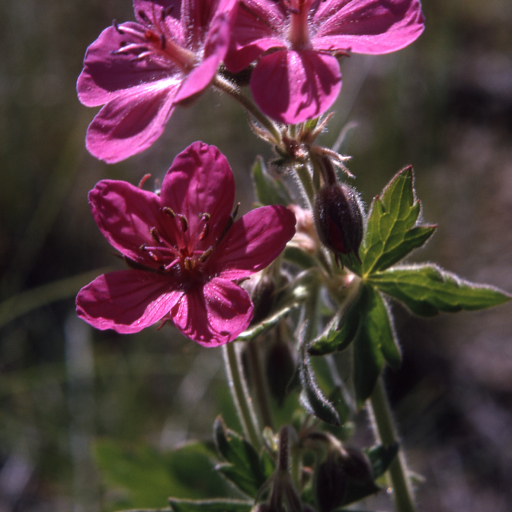
Plant Overview
Known as the Sticky Purple Geranium, this native beauty is a staple of Western North American meadows and mountainsides. While it looks like a delicate wildflower, it hides a "hungry" secret: it is considered a protocarnivorous plant. It uses its sticky stems to trap tiny insects, absorbing their nitrogen to supplement its diet in nutrient-poor soils.
🔍 How to Identify
- 🌸 The Blooms: Large, five-petaled flowers that range from soft lavender to a deep, royal magenta. Each petal is etched with dark purple "veins" that act as landing strips for pollinators.
- 🌿 The Foliage: Deeply lobed, hand-shaped leaves that form a bushy mound. In the autumn, these green leaves transform into a brilliant display of orange and fire-red.
- 🧪 The Texture: True to its name, the stems and flower stalks are covered in glandular, silver-tipped hairs. If you touch them, they feel distinctly tacky or "sticky" to the finger.
🏡 In Your Garden
- 🦋 Pollinator Powerhouse: This is a high-value plant for honeybees, bumblebees, and butterflies. Because it is a native wildflower, it is far more resilient to local pests and diseases than imported nursery geraniums.
- 💧 Moisture Balance: It thrives in "goldilocks" conditions—it loves sunshine but demands soil that stays consistently moist. It is a perfect choice for rain gardens or the edges of a pond where the soil never fully bakes dry.
⚠️ Safety & Toxicity
- ✅ General Safety: This plant is considered non-toxic to humans and has a long history of use in traditional herbalism as an astringent.
- 🐾 Pet Sensitivity: While not classified as deadly, the essential oils and sticky resins can cause mild digestive upset or skin irritation in sensitive dogs or cats if they decide to have a snack.
- 🧤 Skin Contact: Most people handle it without issue, but the "sticky" secretions can sometimes cause a mild itchy sensation for those with sensitive skin.
✨ Fun Fact
The Sticky Purple Geranium is a "murderous" beauty! Researchers discovered that it can actually digest protein from the insects that get stuck to its stems, making it a rare bridge between a normal plant and a true carnivore like a Venus Flytrap.

Detailed Care Instructions
To grow Geranium Viscosissimum plant, you can follow these steps:
- Choose the right location: Geranium Viscosissimum prefers full sun to partial shade. Select a location with well-drained soil that is rich in organic matter.
- Prepare the soil: Before planting, loosen the soil and amend it with compost or well-rotted manure to improve its fertility and drainage.
- Start from seeds: Geranium Viscosissimum can be grown from seeds. Sow the seeds indoors in early spring or directly in the garden in late spring, after the last frost. Cover the seeds lightly with soil and keep them moist until germination.
- Transplanting: When the seedlings have developed a few true leaves, you can transplant them into individual pots or outdoor beds. Make sure to space them adequately, as they can spread up to 1-2 feet (30-60 cm) in width.
- Watering: Keep the soil consistently moist, especially during hot and dry periods. Water deeply but avoid overwatering or waterlogging the soil.
- Mulching: Apply a layer of mulch around the plants to help retain soil moisture and suppress weed growth. Organic mulch, such as straw or wood chips, works well.
- Fertilization: Geranium Viscosissimum plants do not generally require heavy fertilization. However, you can apply a balanced, slow-release fertilizer once a year in early spring to provide some extra nutrients.
- Pruning: While not necessary, you can pinch back the stems in early summer to encourage bushier growth and more abundant flowers.
- Pests and diseases: Geranium Viscosissimum is usually quite resistant to pests and diseases. However, you should regularly inspect the plants for any signs of insect infestation or disease and take appropriate measures if necessary.
- Winter care: Geranium Viscosissimum is a perennial plant that is hardy in USDA zones 4-9. In colder regions, it may require extra protection during the winter. Apply a layer of mulch or cover the plants with burlap to insulate them from extreme temperatures.
With proper care and maintenance, Geranium Viscosissimum can thrive and provide beautiful flowers year after year.

Place in a bright room that is sun drenched almost all day. Or directly in a south-facing window.

To water this particular plant, it is important to avoid splashing the foliage while watering as this can promote fungal growth. A good technique is to water the soil around the base of the plant directly using a watering can or hose with a gentle flow. It is important to avoid overwatering the plant as it prefers well-draining soil and too much moisture can lead to root rot. It is recommended to water this plant deeply but infrequently, allowing the soil to dry out slightly between waterings. Watering frequency may vary depending on the specific growing conditions, such as the amount of sunlight and humidity present in the environment.
To fertilize this plant, use a balanced, water-soluble fertilizer with equal parts nitrogen, phosphorus, and potassium. Apply the fertilizer every 4-6 weeks during the growing season, from spring to fall. Dilute the fertilizer according to the package instructions and apply it directly to the soil around the base of the plant, avoiding the foliage. Water the plant thoroughly after fertilizing. Avoid over-fertilizing, which can lead to excessive foliage growth at the expense of flowers.
Geranium viscosissimum is a perennial herbaceous plant that requires a well-draining soil mixture with good fertility. The ideal soil should have a pH between 5.5 to 7.5 and a texture that allows for good root development and water retention. It is recommended to use a mixture of organic compost, peat moss, and sand to create a well-draining soil that is rich in nutrients.
The plant prefers a moist but not waterlogged soil, so it is essential to avoid overwatering. The soil should be allowed to dry out slightly between watering to prevent moisture-related diseases and root rot. It is also beneficial to add some perlite to the soil mix to increase its aeration capacity and improve water drainage.
When transplanting Geranium viscosissimum, it is recommended to use a potting mixture that is similar in composition to the garden soil. The roots emerge close to the surface, so it is crucial to spread a layer of mulch around the plant to protect the roots from heat and cold damage. With proper soil preparation and care, Geranium viscosissimum will thrive in a well-draining soil mixture, producing beautiful pink flowers and attractive foliage.
To propagate this plant, you can take a stem cutting from the plant during its active growth period. Choose a healthy stem and make a clean cut just below a node. Remove the lower leaves from the stem and dip the cut end in rooting hormone powder. Plant the cutting in a well-draining potting mix and keep it moist, but not waterlogged. Place the pot in a location with plenty of bright, indirect light and maintain a consistent temperature. After a few weeks, the cutting should begin to root and you can transplant it into a larger pot or outside into your garden.








