Plant Overview
Known as Wilford’s Cranesbill, this delicate perennial is a master of the woodland edge. Native to the temperate forests of East Asia, it was named after the Victorian-era plant collector Charles Wilford. It offers a subtle, ethereal beauty that feels more "wild" and natural than its bold, cultivated cousins found in garden centers.
🔍 How to Identify
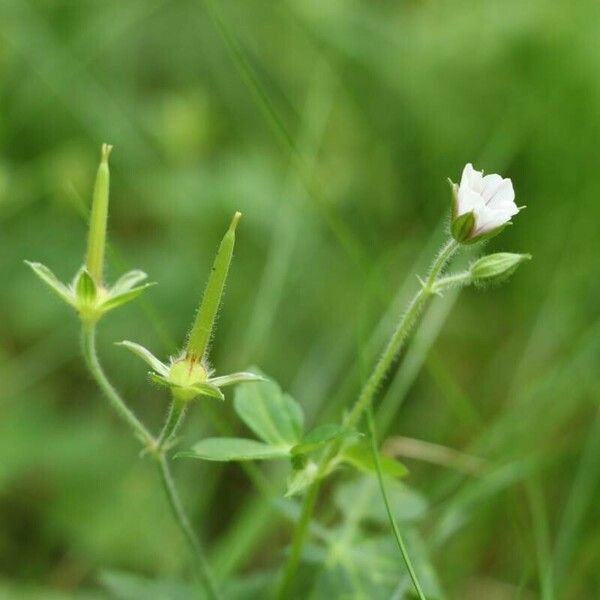
- 🌸 Pinstriped Petals: The small flowers feature five rounded petals, typically white or pale blush, decorated with intricate purple or pink veins that act as "landing strips" for bees.
- 🌿 Jagged Foliage: The leaves are palmately divided into three to five deeply lobed segments, giving the plant a textured, lacy appearance throughout the growing season.
- 🖋️ The "Crane's Bill": Once the flower fades, the seed pod elongates into a sharp, beak-like structure, a signature trait of the Geranium genus.
🏡 In Your Garden
- 🌱 The Shady Weaver: Unlike sun-loving hybrids, Wilford’s Cranesbill thrives in dappled light and moist, well-drained soil. It is an excellent choice for naturalizing the "forgotten" corners of a garden.
- 🏃 A Gentle Rambler: This plant has a sprawling, slightly scrambling habit. It won't stay in a tidy ball; instead, it gracefully weaves its way through neighboring stems, creating a tapestry-like groundcover.
⚠️ Safety & Toxicity
- ✅ Low Risk: Geranium wilfordii is generally considered non-toxic to humans and does not cause skin irritation upon contact.
- 🐾 Pet Precaution: While true Geraniums (Cranesbills) are safer than Pelargoniums (the common potted "Geraniums"), they can still cause mild digestive upset in cats or dogs if ingested in large quantities.
✨ Fun Fact
📜 A Botanical Mystery: This plant carries the name of Charles Wilford, a botanical explorer for Kew Gardens who famously "vanished" from the historical record shortly after his collecting expeditions in the 1850s, leaving this flower as part of his lasting legacy.

Detailed Care Instructions
Geranium wilfordii, commonly known as Wilford's geranium, is a perennial plant that can add beauty to your garden with its attractive foliage and delicate flowers. Here are some detailed steps to help you grow this plant successfully:
Soil Requirements
- Well-Draining Soil: The plant prefers well-draining soil with a neutral to slightly acidic pH.
- Soil Amendments: If your garden soil is heavy clay, amend it with compost or sand to improve drainage.
Light Requirements
- Sunlight: Opt for a location that receives partial to full sun. In hotter climates, afternoon shade can help prevent the plant from getting scorched.
Planting
- Timing: Planting can be done in spring or early autumn.
- Spacing: Space the plants about 12-18 inches apart to allow room for growth.
- Planting Depth: Dig a hole that is twice the size of the root ball. Place the plant in the hole so that the top of the root ball is level with the soil surface.
Watering
- Initial Watering: Water thoroughly after planting to help the plant settle in.
- Regular Watering: Maintain consistent moisture, especially during the first growing season. Water deeply but allow the soil to dry out slightly between waterings to avoid waterlogging.
Mulching
- Mulch Application: Apply a layer of organic mulch around the base to conserve moisture and suppress weeds.
- Mulch Maintenance: Keep the mulch a few inches away from the stem to prevent rot.
Fertilizing
- Initial Fertilization: Incorporate a balanced fertilizer into the soil at planting time.
- Ongoing Feeding: Use a balanced, slow-release fertilizer every spring to promote healthy growth.
Pruning and Maintenance
- Pruning: Lightly prune in early spring to remove dead or damaged parts. Deadhead spent flowers to encourage more blooms.
- Division: Every few years, divide mature plants in early spring or autumn to rejuvenate them and propagate new plants.
Pest and Disease Management
- Monitoring: Regularly check for pests like aphids or spider mites. Treat infestations with insecticidal soap or neem oil.
- Disease Prevention: Ensure good air circulation to prevent fungal diseases. Avoid overhead watering to reduce leaf wetness.
Additional Tips
- Winter Care: In colder regions, a layer of mulch can help protect the plant roots during winter.
- Companion Planting: Geraniums can be planted with other perennials like hostas, ferns, and astilbes for a visually appealing garden bed.
By following these steps, you can successfully grow and maintain a healthy Geranium wilfordii plant in your garden. Happy gardening!

Place in a bright room that is sun drenched almost all day. Or directly in a south-facing window.

Watering *Geranium wilfordii* requires careful attention to ensure the plant thrives. Here are some detailed steps to follow:
1. **Soil Check**: Before watering, check the moisture level of the soil. Insert your finger about an inch deep into the soil. If it feels dry at this depth, it’s time to water. If it's still damp, wait a few more days before checking again.
2. **Watering Technique**: Water the plant slowly and deeply. Use a watering can with a spout to direct water at the base of the plant rather than overhead. This helps prevent fungal diseases and ensures that the roots receive adequate moisture.
3. **Avoid Waterlogging**: Ensure that the plant has well-draining soil and that the pot or ground has good drainage. Waterlogging can lead to root rot, which can be detrimental to the plant’s health. If using a pot, make sure it has drainage holes, and empty any collected water in saucers under the pot.
4. **Watering Frequency**: During the growing season (spring and summer), the plant will require more frequent watering. As a general guideline, water the plant once or twice a week, depending on the weather and soil condition. In the dormant season (fall and winter), reduce watering frequency as the plant’s growth slows down.
5. **Morning Watering**: It is best to water the plant in the morning. This allows excess water on the leaves to evaporate during the day, reducing the risk of fungal infections.
6. **Adjusting for Climate**: Take local climate conditions into account. In hot, dry climates, the plant may need more frequent watering, while in cooler, more humid climates, watering can be less frequent. Always rely on checking the soil’s condition as a primary indicator.
7. **Mulching**: Applying a layer of mulch around the base of the plant can help retain soil moisture, regulate temperature, and reduce the frequency of watering.
By following these guidelines, you’ll help ensure that *Geranium wilfordii* remains healthy and well-hydrated.
Here are the fertilizing instructions for Geranium wilfordii:
- Soil Preparation: Before planting, enrich the soil with organic matter such as compost or well-rotted manure to ensure adequate nutrient supply.
- Initial Fertilizing: When planting, mix a balanced, slow-release granular fertilizer into the soil. A balanced fertilizer typically has equal parts of nitrogen (N), phosphorus (P), and potassium (K), such as a 10-10-10 formula.
- Growing Season:
- Spring: At the beginning of the growing season, apply a balanced, water-soluble fertilizer. Follow the manufacturer’s instructions for dilution and application rates.
- Mid-Season: During the peak growing season, repeat the application of the balanced, water-soluble fertilizer every 4-6 weeks.
- Spring: At the beginning of the growing season, apply a balanced, water-soluble fertilizer. Follow the manufacturer’s instructions for dilution and application rates.
- Application Method:
- Water the plant thoroughly before applying fertilizer to avoid root burn.
- Spread the granular fertilizer evenly around the base of the plant, keeping it away from direct contact with the stem.
- For liquid fertilizers, ensure even distribution around the root zone. Use a watering can or hose attachment designed for fertilizing.
- Water the plant thoroughly before applying fertilizer to avoid root burn.
- End of Season Care: Reduce fertilizing frequency as you approach the end of the growing season. Over-fertilizing late in the season can make the plant less hardy.
- Organic Alternative: Consider using organic fertilizers such as fish emulsion or seaweed extract every 2-4 weeks during the growing season as an alternative to synthetic fertilizers.
- Mulching: Apply a layer of organic mulch around the plant to help retain moisture and slowly release nutrients into the soil.
- Monitoring: Keep an eye on the plant for signs of nutrient deficiencies (yellowing leaves, stunted growth, etc.) and adjust fertilizing schedules or types of fertilizers used accordingly.
By following these instructions, you can ensure that your Geranium wilfordii remains healthy and vibrant throughout the growing season.
For cultivating Geranium wilfordii, it is essential to use soil that meets specific requirements to ensure optimal growth and flourishing. Here are the detailed characteristics of the ideal soil:
- Well-Draining Soil: This plant thrives in soil that allows water to drain effectively, preventing waterlogged conditions that can lead to root rot. A light, sandy, or loamy soil mix is typically preferred.
- Soil Composition: A good potting mix is vital, composed of:
- Loam: Provides essential nutrients and helps retain moisture while draining excess water.
- Sand: Enhances drainage and improves soil aeration, preventing compaction.
- Organic Matter: Compost or well-decomposed leaf mold enriches the soil, improving its structure and fertility.
- Loam: Provides essential nutrients and helps retain moisture while draining excess water.
- Soil pH: It prefers a slightly acidic to neutral soil pH, ideally between 6.0 and 7.0. This range allows for the best nutrient uptake.
- Amendments: Incorporate organic amendments like compost, aged manure, or peat moss to improve moisture retention and nutrient content. These amendments also promote beneficial microbial activity in the soil.
- Aeration: Ensure the soil is well-aerated to allow roots to breathe and avoid compacted conditions which can hinder growth. Perlite or vermiculite can be added to the soil mix to improve aeration.
- Nutrients: While this plant is not overly demanding in terms of nutrients, a balanced slow-release fertilizer or routine feeding with a balanced liquid fertilizer helps support healthy growth.
By providing a soil environment that meets these criteria, you can effectively promote the health and vigor of your Geranium wilfordii, leading to a thriving plant.
Propagating Geranium Wilfordii involves several methods, with the most common being through seeds or cuttings. Here's a detailed guide on how to do it:
Propagation by Seeds
- Collection: Collect the seeds from mature capsules once they have dried and turned brown. It's worth noting that seeds from Geranium Wilfordii often have a long, spiraled tail which aids in natural dispersal.
- Stratification: Store the seeds in a cool, dry place. To enhance germination, you might need to stratify the seeds by placing them in the refrigerator for 4-8 weeks. This mimics winter conditions and breaks any dormancy.
- Sowing:
- Fill a seed tray or pots with a well-draining seed-starting mix.
- Sow the seeds on the surface of the soil and then lightly press them in. They need light to germinate, so do not cover the seeds with soil.
- Water the soil lightly but thoroughly, ensuring it stays moist but not waterlogged.
- Fill a seed tray or pots with a well-draining seed-starting mix.
- Germination: Place the tray or pots in a warm area with indirect sunlight. Maintain moisture by misting the soil surface regularly. Germination usually occurs within 2-3 weeks but can take longer.
- Transplanting: Once the seedlings are large enough to handle and have developed a couple of true leaves, transplant them into individual pots. Use a similar well-draining potting mix.
Propagation by Cuttings
- Selection: Choose healthy stems that are about 4-6 inches long from a mature plant. It's best to take cuttings during the growing season (spring or early summer).
- Preparation:
- Cut the stem just below a leaf node using a sterile, sharp blade.
- Remove any leaves from the lower half of the cutting to prevent rot.
- Optionally, dip the cut end in rooting hormone to encourage root development.
- Cut the stem just below a leaf node using a sterile, sharp blade.
- Planting:
- Fill a pot with a well-draining potting mix, such as a mixture of perlite and peat moss or sand and compost.
- Insert the cut end of the stem into the soil, ensuring at least one node is buried.
- Firm the soil around the cutting to hold it in place.
- Fill a pot with a well-draining potting mix, such as a mixture of perlite and peat moss or sand and compost.
- Conditions:
- Place the pot in a location with bright, indirect light.
- Maintain high humidity around the cutting; a plastic bag or dome can be used to cover the pot, creating a mini greenhouse effect. Ensure it has ventilation to prevent fungal growth.
- Place the pot in a location with bright, indirect light.
- Watering: Keep the soil moist but not waterlogged. Mist the cutting if necessary to maintain humidity.
- Root Development: Roots should form within a few weeks. You can check by gently tugging on the cutting; resistance indicates root growth.
- Transplanting: Once the cutting has developed a healthy root system, transplant it into a larger pot with regular potting soil. Continue to care for the young plant by providing adequate light, water, and nutrients.
General Care Tips for Newly Propagated Plants
- Light: Ensure they receive bright, indirect sunlight. Direct sunlight can scorch young seedlings and cuttings.
- Watering: Keep the soil consistently moist but avoid waterlogging. Overwatering can cause root rot.
- Temperature: Maintain a temperature between 65-75°F (18-24°C) for optimal growth.
- Fertilizing: Use a balanced, diluted liquid fertilizer once the plants are established to promote healthy growth.
By following these steps, you can successfully propagate Geranium Wilfordii and enjoy the beauty of these plants in your garden or as part of your indoor plant collection.








