Plant Overview
Known as the "Slender Salsify" or "Old Man’s Beard," Geropogon hybridus is a Mediterranean native that turns sun-drenched fields into a whimsical landscape. It is famous for its "blink-and-you-miss-it" flowers and its spectacular, oversized seed heads that look like fluffy, bronze clouds. This plant is a master of timing, synchronizing its life cycle with the heat of the spring sun.
🔍 How to Identify
- 🌸 Petal Display: It features pale pink to violet-purple flowers with very long, narrow "ray" florets that spread out like a delicate star.
- 🌿 Foliage: The leaves are incredibly thin and grass-like, often causing the plant to blend into the surrounding weeds until the moment it blooms.
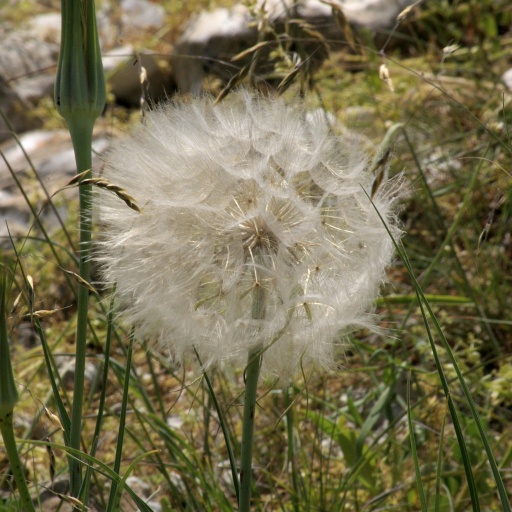
- ☁️ Seed Head: After the flower fades, it produces a massive, spherical puffball (pappus) made of feathery, brownish bristles—resembling a giant, sophisticated dandelion.
🏡 In Your Garden
- ☀️ The Midday Nap: This plant is a "heliotrope," meaning it follows the sun, but it is famous for closing its petals tightly by midday. If you want to see it in bloom, you’ll need to visit your garden in the early morning.
- 🌱 Annual Resilience: As an annual herb, it lives fast and dies young. It thrives in dry, disturbed soils and rocky patches where other plants might struggle, making it a great choice for low-maintenance "wild" meadow aesthetics.
⚠️ Safety & Toxicity
- ✅ General Safety: Geropogon hybridus is not known to be toxic to humans or common household pets.
- 🐾 Physical Irritant: While not chemically poisonous, the feathery seeds (the "beard") are designed to catch the wind and can easily get stuck in a dog’s fur or cause minor irritation if a curious toddler tries to eat the fluffy seed head.
✨ Fun Fact
In many European regions, it shares the nickname "Go-to-bed-at-noon" with its cousin, the Salsify, because of its strict internal clock that shuts the flowers tight long before the sun actually sets!

Detailed Care Instructions
Geropogon hybridus, commonly known as false goldilocks, is a perennial plant native to North Africa and Mediterranean regions. Here are some tips on how to grow Geropogon hybridus:
- Choose a sunny location: Geropogon hybridus thrives in full sun and well-drained soil. Make sure to plant it in a spot that receives at least 6 hours of sunlight per day.
- Prepare the soil: Geropogon hybridus prefers sandy or loamy soil with good drainage. You can improve the soil by adding organic matter, such as compost, to help retain moisture and nutrients.
- Plant the seeds: Sow Geropogon hybridus seeds directly into the garden in early spring or early fall. Scatter the seeds on the soil surface and lightly press them into the soil. Keep the soil consistently moist until the seeds germinate.
- Watering and maintenance: Once Geropogon hybridus is established, water it regularly, especially during dry periods. Avoid overwatering, as this can cause root rot. Remove any weeds that may compete for nutrients and space.
- Fertilization: Geropogon hybridus does not require regular fertilization. If the soil is poor, you can apply a balanced fertilizer in the spring to help promote healthy growth.
- Propagation: Geropogon hybridus can also be propagated by dividing mature plants in the spring. Carefully dig up the plant, divide the root ball into sections, and replant in a new location.
- Pest and disease control: Geropogon hybridus is relatively pest and disease-free. However, keep an eye out for aphids, slugs, and snails, which may occasionally feed on the plant. Use organic or chemical controls as needed.
By following these tips, you can successfully grow Geropogon hybridus in your garden and enjoy its bright yellow flowers and feathery foliage.

Place in a bright room that is sun drenched almost all day. Or directly in a south-facing window.

Geropogon Hybridus plants should be watered regularly to keep the soil consistently moist but not waterlogged. Water around the base of the plant, taking care not to wet the foliage as this can cause fungal diseases. Allow excess water to drain away to prevent root rot. Monitor the soil moisture level regularly and adjust watering frequency as needed based on the plant's specific needs and environmental conditions. It is important to water Geropogon Hybridus plants evenly and thoroughly to promote healthy root growth and overall plant health.
Geropogon hybridus should be fertilized with a balanced, slow-release fertilizer in the spring before new growth begins. Avoid fertilizing during the winter months or when the plant is dormant. Apply the fertilizer according to package instructions and water thoroughly after applying to help the nutrients reach the roots. Be careful not to over-fertilize, as this can harm the plant. Repeat fertilization every 4-6 weeks during the growing season to support healthy growth and flowering.
The ideal soil for this plant should be well-draining, moderately fertile, and slightly alkaline. It should have a pH range of 7.0 to 7.5. It needs a soil mix that contains a blend of soil, sand, and peat moss. A soil mix that contains organic matter is recommended to enhance the plant's growth. It prefers a soil that is not too heavy and does not hold water for long periods as it can cause root rot. When planting, it is important to ensure that the soil is well-drained to avoid waterlogging. A good soil mix will provide adequate nutrients and support to help the plant establish and thrive.
Geropogon hybridus can be propagated through the division of its roots or by collecting and planting its seeds. To propagate through root division, carefully dig up the plant and separate the roots into smaller sections, making sure each division has a good amount of roots and shoots. Replant the divisions in well-draining soil and keep them consistently moist until new growth appears.
To propagate through seeds, wait until the plant has finished flowering and the seed heads have dried out. Collect the seed heads and separate the seeds from the chaff. Plant the seeds in a seed tray filled with a well-draining potting mix, lightly cover them with soil, and water gently. Keep the seed tray in a warm, sunny location and water regularly to keep the soil moist. Germination typically occurs within a few weeks.
Once the new plants have established themselves, they can be transplanted into the desired location in the garden or into individual pots. Remember to continue to water and care for the new plants until they are well established.








