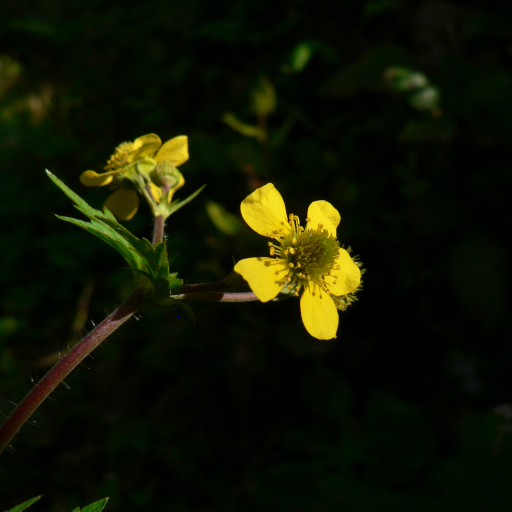
Plant Overview
Often known as the Large-leaved Avens or "Bigleaf Avens," this hardy perennial is a familiar face in the moist woodlands and meadows of North America. While it might look like a simple wildflower, it has a clever survival strategy involving "hitchhiking" seeds that cling to anything passing by. It is a rugged, dependable plant that bridges the gap between a garden ornamental and a wild forest dweller.
🔍 How to Identify
- 🍃 The Foliage: True to its name (macrophyllum means "large leaf"), the basal leaves are significantly larger than the upper ones, often heart-shaped or deeply lobed with a fuzzy, sandpaper-like texture.
- 🌼 The Blooms: Small, bright butter-yellow flowers with five petals and a cluster of central stamens appear in late spring to mid-summer.
- ⚓ The Seed Head: After the petals fall, the plant develops a spherical cluster of seeds equipped with tiny hooked "beaks" designed to snag on fur or clothing.
🏡 In Your Garden
- 💧 Moisture Lover: This plant is an indicator of damp soil. In a garden setting, it thrives in "rain gardens" or low-lying spots where water tends to collect, helping to stabilize the soil.
- 🐝 Pollinator Magnet: While the flowers are small, they are rich in nectar and are a favorite mid-season snack for native bees and hoverflies.
- 🌱 Spreading Habit: Because of its hooked seeds, it can "travel" across your yard quite easily. If you want to keep it contained, it’s best to deadhead the flowers before the hooks fully harden.
⚠️ Safety & Toxicity
- ✅ Status: Generally considered non-toxic to humans, cats, and dogs.
- 🧤 Skin Irritation: While not poisonous, the stiff hairs on the stems and the sharp "hooks" on the seeds can cause mild mechanical irritation to sensitive skin. It is a good idea to wear gloves when thinning out a large patch.
✨ Fun Fact
The genus name Geum is derived from the Greek word geuo, which means "to give a pleasant flavor." Historically, the roots of some Avens species were used as a substitute for cloves in cooking and traditional tonics!

Detailed Care Instructions
To grow Geum Macrophyllum, also known as large-leaf avens, follow these steps:
- Planting: Choose a location that receives full or partial sunlight. Geum Macrophyllum prefers well-drained soil that is rich in organic matter. Prepare the soil by removing any weeds or debris and loosening it with a garden fork or tiller.
- Sowing seeds: Geum Macrophyllum can be propagated from seeds. Sow the seeds in early spring or late fall, either directly in the garden or in seed trays. Cover the seeds with a thin layer of soil and keep them moist until germination, which usually takes around 2-3 weeks.
- Transplanting: Once the seedlings have grown a few inches tall, transplant them to their permanent location. Space the plants at least 12 inches apart to allow for proper air circulation and growth. Keep the soil moist during the first few weeks after transplanting to help the plants establish themselves.
- Watering: Geum Macrophyllum requires regular watering, especially during dry periods. Keep the soil evenly moist but avoid overwatering, as this can lead to root rot. Water at the base of the plant instead of overhead to prevent fungal diseases.
- Fertilizing: Apply a slow-release organic fertilizer in early spring to provide nutrients to the plants. Alternatively, you can use a balanced liquid fertilizer every 4-6 weeks during the growing season. Follow the instructions on the fertilizer package for application rates.
- Mulching: Apply a layer of organic mulch, such as shredded bark or compost, around the base of the plants. Mulching helps retain moisture, suppresses weed growth, and provides nutrients as it breaks down.
- Pruning: After the blooming period, which typically occurs in late spring to early summer, deadhead the spent flowers to encourage additional blooms. Cut the flower stalks back to their base to promote new growth and a neat appearance. In fall, you can trim back the foliage to tidy up the plants.
- Winter care: Geum Macrophyllum is frost tolerant but might benefit from a layer of mulch to protect the roots during severe winters. Cut back any dead foliage in the spring to allow for new growth.
- Pests and diseases: Geum Macrophyllum is generally resistant to common pests and diseases. However, keep an eye out for aphids, slugs, or snails, and treat them accordingly if they become a problem.
By following these guidelines, you should be able to successfully grow Geum Macrophyllum and enjoy its beautiful flowers.

Place in a window with dappled sun or a spot in the middle of a room. Or directly in a window facing west or east.

Geum Macrophyllum is a perennial plant that requires regular and consistent watering to thrive. When watering, it is important to ensure that the soil is evenly moist, but not waterlogged or saturated. Overwatering can lead to root rot and other fungal diseases.
To water Geum Macrophyllum, you should first check the soil moisture level by inserting your finger into the soil up to the first knuckle. If the soil feels dry, it is time to water.
When watering, pour water slowly and gently around the base of the plant, avoiding the leaves and stems. Deeply watering the roots encourages healthy growth and helps to establish a strong root system.
In hot weather or during dry periods, Geum Macrophyllum may require more frequent watering. However, be careful not to water too much, as this can lead to waterlogging and root rot.
It is also important to water Geum Macrophyllum regularly throughout the growing season, and to reduce watering in the winter months when the plant is dormant.
To fertilize this plant, apply a balanced fertilizer once a month during the growing season. Be sure to follow the instructions on the label for the correct dilution rate and application method. Avoid over-fertilizing as it can lead to excessive vegetative growth and poor flowering. Water the plant thoroughly after fertilizing to help distribute the nutrients evenly.
Geum Macrophyllum is a plant species that requires a specific type of soil to thrive. The ideal soil for this plant should be well-draining, with good aeration and moisture retention qualities. It should have a neutral to slightly acidic pH level, ranging from 6.0 to 7.0.
The soil should be rich in organic matter, containing a good amount of compost, humus, or other organic materials. It should also have a balanced nutrient content, with adequate amounts of nitrogen, phosphorus, and potassium.
Avoid using heavy clay soils or those that are prone to waterlogging, as these can restrict root growth and lead to other problems such as root rot. Sandy soils may be used, but they tend to dry out quickly and may require more frequent watering and fertilization.
In summary, the ideal soil for Geum Macrophyllum should have good drainage, aeration, moisture retention, a neutral to slightly acidic pH, rich in organic matter, and balanced in nutrients.
Propagation of the plant involves several steps that involve cutting, planting, and monitoring. First, take a healthy stem cutting with a pair of sterile pruners, making sure the cutting is at least four inches long and has several leaf nodes. Remove any bottom leaves and dip the cut end in rooting hormone powder.
Next, prepare a pot with well-draining soil and make a hole in the center. Insert the cutting into the soil and gently press the soil around it to secure it in place. Water the cutting lightly and cover the pot with a plastic bag to maintain humidity.
Place the pot in a warm and brightly-lit location but away from direct sunlight. Monitor the soil moisture and keep it slightly damp but not waterlogged. After a few weeks, check for root development by gently tugging on the cutting. If there is resistance, then roots are forming.
Once the roots have developed, transplant the cutting into a larger pot or a garden bed. Be careful when transplanting, making sure not to disturb the roots. Water the new plant regularly, and it will take a few months to become fully established.








