Plant Overview
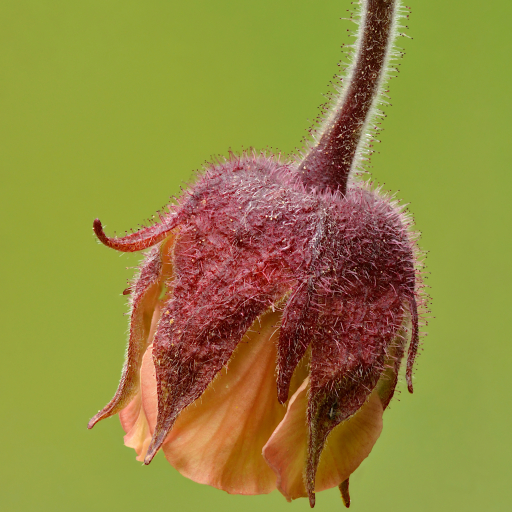
Commonly known as Water Avens or "Nodding Avens," this enchanting perennial is a staple of damp woodlands and stream banks across the Northern Hemisphere. With its shy, downward-facing blooms and dusky colors, it looks like something plucked straight from a Victorian fairy painting. Historically, it earned the nickname "Indian Chocolate" because its boiled roots release a comforting aroma reminiscent of cocoa and cloves.
🔍 How to Identify
- 🔔 Nodding Flowers: The most distinct feature is the bell-shaped blossoms that hang gracefully toward the ground, usually supported by dark, fuzzy stems.
- 🎨 Subtle Hues: Unlike its bright yellow cousins, this species features soft salmon-pink or apricot petals tucked inside protective, purplish-red sepals.
- 🍃 Basal Leaves: The foliage at the base forms a lush mound; the leaves are pinnate (divided) with a significantly larger, rounded leaflet at the very tip.
🏡 In Your Garden
- 💧 The "Wet Feet" Rule: Geum rivale is a true moisture-lover. It is the perfect choice for the edge of a garden pond, a bog garden, or those "problem spots" where the soil stays perpetually damp and heavy.
- 🌤️ Cool Exposure: While it can tolerate full sun in cooler climates, it prefers partial shade. In a garden setting, it uses its sturdy rhizomes to spread slowly, creating a beautiful groundcover that helps suppress weeds without becoming invasive.
⚠️ Safety & Toxicity
- ✅ Status: Generally considered non-toxic to humans, cats, and dogs.
- 🧤 Mild Irritant: While safe, the tiny hairs covering the stems can sometimes cause very mild skin redness or itching for gardeners with sensitive skin.
- 🍽️ Edibility Note: While the roots were historically used for tea and flavoring, it is best to enjoy this plant for its beauty rather than its taste to avoid any potential stomach upset from wild-foraging.
✨ Fun Fact
In the Middle Ages, Water Avens was believed to have the power to drive away "evil spirits" and venomous beasts. It was often depicted in church carvings as a symbol of purity and protection.

Detailed Care Instructions
| Hardiness Zones | Max 7B |
To grow Geum Rivale, commonly known as Water Avens, you can follow these steps:
- Choose a suitable location: Geum Rivale prefers a partially shaded area, such as the edge of a woodland or a spot with morning sun and afternoon shade. It also needs moist, well-draining soil, rich in organic matter.
- Prepare the soil: Before planting, loosen the soil to a depth of around 8-10 inches and mix in some compost or well-rotted manure to improve drainage and fertility. Remove any weeds from the area.
- Planting: Dig a hole slightly larger than the nursery container, and gently remove the plant from its container. Place the Geum Rivale in the hole, ensuring that the crown is at ground level or slightly above. Backfill the hole with soil and firm it gently around the plant.
- Watering: Geum Rivale needs consistently moist soil for optimal growth. Water the plant regularly, especially during dry spells. Monitor the soil moisture level and avoid overwatering or allowing the plant to dry out completely.
- Mulching: Apply a layer of organic mulch, such as wood chips or compost, around the base of the plant. Mulching helps retain moisture, control weeds, and maintain an even soil temperature.
- Fertilizing: Geum Rivale generally does not require heavy feeding. However, you can apply a balanced, slow-release fertilizer in early spring before new growth emerges, following the package instructions.
- Pruning: After the blooming period, which usually occurs in late spring to early summer, you can deadhead the spent flowers to encourage more blooms. Additionally, remove any damaged or diseased foliage throughout the growing season to maintain plant health.
- Division: Geum Rivale can be divided every few years to promote healthy growth. Dig up the plant in early spring or late autumn, carefully separate the clumps into smaller sections, and replant them in suitable locations.
By following these steps, you can successfully grow Geum Rivale and enjoy its charming, nodding, bell-shaped flowers.

Place in a window with dappled sun or a spot in the middle of a room. Or directly in a window facing west or east.

Geum Rivale is a plant that requires regular and adequate watering to thrive. To water this plant, you should first check the soil moisture level before watering. The soil should be moist but not waterlogged. The best time to water is in the morning or evening when the sun is not too hot.
You should water around the base of the plant, making sure not to wet the leaves or flowers as this can lead to fungal diseases. Use a watering can or hose with a gentle spray attachment to apply water slowly and evenly to the soil.
During hot and dry weather, you may need to water the plant more frequently, possibly every other day. However, during cooler and rainy periods, the plant may not require as much watering. It's essential to adjust your watering schedule based on the weather conditions and the moisture needs of the plant.
Overall, Geum Rivale is a relatively low-maintenance plant that requires consistent and appropriate watering to thrive and produce beautiful blooms.
- Choose a well-drained soil to plant the Geum Rivale.
- Spread a layer of organic compost or well-rotted manure over the soil.
- Mix the fertilizer with water according to the package instructions.
- Water the plant with the fertilizer solution, making sure to thoroughly wet the soil.
- Fertilize the plant once a month during the growing season.
- Monitor the plant for signs of over-fertilization, such as burned leaves or stunted growth.
- Stop fertilizing the plant in late summer to allow it to prepare for winter dormancy.
Geum Rivale is a perennial flowering plant that requires a well-draining, fertile, and moist soil to grow. The soil should be slightly acidic with a pH range of 5.5 to 7.0. The plant prefers a soil that is rich in organic matter, such as compost or well-rotted manure, which helps to retain moisture. A sandy loam or loamy soil texture is ideal for this plant.
It is important to avoid heavy clay soils that do not drain well, as this may cause root rot. The plant also requires adequate drainage to prevent waterlogging and to prevent the plant from rotting.
When planting Geum Rivale, it is advisable to improve the soil quality by adding organic matter and mixing it into the soil. This will help the plant to establish and grow more quickly. Adding a slow-release fertilizer to the soil will also provide the necessary nutrients that are required for healthy growth.
Overall, a well-draining, fertile, and moist soil that is rich in organic matter, has a slightly acidic pH, and is free from heavy clay or hardpan soils is the best type of soil to use when growing Geum Rivale.
Geum Rivale can be propagated by division in the spring or fall. Begin by digging up the entire plant and gently separating it into multiple parts, making sure that each division has several healthy roots and shoots. Replant each division in a new location, spacing them about 12-18 inches apart. Water thoroughly and keep the soil consistently moist until new growth appears. With proper care, the new divisions should establish quickly and grow into healthy, thriving plants.








