Plant Overview
Often called "Prairie Smoke" or "Old Man’s Whiskers," Geum triflorum is a North American wildflower that transforms a spring meadow into a misty dreamscape. While its nodding pink buds are charming, it is the spectacular, feathery seed heads that give this plant its poetic names. This hardy perennial is a favorite for rock gardens and native landscapes due to its unique silhouette and tough-as-nails personality.
🔍 How to Identify
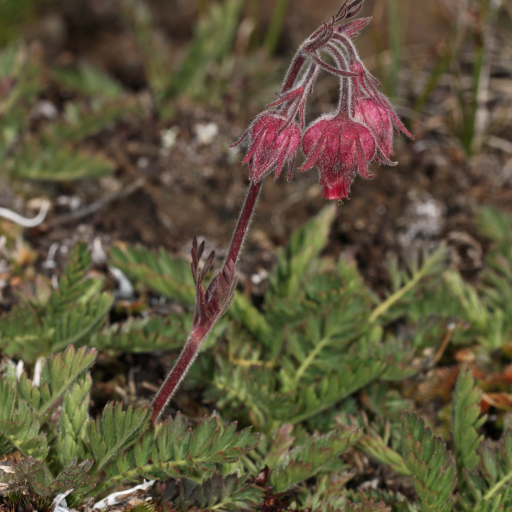
- 🌸 The Bloom: Look for small, bell-shaped, rose-pink flowers that hang bashfully downward, usually appearing in clusters of three on reddish stems.
- 🌬️ The "Smoke": After pollination, the flowers turn upright and develop long, feathery, purple-pink plumes (styles) that resemble puffs of smoke or wispy beards.
- 🌿 The Foliage: The base of the plant features deeply lobed, fern-like leaves that form a low-growing rosette; these leaves often turn a beautiful burgundy-purple in the autumn.
🏡 In Your Garden
- ☀️ Sun & Drainage: This plant is a true prairie native; it thrives in full sun and requires exceptionally well-draining soil. It is very drought-tolerant once established but will quickly "drown" or rot if left in soggy, heavy clay during the winter months.
- 🐝 Bumblebee Favorite: Because the flowers hang low and remain mostly closed, they rely on "buzz pollination." Large bumblebees are among the few insects strong enough to force their way inside the petals to reach the nectar, vibrating their wings to release the pollen.
- 🌱 Slow and Steady: It is a slow-growing groundcover that spreads via rhizomes. It is perfect for "parking strips" or rocky edges where other plants might struggle with the heat.
⚠️ Safety & Toxicity
- ✅ Safe Status: Geum triflorum is generally considered non-toxic to humans, dogs, and cats.
- 🍵 Historical Use: Various Indigenous tribes historically used the roots to create a medicinal tea for wounds or sore throats, though it is not commonly consumed today. It is a safe, worry-free addition to a family garden.
✨ Fun Fact
📜 A Living Smoke Show: On a breezy day, a large patch of these plants creates an optical illusion; the thousands of feathery plumes catch the light and sway together, making it look as though a low-lying pink mist is rolling across the ground.

Detailed Care Instructions
To grow Geum triflorum, also known as prairie smoke, you can follow these steps:
- Choose the right location: Geum triflorum prefers full sun to partial shade. Ensure that the area has well-draining soil.
- Prepare the soil: Before planting, amend the soil with organic matter, such as compost, to improve its fertility and drainage.
- Sow seeds: Geum triflorum can be propagated by sowing seeds directly in the garden or starting them indoors. If starting indoors, sow the seeds in pots or trays, about 6-8 weeks before the last expected frost. Sow the seeds on the soil surface without covering them as they require light to germinate.
- Transplant seedlings (if applicable): Once the seedlings have developed a few sets of leaves and the danger of frost has passed, transplant them into the prepared garden bed, spacing them about 12-18 inches apart.
- Watering: Keep the soil evenly moist, avoiding overwatering. Geum triflorum prefers slightly dry conditions.
- Mulch: Mulching around the plants can help retain moisture and suppress weed growth. Use a layer of organic mulch, such as wood chips or straw, around the base of the plants.
- Fertilize: Geum triflorum doesn't require much fertilization. However, you can apply a balanced, slow-release fertilizer during the growing season if desired.
- Pruning: After the flowers fade, you can deadhead the spent blooms to encourage further flowering.
- Winter care: Geum triflorum is a cold-hardy perennial. In late fall, you can mulch around the base of the plant to protect it during winter.
- Divide and propagate: Every few years, you can divide Geum triflorum to propagate new plants. Dig up the clumps in early spring or fall, separate them into smaller sections, and replant them in a new location.
Remember to check the specific growing requirements for your region, as some variations may exist depending on your climate.

Place in a window with dappled sun or a spot in the middle of a room. Or directly in a window facing west or east.

When watering this plant, it is important to avoid overwatering as it can lead to root rot. Check the soil moisture before each watering by sticking your finger about an inch into the soil. If the soil feels dry, it is time to water. Water the plant at the base, avoiding getting water on the leaves as this can lead to fungal diseases. Use a gentle stream of water and water until the soil is evenly moist, but not soaking wet. Allow the top inch of soil to dry out before watering again. In general, this plant requires moderate watering, but this can vary based on the climate and environmental conditions.
For optimal growth and development of this plant, it is recommended to fertilize it twice a year in the early spring and late summer. Use a balanced fertilizer with equal parts nitrogen, phosphorus, and potassium. Apply the fertilizer evenly around the plant but avoid getting it on the leaves. Water the plant immediately after fertilization to help the nutrients penetrate the soil and reach the roots. Always follow the manufacturer's instructions for application rates and timing.
Geum Triflorum is a perennial flowering plant that requires well-draining soil for optimal growth. The soil should have a pH level of 6.5 to 7.5. This plant prefers loamy soil that is rich in organic matter. The soil should be moist but not waterlogged. It is recommended to amend the soil with compost or aged manure before planting to enhance its nutrient content. It is important to avoid heavy clay soils that can lead to poor drainage and waterlogging, leading to root rot. Additionally, Geum Triflorum grows well in areas with full sun or partial shade. We hope this information helps!
Geum Triflorum plant can be propagated by division or by using seeds. Division method involves splitting the plant clumps into smaller sections and replanting them in new locations. To do this, dig up the plant clump and carefully separate it into smaller sections, ensuring that each section has healthy roots and leaves. Replant the new sections in a suitable location with well-draining soil and adequate sunlight.
The seed propagation method involves collecting the seeds from the plant after it has flowered and dried up. These seeds can be sown directly into soil or started indoors in trays. The seeds should be sown shallowly into soil and kept moist until they germinate, which usually takes around 2-3 weeks. Once the seedlings have sprouted, they can be transplanted into bigger pots or directly into the garden, ensuring adequate spacing between each plant.
It is important to note that Geum Triflorum plant prefers well-draining soil and partial to full sunlight. It also benefits from regular watering and fertilization to encourage healthy growth. Propagating this plant through division or seed propagation can be done in the spring or fall when the plant is in dormancy. With proper care and attention, Geum Triflorum plant can grow into a beautiful addition to any garden or landscape.
Common pests of the prairie smoke include Spider mites, aphids, larvae. Make a habit of checking your prairie smoke frequently for pests so that any infestations can be caught and managed early.








