Plant Overview
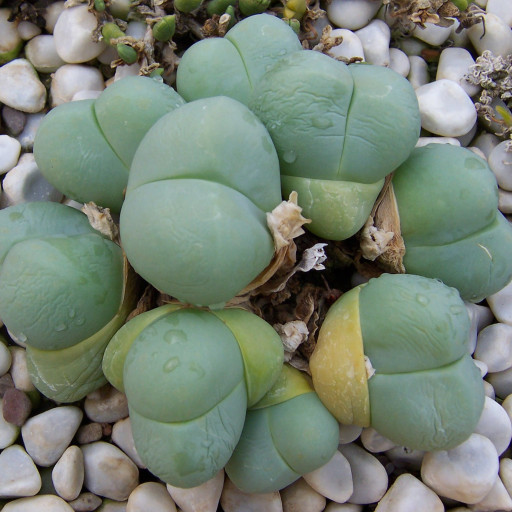
Commonly known as the Golf Ball Plant or Pebble Plant, Gibbaeum heathii is a master of disguise hailing from the arid Little Karoo region of South Africa. These charming succulents are famous for their spherical shape, mimicking the scattered stones of their native habitat to avoid being eaten by thirsty animals. They grow in slow-moving, silvery clumps that look more like a collection of river stones than a living organism.
🔍 How to Identify
- 🟢 The Body: Features two thick, fleshy leaves of unequal size that join together to form a near-perfect sphere or "egg" shape.
- 🪟 The Fissure: A small, narrow slit runs across the top of the plant where the two leaves meet; this is where the new leaves and flowers eventually emerge.
- 🌸 The Bloom: In late winter or early spring, it produces stunning, many-petaled flowers that resemble daisies, usually in shades of creamy white or soft pink.
🏡 In Your Garden
- ☀️ Sun Worshipper: This plant requires intense light to maintain its compact, "golf ball" shape. If kept in the shade, it will stretch out and lose its stone-like appearance, a process known as etiolation.
- 🏺 The Taproot Trap: Unlike many small succulents, Gibbaeum heathii develops a long, substantial taproot. It hates being moved once established and requires a surprisingly deep pot with excellent drainage to accommodate its downward growth.
- 💧 The "Bursting" Risk: Because it is designed to store every drop of water it finds, overwatering causes the skin to literally crack or burst. It is best to wait until the plant looks slightly wrinkled before offering a drink.
⚠️ Safety & Toxicity
- ✅ Pet & Child Safe: Gibbaeum heathii is generally considered non-toxic to cats, dogs, and humans. It is a "friendly" succulent for household collections.
- 🌵 Handle with Care: While not poisonous, the plant is quite fragile. Its smooth skin can be easily bruised or scarred by fingernails or curious pets, and these marks are permanent until the next growth cycle.
✨ Fun Fact
In the wild, Gibbaeum heathii practices "mimicry." It grows half-buried in white quartz fields, making it almost impossible for predators to distinguish the plant from the surrounding rocks until it decides to bloom!

Detailed Care Instructions
To grow the Gibbaeum Heathii plant, follow these steps:
- Choose a suitable location: Gibbaeum Heathii plants require plenty of direct sunlight for at least 6 hours a day. Select a spot in your garden or a sunny windowsill indoors.
- Soil preparation: Use a well-draining soil mix suitable for succulents and cacti. You can prepare a mix by combining regular potting soil with coarse sand or perlite. This helps prevent excessive moisture around the plant's roots.
- Propagation: Gibbaeum Heathii plants can be propagated from leaf cuttings. Gently remove a healthy leaf from the parent plant, ensuring a clean break. Allow the cutting to dry for a few days until a callous forms on the cut end. Then, plant the cutting about half an inch deep in the prepared soil mix.
- Watering: Water the plant sparingly, allowing the soil to dry out completely between waterings. Overwatering can lead to root rot. Aim for deep but infrequent waterings, adjusting based on the climate and region you live in.
- Fertilization: Gibbaeum Heathii plants do not require frequent fertilization. You can occasionally provide a diluted liquid succulent fertilizer during the growing season from spring to summer. Follow the instructions on the fertilizer packaging for the correct dilution ratio and frequency.
- Temperature and humidity: Gibbaeum Heathii plants prefer warm temperatures ranging from 70-80°F (21-27°C). They can tolerate slightly cooler temperatures but may not thrive in very cold or frost-prone regions. These plants also prefer low humidity levels.
- Pests and diseases: Gibbaeum Heathii plants are relatively resistant to pests and diseases. However, it's important to keep an eye out for common succulent pests like mealybugs or aphids. If detected, treat them with an appropriate insecticide or by wiping the affected areas with a cotton swab dipped in rubbing alcohol.
- Repotting: As the Gibbaeum Heathii plant grows, it may require repotting. Choose a slightly larger pot with good drainage and transfer the plant carefully, being mindful of its delicate roots.
Remember, different plants may have specific requirements, so it's always helpful to do additional research or consult a local nursery for any specific instructions or tips for growing Gibbaeum Heathii in your area.

Place in a window with dappled sun or a spot in the middle of a room. Or directly in a window facing west or east.
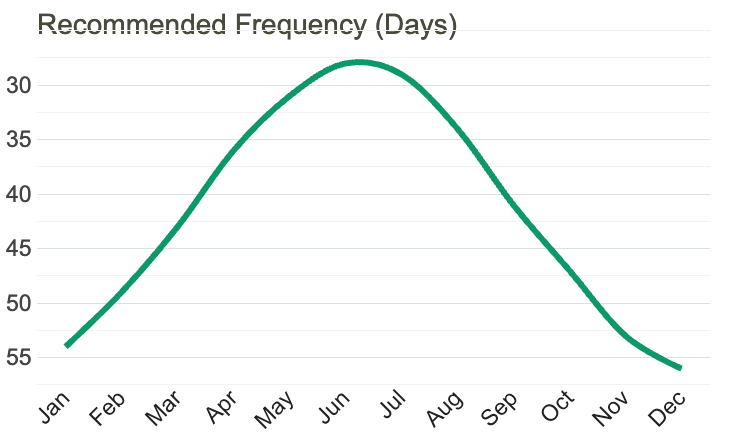
To water this plant, it is important to use a well-draining soil mix with additional perlite or coarse sand to prevent water accumulation. It is recommended to allow the soil to dry completely between waterings and to avoid waterlogging the plant's roots. When watering, gently pour water around the base of the plant, being careful not to get water on the leaves or stem. It is best to water in the morning or early afternoon to allow excess moisture to evaporate before nightfall. Additionally, it is important to reduce watering during dormant periods and not to water the plant during prolonged periods of rain or humidity.
To fertilize Gibbaeum Heathii plant, follow these instructions:
- Choose a balanced fertilizer suitable for succulents or cacti. Look for one with an N-P-K ratio (Nitrogen, Phosphorus, Potassium) of around 10-10-10.
- Dilute the fertilizer by half, following the instructions on the package. This will prevent the plant from getting overwhelmed by nutrients.
- Apply the diluted fertilizer to the soil around the base of the plant. Avoid direct contact with the leaves, as this can cause damage.
- Water the plant thoroughly after fertilizing to help distribute the nutrients evenly and prevent any potential fertilizer burn.
- Fertilize the Gibbaeum Heathii plant once a month during the growing season, which is usually spring and summer. Reduce or stop fertilizing completely during the winter months when the plant goes into dormancy.
- Monitor the plant for any signs of nutrient deficiencies or excessive fertilization, such as yellowing leaves or brown tips. Adjust the fertilization schedule or dilution strength accordingly to maintain a healthy balance.
Remember, it's important not to over-fertilize succulents as they are adapted to nutrient-poor environments. Always follow the recommended dosage and pay attention to the needs of the specific plant.
Gibbaeum Heathii plant requires well-draining soil that is slightly acidic to neutral in pH. The soil should be a mixture of sand, perlite, and peat moss to allow for good aeration and drainage. Organic matter like compost or leaf mold can also be added to the soil to improve its fertility. It is important to avoid using soil that is too heavy or too compacted as this can lead to root rot and other diseases. During the growing season, regular watering should be provided, making sure not to allow the soil to get too wet or too dry.
Gibbaeum heathii is a type of plant that can be propagated through various methods. Here's how you can propagate it:
- Selecting the parent plant: Choose a healthy, mature Gibbaeum heathii plant from which to take cuttings. Ensure that it is disease-free and has no signs of stress or damage.
- Preparing the tools: Gather the necessary tools, including a clean, sharp knife or scissors, a clean, well-draining potting mix, and small pots or containers.
- Taking stem cuttings: Identify a suitable stem on the parent plant for propagation. Make a clean cut just below a node, using the sharp knife or scissors. Ensure that the cutting is approximately 2-3 inches long.
- Drying the cuttings: Allow the stem cutting to dry for a few days before proceeding to the next step. This will help prevent the cuttings from rotting during the propagation process.
- Preparing the potting mix: Use a well-draining potting mix that consists of a combination of sand, perlite, and cactus soil. Sterilize the potting mix if necessary to prevent any potential diseases.
- Planting the cuttings: Fill small pots or containers with the prepared potting mix. Create a small hole in the center of the potting mix and insert the stem cutting, burying it slightly to provide stability. Gently firm the potting mix around the cutting to secure it in place.
- Providing ideal conditions: Place the pots or containers in a warm and bright location, preferably with indirect sunlight. Gibbaeum heathii prefers temperatures between 70-85°F (21-29°C). Ensure that the cuttings receive adequate air circulation to minimize the chances of rot.
- Watering and care: Water the cuttings sparingly, ensuring that the potting mix is slightly moist but not overly wet. Overwatering can lead to rotting, so it's important to strike a balance. Avoid direct water contact with the leaves to prevent fungal diseases.
- Root development: Over time, typically within a few weeks to a couple of months, the cuttings will begin to develop roots. You can gently tug on the cutting to check if it has established a good root system.
- Transplanting: Once the cuttings have developed a healthy root system, you can transplant them into individual pots filled with well-draining soil. Gradually acclimate them to more sunlight and resume regular care for adult Gibbaeum heathii plants.
Remember to exercise patience during the propagation process, as it may take some time for the cuttings to establish roots and grow into new plants. Additionally, maintaining proper care and providing the ideal growing conditions will contribute to successful propagation.








