Plant Overview
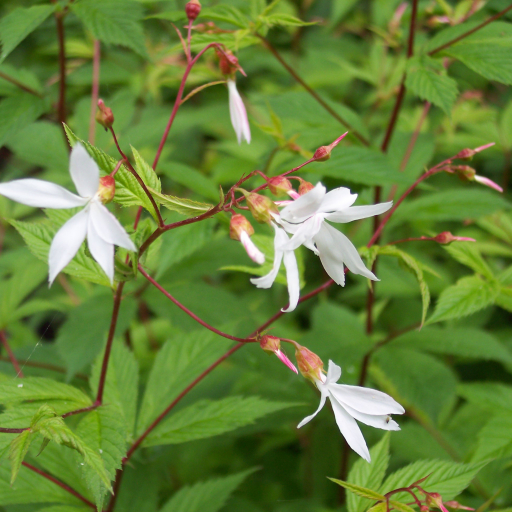
Known affectionately as "Bowman’s Root" or "Indian Physic," Gillenia trifoliata is the ethereal ballerina of the woodland garden. Native to the mountain forests of Eastern North America, this perennial creates a misty, cloud-like effect with its delicate white blooms. It is a favorite for gardeners who want to bridge the gap between structured flower beds and the wild, romantic look of a forest clearing.
🔍 How to Identify
- 🌸 Star-Shaped Blooms: The flowers consist of five long, narrow, snowy-white petals that look slightly "shredded." They appear in loose, airy clusters that seem to float above the foliage.
- 🍃 Trifoliate Leaves: As the name suggests, the dark green leaves are divided into three distinct, pointed leaflets with sharply serrated (toothed) edges.
- 🍷 Wiry Red Stems: One of its most striking features is its thin, branching stems which are a deep, contrasting burgundy-red, providing a beautiful skeletal structure even before the flowers open.
🏡 In Your Garden
- 🌳 The Woodland Aesthetic: This plant hates "wet feet" but loves consistent moisture. It thrives in dappled sunlight, making it the perfect companion for Ferns, Hostas, and Bleeding Hearts.
- 🍂 Autumn Transformation: While famous for its summer stars, the plant puts on a second show in the fall. The foliage transforms from deep green to brilliant shades of copper, bronze, and fiery orange-red, extending its beauty deep into the season.
⚠️ Safety & Toxicity
- 🌿 Mildly Bioactive: Historically, this plant was used by Native Americans and early settlers as a potent "physic" or emetic (to induce vomiting).
- 🐾 General Precaution: While not considered highly toxic to touch, ingesting any part of the plant—especially the roots—can cause significant stomach upset. It is best kept away from curious pets and toddlers who might be tempted to nibble the leaves.
✨ Fun Fact
The flowers of the Bowman's Root are so light and attached by such delicate stems that they dance and shiver with the slightest breath of wind, giving the entire plant the appearance of a swarm of white butterflies hovering in the shade.

Detailed Care Instructions
To grow Gillenia Trifoliata plants, also known as Bowman's root or American ipecac, follow these steps:
- Choose a suitable location: Gillenia Trifoliata prefers partial shade to full sun, so find a spot in your garden that receives at least six hours of sunlight per day.
- Prepare the soil: Ensure the soil is well-draining and rich in organic matter. If the soil is heavy or clay-like, amend it with compost or well-rotted manure to improve drainage.
- Planting: Dig a hole that is slightly larger than the root ball of the plant. Place the plant in the hole and backfill with soil, ensuring that the top of the root ball is level with the soil surface. Gently firm the soil around the plant.
- Watering: Water the plant thoroughly after planting to settle the soil and to provide moisture for the roots to establish. Afterward, water the plant regularly, especially during dry spells, to keep the soil consistently moist but not waterlogged.
- Mulching: Apply a layer of organic mulch, such as wood chips or shredded bark, around the plant to retain moisture, suppress weed growth, and provide insulation to the roots.
- Pruning: In late winter or early spring, prune back any dead or damaged stems to encourage new growth. You can also shape the plant if desired.
- Fertilizing: Gillenia Trifoliata typically does not require heavy fertilization. However, you can apply a balanced slow-release fertilizer in early spring to promote healthy growth.
- Pests and diseases: This plant is generally resistant to most pests and diseases. However, regularly inspect the plant for any signs of pest infestation or disease and take appropriate measures if necessary.
- Propagation: Gillenia Trifoliata can be propagated by dividing mature plants in early spring or by collecting seeds and sowing them in containers or directly in the garden.
By following these steps, you should be able to successfully grow Gillenia Trifoliata plants in your garden.

Place in a window with dappled sun or a spot in the middle of a room. Or directly in a window facing west or east.

To properly water the plant in question, it is important to consider the surrounding environment and the type of soil in which it is planted. The plant should be located in a well-draining area, as it is susceptible to root rot if it sits in standing water for too long. When watering, the soil should be evenly moistened, but not completely saturated. It may be helpful to check the soil with a finger or a soil moisture probe to ensure that the moisture level is appropriate. Additionally, it is recommended to water the plant deeply, but infrequently, rather than giving it frequent shallow waterings. This will help encourage deeper roots and improve overall plant health. It is also important to avoid getting water on the leaves or flowers of the plant, as this can cause fungal diseases or other issues.
To fertilize this plant, use an all-purpose, balanced fertilizer in early spring. Follow the label instructions for the appropriate amount to use based on the size of your plant. Avoid fertilizing during the heat of summer or in late fall. Instead, focus on maintaining consistent moisture levels and providing adequate light for healthy growth.
For optimal growth and health of the plant species in question, it is recommended to use a well-draining soil with a pH level between 5.5 and 7.5. The soil should be loose and airy, allowing for proper water and nutrient absorption. Additionally, it is important to avoid compacted or waterlogged soils, as this can lead to root rot and other plant health issues. Organic matter, such as compost or peat moss, can be added to improve soil structure and provide essential nutrients. When planting, ensure that the soil is evenly moist, but not saturated. Regular watering and fertilization may also be necessary to promote healthy growth.
To propagate this plant, you will need to take softwood cuttings in the spring. First, select a healthy stem with several sets of leaves and make a clean, diagonal cut underneath a leaf node. Remove the leaves on the bottom half of the stem, leaving only the upper leaves intact.
Dip the cut end of the stem in rooting hormone powder and insert it into a pot filled with well-draining soil. Water the cutting thoroughly and cover it with a clear plastic bag to create a humid environment.
Place the pot in a sunny spot, but avoid direct sunlight that can damage the cutting. Keep the soil moist but not waterlogged and mist the cutting regularly to maintain humidity.
After a few weeks, the cutting should start to root and new growth will appear. Increase ventilation gradually by opening the bag a little each day until the cutting is accustomed to the ambient humidity. Once the roots have filled out the pot, transplant the new plant into a larger container or in the garden.








