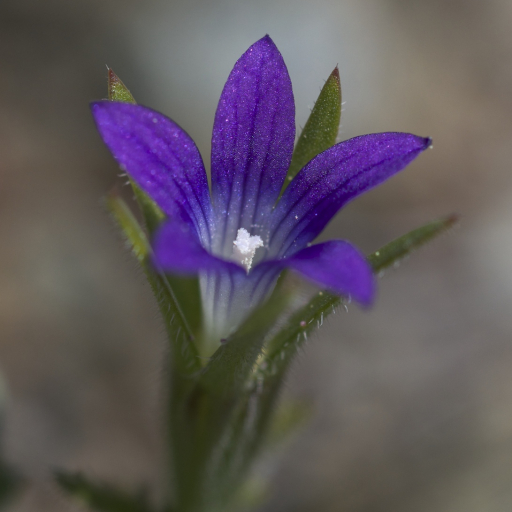
Plant Overview
Known as the Common Bluecup, this tiny annual herb is a hidden gem of the West Coast wilderness. It is often found hiding in plain sight along rocky slopes or in the aftermath of a forest fire, waiting for the perfect moment to reveal its brilliant violet hues. Its scientific name, specularioides, pays homage to its resemblance to the Venus’ Looking-Glass plant (Specularia), though it carries a unique, rugged charm all its own.
🔍 How to Identify
- 🔔 The Bloom: Tiny, deep blue-to-purple bell-shaped flowers with five pointed petals that flare outward, creating a star-like appearance.
- 🌿 Foliage: Small, narrow leaves that are often serrated or toothed. They cling closely to the wiry, slender stems.
- 📏 Stature: This is a "belly plant"—meaning you often have to get down on your belly to see it! It rarely grows taller than 6 inches, staying low to the ground to avoid harsh winds.
🏡 In Your Garden
- ⛰️ Natural Preference: In the wild, it thrives in thin, rocky soils and disturbed areas. If you are trying to grow it, avoid "rich" potting soil; it prefers well-draining, gritty substrates that mimic a mountain slope.
- 💧 The "Rain" Trigger: As an annual, its life cycle is tied strictly to seasonal moisture. It germinates after winter rains and completes its entire life cycle before the summer heat turns the landscape gold.
- ☀️ Light Seeker: It demands full sun to open its delicate bells. In the shade, the plant will become leggy and the flowers may stay tucked away.
⚠️ Safety & Toxicity
- ✅ Status: Non-toxic and generally safe.
- 🐾 Family Friendly: There are no known reports of toxicity toward cats, dogs, or humans. However, because it is so small and fragile, it is easily stepped on or crushed by curious pets.
- 🧤 Skin Contact: It does not produce irritating saps or thorns, making it safe to handle without gloves.
✨ Fun Fact
The Common Bluecup is a "fire-follower" in some regions. While not strictly dependent on fire, it often explodes in numbers the year after a wildfire, taking advantage of the cleared canopy and the nutrient-rich ash left behind.

Detailed Care Instructions

Place in a window with dappled sun or a spot in the middle of a room. Or directly in a window facing west or east.

Water-loving plants flourish in wet or sloppy soil and near ponds. The extensive root system enables these plants to absorb plenty of water. The surface of the soil should be kept moist at all times. Place your pot in a container filled with water to guarantee that plants get enough water. If the ground becomes dry, it is recommended that you water it well. Plants in smaller pots will need to be watered more frequently. Water the soil in which the plant is standing thoroughly using a watering can.








