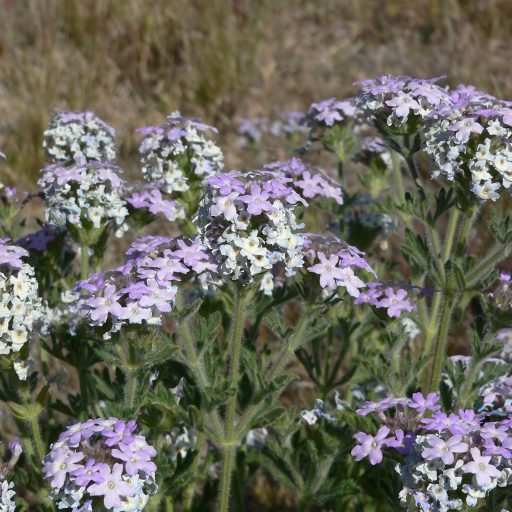
Plant Overview
Often called the Desert Mock Vervain, Glandularia gooddingii is a resilient beauty native to the arid landscapes of the American Southwest. It is known for its ability to blanket rocky hillsides with soft, lavender "pillows" even when the desert heat feels unbearable. This plant is a favorite for xeriscaping, bringing a delicate, cottage-garden aesthetic to harsh, sun-drenched environments.
🔍 How to Identify
- 🌸 The Bloom: Small, trumpet-shaped flowers with five notched petals, grouped together in rounded clusters (umbels) at the tips of the stems.
- 🍃 The Foliage: Gray-green leaves that are deeply lobed or "toothed." The entire leaf surface is covered in fine, soft hairs that help the plant retain moisture.
- 🌱 The Growth: A low-growing, mounded perennial that typically spreads wide rather than tall, often forming a dense carpet of color.
🏡 In Your Garden
- ☀️ Sun Seeker: This plant is a true sun-worshipper. It requires bright, direct light and will become "leggy" or stop blooming if tucked away in the shade.
- 🌵 Thirst Quencher: While it is incredibly drought-tolerant once established, it prefers "deep but infrequent" watering. It hates having "wet feet," so well-draining, sandy, or rocky soil is a must to prevent root rot.
- 🦋 Pollinator Magnet: It is one of the most important nectar sources in desert gardens, acting as a high-traffic station for hummingbirds, swallowtail butterflies, and native bees.
⚠️ Safety & Toxicity
- ✅ Status: Generally non-toxic and safe for residential gardens.
- 🐾 Details: While not considered poisonous to cats, dogs, or horses, the hairy texture of the leaves can occasionally cause mild skin irritation for humans with sensitive skin or digestive upset if a curious pet decides to snack on it.
✨ Fun Fact
- 🏜️ The Goodding Legacy: This plant was named after Leslie Newton Goodding, a legendary botanist known as the "Collector of the Southwest," who discovered dozens of plant species while exploring the rugged canyons of Arizona and Mexico in the early 1900s.

Detailed Care Instructions
To grow Glandularia Gooddingii plants, also known as Goodding's verbena, you can follow these steps:
- Choose a suitable location: Glandularia Gooddingii prefers a location that receives full sun to partial shade. Ensure the area has well-draining soil.
- Soil preparation: Prepare the soil by removing any weeds or grass and loosening it with a garden fork or tiller. You can also add organic matter like compost to improve the soil's fertility and drainage.
- Planting: Plant the Glandularia Gooddingii plants in the prepared area. Dig a hole slightly larger than the root ball and place the plant in it, making sure the top of the root ball is level with or slightly above the ground surface. Space the plants about 8-12 inches apart to allow for adequate airflow.
- Watering: Water the newly planted Glandularia Gooddingii thoroughly and keep the soil consistently moist but not waterlogged. Frequency of watering depends on the climate and soil moisture retention, so check the soil regularly and adjust watering accordingly.
- Mulching: Mulch around the plants with a layer of organic mulch, such as straw or wood chips, to help retain moisture, suppress weeds, and regulate soil temperature.
- Fertilization: Glandularia Gooddingii plants usually do not require heavy fertilization. However, you can apply a balanced, slow-release fertilizer once or twice during the growing season following the manufacturer's instructions. Avoid over-fertilizing, as it can lead to excessive foliage growth rather than flowering.
- Pruning: Trim back the Glandularia Gooddingii plants periodically to maintain shape and encourage bushier growth. This will also help remove any dead or spent flowers, promoting continuous blooming.
- Pests and diseases: Goodding's verbena is generally resistant to pests and diseases. However, keep an eye out for aphids or other common plant pests. Regularly inspect the plants to catch any issues early, ensuring timely intervention if necessary.
Remember to provide regular care and maintenance, such as checking for water needs and removing any weeds that may compete with the plants. With proper care, your Glandularia Gooddingii plants should thrive and provide beautiful flowers.

Place in a bright room that is sun drenched almost all day. Or directly in a south-facing window.

To properly water this plant, it's important to consider the environment it is in. The soil should be slightly moist, but not saturated, and well-draining to avoid waterlogged roots. Use a watering can or hose to gently water around the base of the plant, making sure not to wet the foliage as this can increase the risk of disease. The frequency of watering will depend on factors such as the temperature, humidity, and amount of sunlight the plant receives. It's important to monitor the soil moisture levels regularly and adjust watering as necessary.
To fertilize this plant, use a balanced, slow-release fertilizer and apply it according to the instructions on the packaging. For best results, fertilize the plant in the spring and again in the summer. Avoid fertilizing during the winter months or when the plant is dormant. Water the plant thoroughly after fertilizing to distribute the nutrients evenly.
The ideal soil for the aforementioned plant is a well-draining, sandy soil with a slightly acidic to neutral pH level. The soil should be rich in organic matter to help retain moisture and provide adequate nutrients to the plant. It is important to avoid planting in heavy clay soils or soils that tend to retain too much moisture, as this can lead to root rot and other fungal issues. Additionally, adding a layer of mulch around the base of the plant can help to retain moisture and protect the roots from extreme temperatures.
The process for propagating this plant involves taking cuttings from healthy, established plants. First, select a stem that is around 4-6 inches in length and has at least two sets of leaves. Using a sharp, sterile pair of scissors or pruners, make a clean cut just below a node (where the leaves meet the stem).
Strip off all the leaves from the lower half of the stem, leaving just the top two sets of leaves intact. Dip the cut end of the stem in rooting hormone powder, if desired, to promote root growth.
Prepare a pot with a sterile, well-draining potting mix. Make a hole in the soil with a pencil or other pointed object and gently insert the stem into the soil, pressing down lightly to ensure good contact between the stem and soil.
Water the cutting thoroughly and place it in a bright, but indirect light location. Keep the soil moist but not waterlogged, and avoid letting the cutting dry out.
In a few weeks, you should start to see new growth emerging from the top of the stem. Once the plant has begun to establish roots, which can take several months, you can begin to gradually acclimate it to brighter light and less frequent watering.








