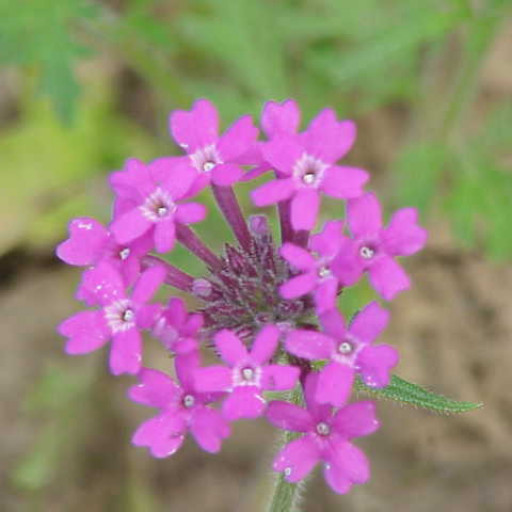
Plant Overview
Often called "Moss Verbena" or "Rose Vervain," Glandularia acts as a living carpet of vibrant color for sun-drenched landscapes. These hardy perennials are beloved for their ability to thrive in blistering heat and poor soil, turning rugged garden spots into seas of purple, pink, and white. Historically grouped with the Verbena genus, they are the "wilder," more resilient cousins often found gracing prairies and rocky outcrops.
🔍 How to Identify
- 🌸 Cluster Blooms: Small, five-lobed flowers are gathered in dense, rounded clusters (umbels) that look like miniature bouquets resting atop the foliage.
- 🌿 Textured Foliage: The leaves are deeply lobed, almost fern-like, and often covered in tiny, stiff hairs that give them a slightly rough or "glandular" feel.
- 🌱 Spreading Habit: It typically grows low to the ground, with stems that "creep" and root where they touch the soil, creating a thick, matted groundcover.
🏡 In Your Garden
- ☀️ The Sun Worshipper: This plant is an "extremist" when it comes to light; it requires full sun to maintain its compact shape. In shade, it becomes leggy and produces far fewer flowers.
- 💧 Drainage is Non-Negotiable: Glandularia hates "wet feet." It is prone to root rot in heavy clay, so it performs best in rock gardens, sandy slopes, or raised beds where water moves away quickly.
- ✂️ The Mid-Summer Trim: After the first heavy flush of blooms, the plant can look a bit "tired." Giving it a light haircut (shearing back about a third of the growth) stimulates a fresh wave of flowers for the autumn.
⚠️ Safety & Toxicity
- 🐾 Safe for Pets: Glandularia is generally considered non-toxic to dogs, cats, and horses, making it an excellent choice for accessible garden borders.
- 🧤 Mild Irritant: For humans with very sensitive skin, the bristly hairs on the leaves and stems can cause minor mechanical irritation or redness during heavy pruning. Wearing gloves is recommended for long gardening sessions.
✨ Fun Fact
- 🦋 Pollinator Runway: Glandularia produces high volumes of nectar compared to other groundcovers, making it a primary "fueling station" for migrating butterflies and the elusive, hovering Clearwing Hummingbird Moth.

Detailed Care Instructions

Place in a bright room that is sun drenched almost all day. Or directly in a south-facing window.

The Glandularia plant should be watered regularly during the growing season. It is important to make sure the soil is well-drained and does not become waterlogged, as this can lead to root rot.
When watering, pour water directly onto the soil around the base of the plant rather than over the leaves. This will help prevent fungal diseases and promote healthy growth.
During periods of hot or dry weather, it may be necessary to water more frequently to prevent the plant from drying out.
However, it is important not to overwater, as this can also cause root rot. Before watering, check the soil moisture level by sticking your finger into the soil. If it feels dry to the touch, it’s time to water.
In the winter, water the plant less frequently as it enters a period of dormancy. Only water when the soil is dry to the touch.
Overall, consistency is key when watering the Glandularia plant. Stick to a regular watering schedule and adjust as needed based on the plant’s needs and the weather conditions.
For optimum growth and development of this particular plant species, it is recommended to use well-draining soil with good moisture retention properties. The soil should be slightly acidic with a pH range of 6.0-6.5. Addition of organic matter such as compost or peat moss is also beneficial for improving soil structure and nutrient content. Avoid using heavy clay soils as they may lead to waterlogged conditions and poor root growth. It is also important to ensure that the soil has good aeration to prevent root rot and other soil-borne diseases.







